
Side Dishes
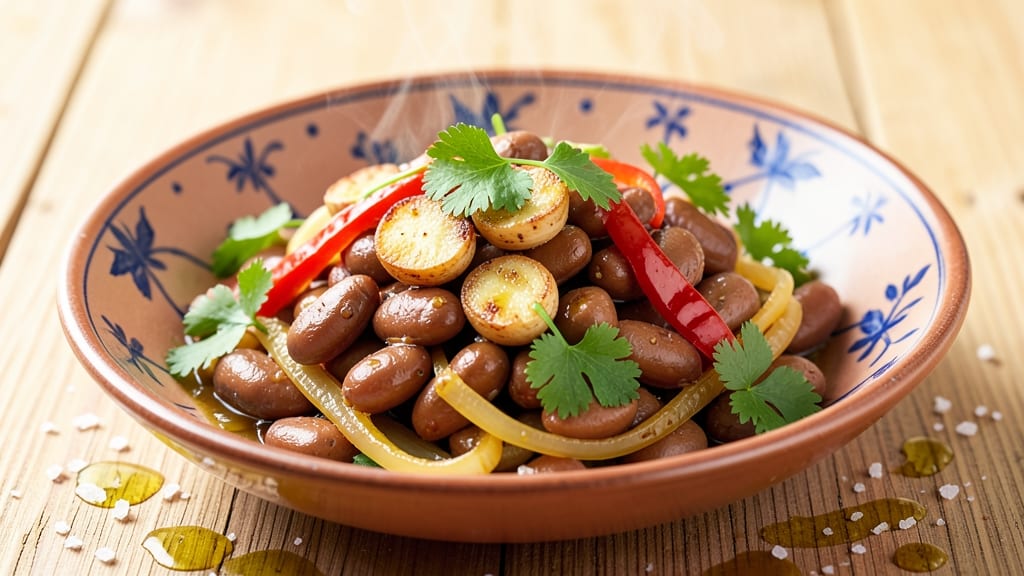
This Azorean fava bean recipe brings the hearty, earthy flavors of Portugal’s Azores straight to your kitchen. 💛 A traditional vegetarian dish, it’s where tender fava beans simmer with garlic, cilantro, and olive oil until rich and aromatic—simple yet deeply satisfying.
The secret lies in slow cooking, which transforms tough beans into melt-in-your-mouth perfection.
What makes this recipe special is its balance of bold flavors and simplicity. The garlic and cilantro infuse every bite with fresh, herbaceous notes, while the olive oil adds depth without overpowering.
Optional bacon or chorizo can be added for a meaty twist, but the dish shines just as well on its own. It’s the kind of meal that feels both rustic and refined.
By the time you’re done, you’ll have a fragrant, hearty stew that pairs beautifully with rice or crusty bread. The beans will be tender yet hold their shape, and the sauce will coat each bite with garlic-infused richness. This is comfort food at its finest—warm, inviting, and full of tradition.
Perfect for a cozy family dinner or a special occasion, this Azorean fava bean recipe delivers restaurant-quality flavor with minimal effort. Let’s get cooking!
Ingredients for azorean fava bean
Earthy fava beans meet bright garlic and cilantro in this Azorean classic—simple but deeply satisfying.
| Ingredient | Amount | Notes |
|---|---|---|
| Dried Fava Beans 🌱 | 1 ½ cups | Soaked overnight, skins removed |
| Extra-Virgin Olive Oil 🫒 | ½ cup | High quality, fruity notes |
| Garlic Cloves 🧄 | 6 cloves | Freshly minced, aromatic |
| Fresh Cilantro 🌿 | ½ cup | Chopped, stems included |
| Yellow Onion 🧅 | 1 whole | Diced, medium size |
| Red Bell Pepper 🌶️ | 1 whole | Diced, any color |
| Tomato Paste 🍅 | 2 tbsp | Smooth, no sugar added |
| Vegetable Broth 💧 | 3 cups | Low-sodium preferred |
| Bay Leaves 🍃 | 2 whole | Fresh if possible |
| Salt 🧂 | 1 ½ tsp | Kosher or sea salt |
| Black Pepper 🌶️ | ½ tsp | Freshly cracked |
| Lemon Juice 🍋 | 1 tbsp | Freshly squeezed |
| Cumin Seeds 🌿 | ½ tsp | Toasted for aroma |
| Paprika 🌶️ | ½ tsp | Smoked for depth |
| Crusty Bread 🍞 | 4 slices | For serving, optional |
The fava beans are the heart of this dish, so don’t skimp. Dried beans are traditional, but if you’re in a hurry, canned fava beans (drained and rinsed) work in a pinch—just add them at the end. Soaking overnight softens them dramatically, but if you forget, a 24-hour soak in warm water does the trick. For the best flavor, use extra-virgin olive oil—the fruity notes shine through. I grab mine from Trader Joe’s or Whole Foods; anything labeled ‘fruity’ or ‘robust’ is ideal. The garlic and cilantro should be fresh—no dried substitutes here, trust me on that.
No fresh cilantro? Fresh parsley works in a bind, but it won’t have that same bright, citrusy kick. Running out of vegetable broth? Water plus a bouillon cube gets you close, but add an extra pinch of salt. The tomato paste can be swapped for 1 small diced tomato if you’re feeling fancy, but paste keeps things consistent. For extra depth, toast the cumin seeds in a dry pan for 30 seconds before adding—that smoky aroma is a game-changer. And if you’ve got smoked paprika, use it instead of regular; it adds a subtle char that’s perfect for this dish.
This stew tastes even better the next day, so make extra. It keeps for 4-5 days in the fridge, and freezes beautifully for up to 3 months. Reheat gently on the stove with a splash of water or broth to keep it from drying out. The crusty bread is optional but worth it—a good sourdough or baguette soaks up all that garlicky goodness. Store leftovers in airtight containers, and if you’re freezing, portion into single servings for easy reheating.
Why You'll Love This Recipe
- No-Soaking Needed: I’ll admit, I was skeptical about dried fava beans—until I realized you can just simmer them overnight in water (yes, really). No pre-soaking, no fuss, and they turn into this creamy, dreamy texture that’s basically foolproof.
- Garlic-Cilantro Magic: That crisp, bright punch of fresh cilantro and roasted garlic? It’s the kind of flavor that makes you want to eat it straight from the pot. The olive oil ties it all together like a warm hug—simple, but ridiculously good.
- Weeknight Workhorse: This dish is my go-to when I’m too tired to think. Toss it into a bowl with crusty bread for lunch, or serve it over rice for dinner—it’s that adaptable. Honestly, I’ve even sneaked it into tacos, and no one’s complained.
- Budget-Friendly Pantry Staple: Dried fava beans are dirt cheap, and a single batch stretches for days. I make a big pot on Sundays and eat it all week—whether it’s for breakfast with eggs or as a side with grilled fish. Zero waste, maximum satisfaction.
Step-by-step instructions for Azorean fava beans stew
This hearty Portuguese stew comes together with simple steps and bold flavors.
🍳 Step 1: Toast the Spices and Sauté the Aromatics
Heat the 0.5 cup extra-virgin olive oil in a large pot over medium heat. Add the 0.5 tsp toasted cumin seeds and 0.5 tsp paprika, stirring constantly for 30 seconds until fragrant—you'll smell that warm, nutty aroma that's the soul of this dish.
Toss in the 6 cloves minced garlic and cook for 30 seconds until golden, not browned. Add the 1 whole diced yellow onion and 1 whole diced red bell pepper, stirring occasionally for 5 minutes until softened. The peppers should release their juices and the onions turn translucent—this builds the flavor base.
🍳 Step 2: Build the Flavor Foundation
Stir in the 2 tbsp tomato paste and cook for 1 minute until it darkens slightly. Pour in the 3 cups vegetable broth and add the 2 whole bay leaves. Bring to a gentle simmer, then add the 1.5 cups soaked fava beans (skins removed). The beans should be fully submerged—add a splash of water if needed.
Season with the 1.5 tsp salt and 0.5 tsp black pepper, then reduce heat to low. Cover and let it simmer for 45-50 minutes until the beans are tender. You'll know they're ready when they mash slightly between your fingers—no resistance at all.
🥘 Step 3: Finish with Fresh Herbs and Brightness
Remove the bay leaves and stir in the 0.5 cup chopped fresh cilantro and 1 tbsp lemon juice. The lemon brightens everything up—you'll see the stew turn a vibrant green. Taste and adjust seasoning if needed; sometimes the broth needs a pinch more salt or a squeeze more lemon.
Let the stew sit off heat for 5 minutes before serving. This resting time lets the flavors meld together. The final texture should be creamy from the beans but still have some broth—thick enough to coat the back of a spoon but not gluey.
🍽️ Step 4: Serve with Crusty Bread
Ladle the warm stew into bowls and serve immediately with the 4 slices crusty bread on the side. The bread soaks up all that delicious broth, and you can use it to scoop up every last bite. For extra flavor, sprinkle more fresh cilantro on top right before serving.
This stew tastes even better the next day, so make extra if you can. The flavors deepen as it sits, and the beans get even more tender. Store leftovers in the fridge for up to 3 days, or freeze for 3 months—just reheat gently on the stove with a splash of water or broth.
Pro Tips For Making Azorean Fava Bean
- SOAK BEANS 12 HOURS MINIMUM: Dried favas need patience—any less time and they’ll turn to mush or stay rock-hard. I learned this the hard way after a batch split like overcooked lentils. Use a bowl with plenty of water (double the beans) and a pinch of baking soda to soften them faster, but don’t skip the overnight soak.
- PEEL BEANS WHILE WARM: Freshly cooked favas peel like a dream when they’re still hot. Toss them in ice water for 30 seconds first—this stops cooking and makes the skins slide off effortlessly. Skip this, and you’ll be stuck picking through a bowl of stubborn skins (trust me, it’s not fun).
- SWEAT ONIONS LOW AND SLOW: Caramelizing onions for this dish is tempting, but resist the urge to crank the heat. Cook them on medium-low with a splash of water until they’re translucent but still bright—about 10-12 minutes. Burnt onions will overpower the delicate earthiness of the favas, and nobody wants that.
- FINISH WITH COLD OIL: Drizzle the final olive oil while the beans are still warm, but let it sit for 2 minutes before serving. This lets the oil soak in instead of pooling on top, and the contrast of cold oil against hot beans makes the dish taste richer. (Yes, even if you’re impatient like me.)
Troubleshooting perfect results
Beans Too Tough?
If your fava beans aren’t tender after 45-50 minutes, they likely need more time. The key is low-and-slow cooking—keep the heat at low and add ½ cup extra broth if the stew gets too thick.
I’ve found that beans from different batches vary in cooking time, so check them at the 40-minute mark and go from there. 💡
Broth Too Salty?
If your broth tastes too salty, don’t panic—acid and fresh herbs are your best friends. Add 1 extra tbsp lemon juice and a handful of fresh cilantro to cut through the saltiness.
For a more dramatic fix, stir in 1 tbsp unsalted butter (it melts into the broth and balances flavors beautifully). Taste as you go!
Skin Still Attached?
If your soaked fava beans still have stubborn skins, rub them between your fingers under running water before adding them to the pot. For extra insurance, use a potato masher to gently press the skins off while the beans are still in their soaking water.
This step makes all the difference for a silky texture. 🌱
Mushy Beans?
Overcooking turns fava beans into mush. To avoid this, check them at the 40-minute mark—they should be tender but still hold their shape. If they’re already too soft, remove them from the pot and set aside.
You can still use them in sandwiches or salads, just not as a stew. The broth can be strained and used as a base for another dish.
Lacking Depth?
If your stew tastes flat, it might need more umami or acidity. Boost flavor by adding 1 tbsp soy sauce (for umami) or another ½ tsp smoked paprika.
A splash of red wine vinegar (just 1 tsp) also adds brightness. For extra richness, stir in 1 tbsp tomato paste at the end—it deepens the sauce without overpowering.
Too Watery?
If your stew is too thin, let it simmer uncovered for 5-10 minutes to reduce the liquid. For a thicker texture, mash ¼ of the beans with a fork and stir them back in—the starch helps thicken the broth naturally.
Avoid adding flour or cornstarch, as it can make the dish taste artificial. 💫
Nutrition facts
Frequently asked questions
Can I use canned fava beans instead of dried?
Yes, but with a few adjustments! Canned fava beans cook much faster—simply rinse them well and add them to the pot during the last 10-15 minutes of simmering. They’ll absorb flavors quickly, so don’t overcook. For texture, mash ¼ of the canned beans lightly to mimic the creaminess of dried beans.
What makes this Azorean version different from other fava bean dishes?
The Azorean twist lies in the bold garlic-cilantro combo and the slow-simmered richness. Unlike simpler fava purées, this stew builds depth with toasted cumin, smoked paprika, and a touch of lemon juice—creating a bright, earthy balance. The skins are removed for a silky texture, setting it apart from heartier Portuguese bean dishes.
How do I store leftovers without drying them out?
Store in an airtight container with a splash of water or broth to keep it moist. Reheat gently on the stove with low heat, stirring occasionally. For freezing, portion into single servings—thaw overnight in the fridge, then warm through. The broth may separate slightly, but stirring restores the creamy texture.
Is there a quicker way to remove fava bean skins?
After soaking, place beans in a colander and rub them vigorously between your palms under running water. For stubborn skins, use a potato masher in the soaking water to press them off. This method works faster than peeling individually and ensures a smoother final dish.
Can I make this vegan?
Yes! Skip the optional bacon/chorizo and use vegetable broth instead of chicken broth. For extra richness, stir in 1 tbsp nutritional yeast or a splash of white wine at the end. The dish remains hearty and flavorful—just as the Azoreans originally intended for plant-based eaters!