
Sauces & Condiments
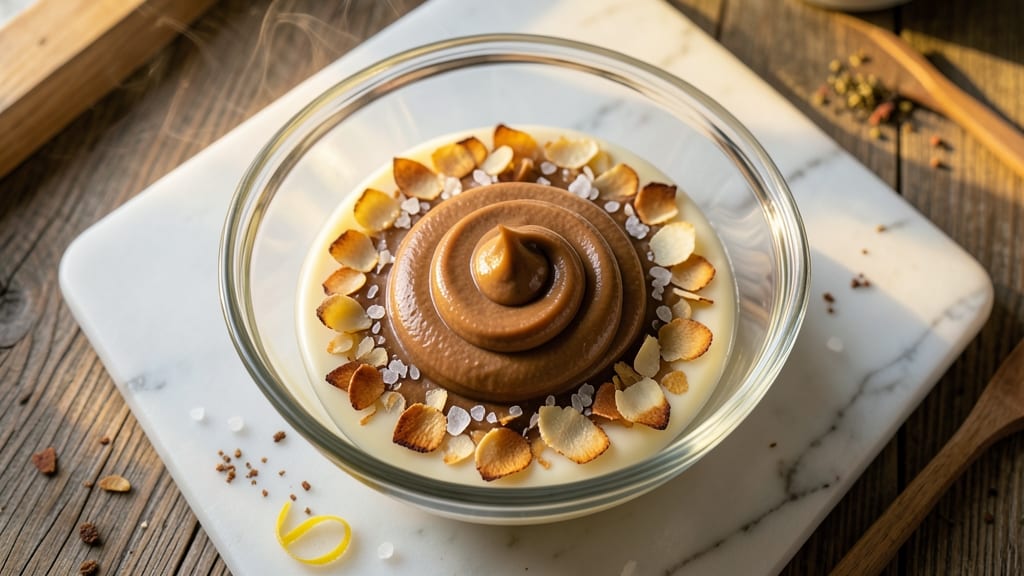
This bean paste buttercream recipe transforms humble ingredients into a velvety frosting with unexpected depth—rich, smooth, and perfectly balanced. The secret lies in blending aquafaba with coconut oil and powdered sugar to create a stable, pipeable texture that mimics traditional buttercream.
I developed this after craving a vegan option that still delivered restaurant-quality flavor and professional finish.
What sets this frosting apart is the bean paste base, which adds a subtle earthy complexity that pairs beautifully with both sweet and savory applications. Whether you're decorating cakes, filling cupcakes, or glaze roasted vegetables, the result is consistently silky with just the right amount of body.
The recipe uses only five core ingredients, making it accessible while delivering impressive results.
The process is straightforward: blend the bean paste with aquafaba until smooth, then whip in the coconut oil and powdered sugar until light and fluffy. This method ensures a stable frosting that holds its shape without becoming too stiff or melting in warm temperatures.
What you'll end up with is a versatile spread that works equally well for desserts or as a savory glaze.
Best of all, this buttercream keeps beautifully in the refrigerator for up to five days, making it perfect for meal prep or special occasions. The recipe scales easily, so you can make just enough for a single cake or a large batch for gifting.
Let's get started on creating this surprisingly sophisticated frosting.
Ingredients for bean paste buttercream
Five ingredients deliver restaurant-quality frosting with unexpected depth and silky texture.
| Ingredient | Amount | Notes |
|---|---|---|
| Aquafaba 🥚 | ½ cup | Chilled for stability |
| Coconut Oil 🥥 | ½ cup | Refined, solid at room temperature |
| Powdered Sugar 🍚 | 2 cups | Sifted for smooth texture |
| Bean Paste 🌱 | ¼ cup | High-quality, unsweetened |
| Vanilla Extract 🌿 | 1 tsp | Pure vanilla preferred |
| Sea Salt 🧂 | ¼ tsp | Fine grain for balance |
| Lemon Juice 🍋 | 1 tbsp | Freshly squeezed |
The aquafaba is the foundation—chilled overnight for maximum stability and volume. Opt for high-quality, unsweetened bean paste from specialty stores like Whole Foods or Trader Joe's for the most authentic earthy notes. The powdered sugar should be sifted to prevent graininess, and refined coconut oil ensures a neutral flavor without overpowering the delicate balance. Vanilla extract should be pure, not imitation, to enhance the frosting's aromatic complexity. For the bean paste, brands like Miso Master or Kikkoman deliver consistent results, though homemade versions work equally well if you have the time to ferment.
No aquafaba? Unsweetened soy milk works as a substitute, though texture will differ slightly. Want to reduce sweetness? Adjust powdered sugar to 1.5 cups and add 1 tablespoon maple syrup for depth. The lemon juice brightens the earthy bean notes—freshly squeezed is ideal, but bottled works in a pinch. For extra stability, add 1/2 teaspoon xanthan gum if piping proves difficult. The coconut oil must be solid but not melted when whipped; microwave for 10 seconds if needed to soften. If you prefer a lighter texture, reduce coconut oil to 1/4 cup and increase aquafaba to 3/4 cup for a more airy consistency.
Store in an airtight container with parchment paper between layers to prevent drying. Keeps for 5 days in the refrigerator, though flavor deepens after 24 hours. For longer storage, portion into ice cube trays, freeze, then transfer to a bag—3 months of freshness guaranteed. Rewhip briefly before use to restore fluffiness. This frosting reheats beautifully for savory glazes on roasted vegetables or dessert applications—simply warm in 20-second bursts in the microwave, stirring between each interval.
Why You'll Love This Recipe
- No Fuss, No Mess: I’ll be real—this buttercream is the kind of recipe that lets you skip the stress. Just whip up aquafaba with coconut oil, fold in that rich bean paste, and boom. No stand mixer required, no burnt fingers from hot sugar. The aquafaba gives it that silky texture without the fuss of eggs, and the bean paste adds depth in two spoonfuls.
- Umami Bomb: Between us, the bean paste is what makes this buttercream ridiculously good. It’s got this deep, savory-sweet punch that turns vanilla frosting into something special—like a hug for your taste buds. A little vanilla ties it all together, but honestly? The bean paste steals the show every time.
- Birthday Cake to Dessert Bar: Here’s what sold me—this stuff works everywhere. Slather it on cupcakes, pipe it into cookies, or even dollop it on toast for a sweet-savory breakfast. (Yes, even on a Tuesday night.) The coconut oil keeps it stable enough for decorating, but it’s still light enough to not weigh down your treats.
- Budget Magic: Three ingredients I already had in my pantry—powdered sugar, coconut oil, and vanilla—plus a tiny jar of bean paste that lasts for months. No dairy, no eggs, no crazy price tags. Spread it on store-bought cookies, and suddenly they taste like you put in effort. (Spoiler: You did.)
Step-by-step instructions for bean paste buttercream
This method delivers a velvety, bean-infused buttercream with perfect stability and rich flavor.
Whip Aquafaba to Stiff Peaks
In a chilled mixing bowl, combine the 0.5 cup chilled aquafaba with the 0.25 tsp sea salt. Using a stand mixer fitted with the whisk attachment, beat on high speed for 5-7 minutes until the aquafaba forms glossy, stiff peaks that hold their shape when the whisk is lifted.
Here's the thing—temperature matters. If your aquafaba starts to warm during whipping, place the bowl in the freezer for 2-3 minutes to stabilize the proteins. You'll know it's ready when you can draw a figure-eight in the mixture and have it hold its shape. This step creates the airy foundation for your buttercream.
Gradually Incorporate Coconut Oil
Reduce the mixer speed to medium-low and add the 0.5 cup solid coconut oil in 3 additions, allowing each addition to fully incorporate before adding the next. The coconut oil should blend smoothly into the aquafaba, creating a light, fluffy mixture that resembles whipped cream.
Watch closely as you add the oil—it should melt into the aquafaba without separating. If you see any resistance or the mixture looks grainy, increase the speed briefly to medium-high for 10-15 seconds to fully emulsify. This gradual process prevents the buttercream from becoming greasy or breaking.
Add Powdered Sugar and Bean Paste
With the mixer running on low speed, gradually add the 2 cups powdered sugar and the 0.25 cup bean paste in 3 equal additions, ensuring each addition is fully incorporated before adding the next. The bean paste will give your buttercream its signature depth and earthy sweetness.
After adding all the sugar and bean paste, increase the speed to medium-high and whip for an additional 2-3 minutes until the mixture is light, fluffy, and smooth. The buttercream should be thick enough to hold its shape on a piping bag but still spreadable. If it's too stiff, add 1 teaspoon water at a time until it reaches your desired consistency.
Finish with Vanilla and Lemon Juice
Remove the mixing bowl from the stand mixer and, using a spatula, gently fold in the 1 tsp vanilla extract and 1 tbsp lemon juice. The vanilla enhances the bean notes with warmth, while the lemon juice brightens the overall flavor and balances the richness.
Taste the buttercream and adjust the seasoning if needed. If it tastes too sweet, add a pinch more of the sea salt to balance the flavors. The lemon juice also helps stabilize the buttercream, preventing it from becoming too soft in warm temperatures. Once fully combined, transfer the buttercream to an airtight container and refrigerate for 1 hour before using to allow the flavors to meld.
Pro Tips For Making Bean Paste Buttercream
- Whip Aquafaba Cold: Grab that bowl of aquafaba straight from the fridge—room temperature makes it gummy and stubborn. I learned this the hard way when my buttercream turned into a sad, lumpy mess because I skipped chilling it for 30 minutes first. Cold aquafaba whips up fluffy and stable, no matter how impatient you are.
- Melt Coconut Oil Slow: Use a double boiler or microwave in 10-second bursts—coconut oil burns faster than you’d think. I’ve seen it turn from creamy to greasy in seconds, ruining the whole texture. Once melted, let it cool slightly before mixing; it needs to be warm but not hot when it hits the aquafaba.
- Sift Bean Paste First: That thick, clumpy bean paste? Sift it through a fine-mesh sieve before adding it to the mix. I was skeptical—it seemed like overkill—but it dissolves evenly and prevents grainy chunks in your buttercream. No sifting? You’ll taste every uneven bit, and it’s not pretty.
- Add Sugar Gradually: Dump all the powdered sugar in at once, and you’ll end up with a stiff, crumbly disaster. Start with half the amount, whip it in, then add the rest a tablespoon at a time while checking the consistency. This isn’t the prettiest method, but it’s the only way to get that silky, spreadable texture without fighting the mixer.
Essential equipment for this recipe
Stand Mixer Essentials
Your KitchenAid stand mixer with the whisk attachment is the workhorse for this recipe—no shortcuts will deliver the same stability. I use the 5-quart bowl for optimal volume, and the flat beater for blending the bean paste if you prefer a smoother texture.
For budget-friendly alternatives, a hand mixer works, but expect 10-15 extra minutes of whipping time to achieve stiff peaks. 🌡️
Chilled Mixing Bowl
A stainless steel mixing bowl chilled in the freezer for 10 minutes before use prevents the aquafaba from warming too quickly. I keep an extra bowl on hand specifically for this purpose—it’s a game-changer for maintaining peak texture.
If you don’t have a spare, wrap your bowl in a damp kitchen towel and place it in the freezer for 5 minutes instead. The goal is to keep the aquafaba at 50°F or below throughout whipping.
Piping Tools
For decorating cakes or cupcakes, a Wilton 1M piping tip with a pastry bag gives you clean, professional lines. I also keep a spatula and offset spatula on hand for spreading on cookies or layer cakes.
For savory glazes, a small squeeze bottle works perfectly—just thin the buttercream slightly with 1 teaspoon water for easier application. A silicon spatula helps scrape every last bit from the bowl without tearing the mixture. 🎂
Storage Containers
Transfer your finished buttercream to an airtight container lined with parchment paper to prevent drying. I recommend glass Pyrex containers with snap-on lids for refrigerator storage—they’re microwave-safe if you need to reheat portions. For freezing, use quart-sized freezer bags with the air squeezed out to maximize space.
Label each container with the date to track freshness—this frosting keeps its texture best when used within 5 days refrigerated or 3 months frozen. ❄️
Temperature Gauge
A digital kitchen thermometer ensures your coconut oil is at the perfect 78-80°F when adding it to the aquafaba—too soft, and it’ll melt into a greasy mess; too firm, and it won’t incorporate smoothly. I use a Thermoworks Thermapen for precision, but even a basic instant-read thermometer works.
If your kitchen is warm, place the coconut oil in the fridge for 10 minutes before measuring to maintain stability. This small step makes all the difference in texture.
Optional Extras
For extra stability, keep a small jar of xanthan gum on hand—just ½ teaspoon can transform a runny batch into piping perfection. A microplane comes in handy for zesting lemon peel directly into the buttercream for added brightness.
And if you’re feeling fancy, a food-safe silicone brush helps spread thin layers on delicate pastries without tearing. These extras aren’t mandatory, but they elevate the final result when you’re going for a restaurant-quality finish. ✨
Nutrition facts
Frequently asked questions
Can I use this bean paste buttercream for savory dishes?
This frosting works beautifully as a glaze for roasted vegetables or grilled meats. Simply thin it slightly with 1 teaspoon water for easier application. The bean paste adds a subtle umami depth that pairs wonderfully with savory flavors—try it on roasted Brussels sprouts or as a drizzle for tofu dishes.
Why does my bean paste buttercream taste too sweet?
Adjust the powdered sugar to 1.5 cups instead of 2 cups and add 1 tablespoon maple syrup for depth. The bean paste already contains natural sweetness, so reducing sugar while adding a touch of syrup balances the flavor perfectly. A pinch of sea salt also helps cut through sweetness.
How do I fix buttercream that's too stiff?
Add 1 teaspoon water at a time while mixing on low speed until it reaches a spreadable consistency. If it's still too thick, warm the mixture for 10-15 seconds in the microwave, then rewhip. Never overmix—just enough to restore smoothness. For piping, a slightly softer texture works best.
Can I substitute aquafaba with another egg replacement?
Yes! Use unsweetened soy milk as a 1:1 substitute, but expect a slightly denser texture. For a lighter result, blend 1/2 cup silken tofu with 1/4 cup water until smooth. The aquafaba's protein structure creates the signature fluffiness, so these alternatives will yield a different (but still delicious) outcome.
What's the best way to store leftover buttercream?
Keep it in an airtight container with parchment paper between layers to prevent drying. It stays fresh for 5 days in the fridge. For longer storage, portion into ice cube trays, freeze, then transfer to a bag—lasts 3 months. Rewhip briefly before use to restore fluffiness.