
Sauces & Condiments
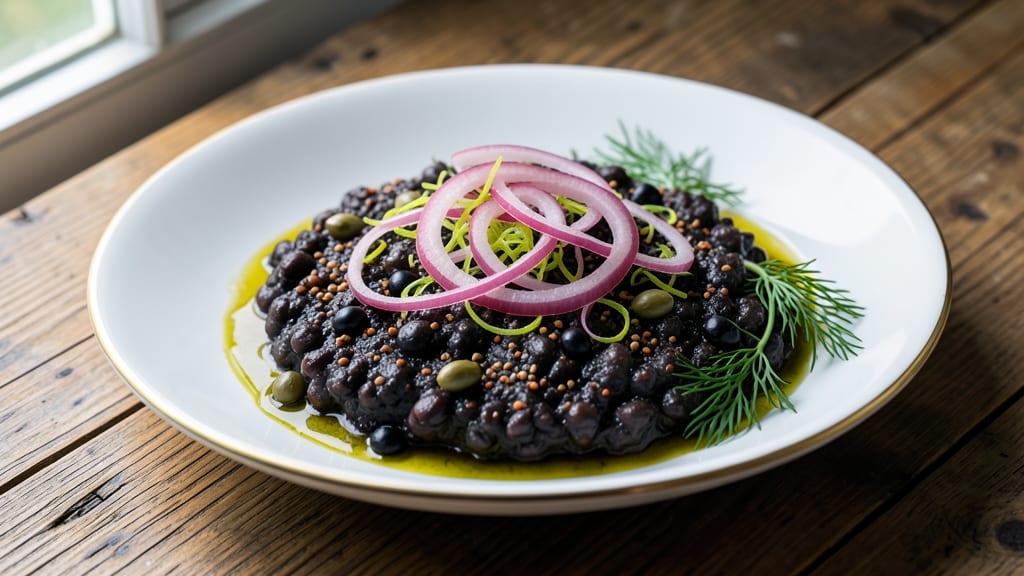
This black bean caviar recipe transforms humble ingredients into a creamy, briny topping that elevates everything from tacos to toast.
The secret lies in blending black beans with tangy lime zest, smoky cumin, and fresh dill until it reaches that perfect spreadable consistency—like caviar but entirely plant-based and packed with umami depth.
The magic happens in the blending process, where you pulse ingredients until smooth yet slightly textured, ensuring each bite delivers that perfect balance of creamy richness and bright acidity.
Olive oil and capers add that signature briny punch, while red onion brings a subtle sweetness that rounds out the flavors beautifully.
What you'll end up with is a versatile condiment that can be dolloped onto tacos, stirred into grain bowls, or spread on crusty bread. It keeps well in the fridge for up to 5 days, making it perfect for meal prep or entertaining.
The texture is luxuriously smooth with just enough body to cling to any dish.
This isn't just a topping—it's a flavor enhancer that transforms simple meals into something special. Ready to make your own? Let's get started with the ingredients.
Ingredients for black bean caviar
Nine ingredients transform into a luxurious, briny topping that rivals caviar in flavor and texture.
| Ingredient | Amount | Notes |
|---|---|---|
| Canned Black Beans 🫘 | 1 ½ cups | Drained and rinsed thoroughly |
| Extra-Virgin Olive Oil 🫒 | ½ cup | High-quality, fruity variety |
| Capers 🍈 | ¼ cup | Rinsed and drained well |
| Red Onion 🧅 | ¼ cup | Finely diced, vibrant color |
| Fresh Lime Zest 🍋 | 1 tbsp | Bright, organic preferred |
| Fresh Dill 🌿 | ¼ cup | Chopped, stems removed |
| Ground Cumin 🌶️ | 1 tsp | Freshly toasted for depth |
| Smoked Paprika 🌶️ | ½ tsp | For that signature smokiness |
| Garlic Cloves 🧄 | 2 cloves | Peeled and roughly chopped |
| Lemon Juice 🍋 | 1 tbsp | Freshly squeezed, no pulp |
| Sea Salt 🧂 | ½ tsp | Diamond Crystal preferred |
The black beans are the foundation—low-sodium canned is ideal, but rinse thoroughly to cut excess salt. Trader Joe's or Whole Foods carry excellent organic options, but any good-quality can works. Fresh dill is non-negotiable here; dried just won’t cut it. If you’re using frozen dill, thaw and squeeze out excess moisture first. For the capers, look for non-pasteurized in the refrigerated section—they’ve got that briny punch that makes this topping sing. The lime zest should be vibrant, not dried out, so buy limes that still have a little give when squeezed.
No fresh dill? Substitute with fresh parsley or cilantro at double the amount, though it’ll lack that signature depth. Running low on capers? Olives chopped fine add a similar briny note, but you’ll need about twice as much. The smoked paprika is what gives this topping its signature smoky character—substitute with regular paprika if needed, but you’ll lose that campfire aroma. For the red onion, yellow or white works best—sweeter varieties can overpower the delicate balance. If you’re short on time, jarred capers in brine are fine, but drain and rinse them well to avoid a watery texture.
This topping keeps beautifully in an airtight container in the fridge for up to 5 days, though it tastes even better the next day as flavors meld. For longer storage, portion into small jars or ice cube trays—freeze for up to 3 months. The texture thickens slightly when chilled, so let it sit at room temperature for 10 minutes before serving if it’s too stiff. Trust me, the first time you dollop this onto warm tortillas or crusty bread, you’ll never go back to store-bought.
Why You'll Love This Recipe
- Pantry Magic: I swear by this recipe when I forget to meal prep. Just drain those canned beans, toss in capers and onion, and let the olive oil work its magic—no fresh herbs or fancy prep needed.
- Bright & Tangy: That lime zest and capers? It’s the perfect balance—salty, briny, and zesty enough to wake up any dish. Drizzle it on toast, fold it into eggs, or pile it on avocado toast—it’s always a hit.
- Game for Any Meal: Breakfast? Top your scrambled eggs. Lunch? Slather it on grilled fish. Dinner? Toss it with roasted potatoes. It’s my secret weapon for turning simple meals into something special without extra effort.
- Budget-Friendly Flex: Canned beans and capers won’t break the bank, and a little goes a long way. Make a big batch—it keeps for days, and I always end up using it in ways I didn’t plan. (Yes, even on a Tuesday night.)
Step-by-step instructions for black bean caviar
Transform humble black beans into this luxurious, briny-sweet topping with just a few simple techniques.
Toast the Spices for Maximum Flavor
Heat a dry skillet over medium heat and add the 1 teaspoon ground cumin and 0.5 teaspoon smoked paprika. Toast for 30-45 seconds until fragrant and slightly darker—you should smell that warm, earthy aroma that signals the spices are active. This quick toasting step unlocks deeper flavor than raw spices ever could.
Remove the skillet from heat immediately to prevent burning. Let the spices cool for 1 minute before transferring them to a small bowl. This brief cooling period ensures they won't scorch when added to the oil later. I've found that toasted spices make the difference between good caviar and extraordinary caviar.
Sauté Aromatics Until Fragrant
In a medium saucepan, heat the 0.5 cup extra-virgin olive oil over medium-low heat. Add the 2 cloves garlic cloves and 0.25 cup finely diced red onion, stirring occasionally for 3-4 minutes until the onion softens and becomes translucent. You'll know it's ready when the garlic releases its sweet, pungent aroma.
Add the toasted spices and stir for another 30 seconds to infuse their flavors into the oil. This aromatic base forms the flavor foundation of your caviar. If you notice the garlic starting to brown too quickly, reduce the heat slightly—you want flavor, not bitterness. The oil should be warm but not smoking.
Cook the Black Beans Until Tender
Add the 1.5 cups drained black beans to the saucepan along with the 1 tablespoon lemon juice and 0.5 teaspoon sea salt. Stir well to combine, then increase heat to medium and bring to a gentle simmer. Cook for 8-10 minutes, stirring occasionally, until the beans are heated through and slightly softened.
Here's the thing—don't overcook them. You want them tender but still holding their shape, not mushy. The beans should be warm throughout and easily pierced with a fork. If you're using canned beans that are already tender, you might only need 5-7 minutes of cooking time. Taste a bean at the end to check for proper seasoning.
Incorporate Briny and Herbal Elements
Reduce heat to low and stir in the 0.25 cup capers and 1 tablespoon fresh lime zest. The capers will release their briny punch while the lime zest adds a bright, citrusy contrast. Let the mixture simmer gently for 2 minutes to allow all the flavors to meld together.
Remove from heat and stir in the 0.25 cup chopped fresh dill. This is where the magic happens—the dill adds a fresh, herbal brightness that cuts through the richness of the olive oil and balances the earthy cumin. The caviar should look vibrant with little pops of green throughout. Let it cool completely before serving—this allows all the flavors to fully develop.
Adjust Consistency and Serve
Transfer the caviar to a bowl and taste it. If it needs more brightness, add 1-2 teaspoons more lemon juice. For extra richness, stir in 1-2 tablespoons more olive oil. The texture should be thick but spoonable—if it's too thick, add 1-2 teaspoons water to loosen it.
This black bean caviar is perfect for dolloping over grilled fish, seared scallops, or even as a vibrant topping for avocado toast. The smoky cumin and bright lime zest create a flavor profile that's both sophisticated and approachable. Serve immediately or store in an airtight container in the refrigerator for up to 3 days—it actually tastes better the next day as the flavors continue to meld.
Pro Tips For Making Black Bean Caviar
- Drain and Rinse Beans: Skip the rinsing if you like salt—this caviar is bold by design. But if you’re using low-sodium beans or want to control the salt level, give them a quick rinse after draining, then drain again. I learned this the hard way when my first batch turned out too salty to use as a garnish (it worked on toast, but barely).
- Sweat the Onion Low: Medium heat is your friend here—high heat burns onions fast, and you want them soft and translucent, not caramelized. If they start sticking, add a splash of water or a pinch of salt to break it up. This isn’t about flavor depth; it’s about texture. Overcooked onions turn mushy, and no one wants mushy caviar.
- Toast the Capers: Toss them in the pan with the onions for 30 seconds—just until they smell like the Mediterranean coast. This wakes up their briny punch and makes them pop against the beans. I was skeptical until I tried it, and now I can’t imagine skipping it.
- Strain the Oil: After cooking, let the mixture cool slightly, then strain through a fine-mesh sieve to remove any onion bits or caper skins. The oil should be silky smooth—this isn’t a chunky relish. Pour it back into the pan if you’re reheating, or store it separately for drizzling. (Yes, even if you’re impatient like me, take the 30 seconds.)
Wine and beer pairings for these flavors
White Wine Pairings
A crisp Sauvignon Blanc from New Zealand or Loire Valley is my go-to choice for this black bean caviar. The wine's zesty citrus notes and herbal undertones mirror the lime zest and fresh dill in the caviar, creating a perfect harmony.
Look for wines with 12-13% alcohol—they're lively enough to complement the briny capers without overwhelming the dish. 🍷
Rosé Wine Options
For a lighter, more refreshing pairing, try a dry Provence rosé with its delicate strawberry and citrus flavors. The wine's subtle sweetness balances the smoky cumin and earthy black beans beautifully.
I recommend chilling it to 45-48°F—this enhances its crispness and makes it the ideal palate cleanser between bites of caviar-topped dishes.
Beer Pairings
A Belgian witbier like Hoegaarden or St. Bernardus Wit offers the perfect beer pairing. The wine's coriander and citrus notes complement the lime zest and capers in the caviar, while the effervescence cleanses your palate.
For a darker option, try a German Helles lager—its malty sweetness contrasts nicely with the smoky paprika and briny capers.
Non-Alcoholic Options
For a refreshing non-alcoholic choice, I recommend a sparkling lime soda like San Pellegrino Limonata. The effervescence and citrus flavors enhance the caviar's bright lime zest and herbal notes.
Alternatively, try a ginger beer—the spicy kick complements the smoky cumin beautifully. Both options keep the meal feeling fresh and vibrant. 💛
Cocktail Pairings
For a more indulgent pairing, consider a gin and tonic with a twist of lime. The botanical notes in the gin complement the fresh dill and capers, while the tonic's citrus enhances the lime zest.
For a smoky twist, try a mezcal margarita—the agave sweetness and smoky mezcal notes mirror the smoked paprika in the caviar, creating a truly memorable flavor combination.
Nutrition facts
Frequently asked questions
Can I make black bean caviar without capers?
Yes! If you're caper-free, substitute with 2 tablespoons chopped cornichons or 1 tablespoon chopped green olives for a similar briny punch. For a different twist, try 1 tablespoon chopped pickles or even 1 teaspoon fish sauce (if not vegan) to add umami depth. The key is balancing that salty, tangy element that makes the caviar shine.
How do I get the perfect creamy texture?
The secret is blending in 3-4 pulses with an immersion blender or food processor until smooth but still slightly textured. For an extra-smooth version, strain through a fine-mesh sieve after cooking. If it's too thick, add 1-2 teaspoons water or olive oil to loosen. Chilling for 30 minutes before serving also helps thicken it naturally.
What's the best way to store leftover caviar?
Transfer to an airtight container and refrigerate for up to 5 days. For longer storage, portion into small jars or ice cube trays and freeze for 3 months. The texture thickens when cold, so let it sit at room temperature for 10 minutes before serving. It actually tastes better after 24 hours as flavors meld!
Can I use this caviar in cooking instead of as a topping?
Stir it into grain bowls or taco fillings for instant umami depth. Use it as a dipping sauce for crudités or spread it on toasted baguette slices. For a creamy pasta sauce, simmer with 1 cup marinara and 0.5 cup heavy cream (or coconut milk for vegan). The smoky cumin and briny notes add amazing complexity to any dish.
Why does my caviar taste bland?
Most likely, your spices weren't toasted enough or the acidity needs balancing. Always toast spices for 30-45 seconds to unlock their flavor. For brightness, add 1-2 teaspoons more lemon juice or 1 teaspoon apple cider vinegar. If it's still flat, boost umami with 1/2 teaspoon soy sauce (or vegan alternative) or 1/4 teaspoon white miso paste.