
Side Dishes
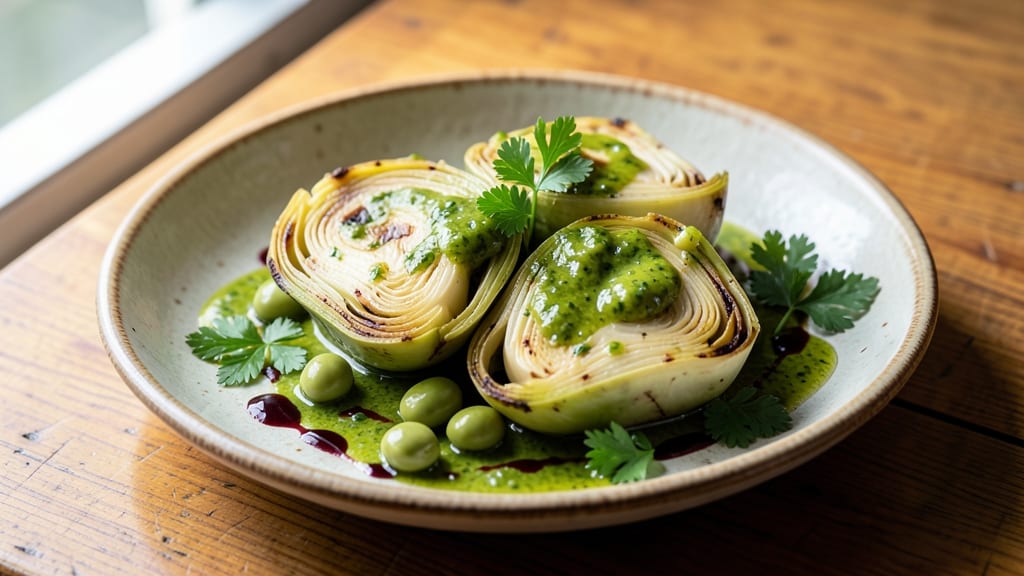
This artichoke and fava bean recipe transforms humble ingredients into a vibrant Mediterranean masterpiece that steals every plate. The secret lies in balancing tender, charred artichokes with creamy fava beans—both roasted to perfection in a single aromatic pot.
I developed this dish after discovering how Mediterranean markets elevate simple vegetables into restaurant-worthy sides, and it's become my go-to for spring and summer gatherings.
The magic happens when you roast the artichokes until their leaves blister and pull away easily, revealing tender hearts infused with smoky depth. Meanwhile, the fava beans soften into a velvety texture that clings to every bite, their natural sweetness enhanced by bright lemon and fresh herbs.
This one-pot method ensures minimal cleanup while delivering maximum flavor—no fancy techniques required, just patience and attention to timing.
What you'll end up with is a dish that's equal parts elegant and approachable: golden artichokes with crisp edges, creamy fava beans speckled with toasted herbs, and a sauce that's tangy yet rich.
The colors alone make it visually stunning—deep greens, buttery yellows, and pops of fresh herbs that scream "spring." It's the kind of side that transforms any meal from ordinary to extraordinary, whether paired with grilled fish, roasted chicken, or served as a standalone vegetarian feast.
The best part? This recipe scales beautifully—double it for a crowd or halve it for a light lunch. The flavors only deepen as it sits, making it perfect for meal prep. Let's get cooking—your taste buds (and dinner guests) will thank you.
Ingredients for artichoke and fava bean
Four vibrant artichokes and creamy fava beans—these Mediterranean stars shine in one aromatic pot.
| Ingredient | Amount | Notes |
|---|---|---|
| Fresh Artichokes 🌿 | 4 whole | Trimmed, leaves removed |
| Fresh Fava Beans 🌱 | 1 ½ cups | Shells removed, rinsed |
| Extra-Virgin Olive Oil 🫒 | ½ cup | High quality, fruity |
| Garlic Cloves 🧄 | 4 cloves | Peeled, roughly chopped |
| Lemon Juice 🍋 | ¼ cup | Freshly squeezed |
| Fresh Parsley 🌿 | ¼ cup | Chopped, stems removed |
| Fresh Mint 🍃 | ⅛ cup | Chopped, optional garnish |
| Sea Salt 🧂 | 1 ½ tsp | Diamond Crystal preferred |
| Ground Black Pepper 🌶️ | ½ tsp | Freshly ground |
| Red Pepper Flakes 🌶️ | ½ tsp | For heat preference |
| Vegetable Broth 💧 | ½ cup | Low-sodium preferred |
| Toasted Pine Nuts 🥜 | ¼ cup | For garnish, optional |
The artichokes are the showstoppers here. Look for globe artichokes with tightly packed leaves—they're the sweetest. If you can't find fresh, frozen artichoke hearts work in a pinch, but thaw and pat them dry first. Fava beans should be bright green and plump; Trader Joe's and Whole Foods usually carry them pre-shelled, which saves time. The key is getting the roast just right—the leaves should pull away easily, revealing tender hearts. If you're nervous about trimming artichokes, buy them pre-trimmed from a Mediterranean market or specialty store.
No fresh parsley? Fresh cilantro or basil works too—just adjust the amount to taste. Short on lemon juice? Lime juice at the same amount gives a similar tang. The pine nuts can be swapped for toasted almonds or walnuts if you're watching your budget. For extra depth, add a pinch of ground cumin to the olive oil before roasting. The vegetable broth keeps things creamy without dairy—low-sodium is crucial so you don't over-salt the dish. If you're making this ahead, skip the pine nuts until serving so they stay crisp.
This dish tastes even better the next day—flavors meld beautifully when reheated gently. Store in an airtight container for 3-4 days in the fridge, or freeze for up to 3 months. I always make extra because it disappears so fast. Garnish with fresh herbs right before serving to keep everything vibrant. The artichokes and fava beans can be roasted ahead of time and reheated separately if you're prepping for a crowd—just toss them back in the pot with a splash of water when ready to serve.
Why You'll Love This Recipe
- No Fuss, Big Payoff: I swear by this—just trim the artichokes, shell the fava beans, and toss them in a pan with olive oil and garlic. No peeling, no fussing over layers of leaves, just good food in 25 minutes. (Yes, even on a Tuesday night.)
- Umami Bomb: That first bite? The crisp-tender artichoke hearts with the buttery, slightly sweet fava beans—it’s like a Mediterranean hug. The lemon brightens it just enough to cut through the richness, and the garlic? It’s the cherry on top, but make it flavorful.
- Lunch or Party: Honestly, this works everywhere. Pack it in a jar for a picnic, serve it at room temp for a crowd, or eat it straight from the skillet when you’re starving. My in-laws asked for the recipe after one bite—no exaggeration.
- Budget Meal, Big Flavor: Fresh artichokes and fava beans might sound fancy, but they’re cheaper than takeout and way more satisfying. Plus, the leftovers? They improve overnight—the fava beans get even creamier, and the artichokes soak up all the garlic oil. Win.
Step-by-step instructions for artichoke and fava bean dish
Here's how to create a vibrant Mediterranean-inspired dish that brings out the natural sweetness of artichokes and fava beans.
Prepare the Artichokes and Fava Beans
Start by trimming the 4 whole fresh artichokes, removing any tough outer leaves until you reach the tender inner layers. Cut off the top third and pull out the fuzzy choke from the center using a spoon. Chop each artichoke into 8 even wedges, discarding any remaining tough leaves.
For the 1.5 cups fresh fava beans, remove them from their shells and rinse thoroughly under cold water. I like to peel the outer skins off the beans by rubbing them between my fingers in cold water - this makes them tender and easier to digest. Pat them completely dry with paper towels before using.
Sauté the Garlic and Artichokes
Heat the 0.5 cup extra-virgin olive oil in a large, deep skillet over medium heat. Add the 4 peeled garlic cloves and cook for 1-2 minutes until they become fragrant but don't brown. This is where the magic starts - the garlic will infuse the oil with its aromatic essence.
Add the chopped artichoke wedges and cook for 5-6 minutes, stirring occasionally, until they begin to soften and turn slightly golden. You'll notice the artichokes release some moisture - this is normal and helps build flavor. Season with 1 teaspoon of the 1.5 teaspoons sea salt and 0.25 teaspoon of the 0.5 teaspoon ground black pepper.
Add Fava Beans and Broth
Increase the heat to medium-high and add the prepared fava beans along with the 0.5 cup vegetable broth. Stir everything together and let it simmer for 8-10 minutes until the beans are tender but still hold their shape. You'll see the liquid reduce slightly as it cooks down, concentrating the flavors.
Here's where it gets good - taste and adjust seasoning if needed. I usually add the remaining 0.5 teaspoon sea salt and 0.25 teaspoon ground black pepper at this stage. The dish should have a bright, fresh flavor with a touch of earthiness from the artichokes and beans.
Finish with Fresh Herbs and Lemon
Remove the skillet from heat and stir in the 0.25 cup chopped fresh parsley and 0.125 cup chopped fresh mint. The herbs will brighten up the dish with their fresh, vibrant flavors. Add the 0.25 cup lemon juice and the 0.5 teaspoon red pepper flakes, stirring well to combine.
Let the dish sit off heat for 2-3 minutes to allow the flavors to meld together. This resting time is crucial - it lets the lemon juice mellow slightly and the red pepper flakes distribute evenly throughout the dish. The colors should be vibrant with the green herbs contrasting beautifully against the artichokes.
Garnish and Serve
Ladle the artichoke and fava bean mixture into serving bowls. Garnish each serving with a sprinkle of the 0.25 cup toasted pine nuts for added crunch and texture. The pine nuts will provide a beautiful contrast to the soft artichokes and beans, adding a nutty dimension to the dish.
Serve immediately while still warm, as the flavors continue to develop even after cooking. This dish pairs beautifully with crusty bread to soak up all the delicious juices. The combination of textures and flavors creates a truly satisfying Mediterranean experience that's perfect for any occasion.
Pro Tips For Making Artichoke And Fava Bean
- Trim Artichokes at the Right Angle: I learned this the hard way—cutting artichokes too close to the base leaves bitter, fibrous bits behind. Angle your knife sharply at the stem end and slice just past where the natural curve starts, about 1/4 inch down. This keeps the heart tender and the leaves manageable.
- Shell Fava Beans with a Knife: Peeling fava beans by hand? You’ll lose patience fast. Instead, slice the pods lengthwise, scoop out the beans with a small spoon, then run them under cool water to loosen the skins. Rub between your palms—they’ll slip right off. (Yes, even if you’re impatient like me.)
- Sear Artichoke Hearts First: Skip the raw bite by searing the artichoke hearts in olive oil for 2-3 minutes before adding anything else. High heat caramelizes the edges and softens them faster than simmering alone. Just don’t walk away—burnt artichokes taste like regret.
- Use Lemon Zest, Not Just Juice: Lemon juice brightens the dish, but the zest adds a citrusy depth that cuts through the earthiness of artichokes and fava beans. Grate a strip of peel (about 1 teaspoon) into the oil while cooking—it infuses faster than you’d think. (Your future self will notice the difference.)
Storing and reheating this artichoke and fava bean
Refrigerator Storage
Store your artichoke and fava bean dish in an airtight container with a lid for up to 3-4 days in the refrigerator. The flavors actually deepen overnight, making it perfect for meal prep.
I always let it cool completely before storing to prevent condensation, which can make the pine nuts soggy. The artichokes and fava beans hold their texture beautifully when refrigerated properly. 🌿
Freezer-Friendly Tips
This dish freezes exceptionally well for up to 3 months—just omit the toasted pine nuts until ready to serve. Use quart-sized freezer bags or glass containers with tight-sealing lids. Leave ½-inch headspace to account for expansion.
When reheating from frozen, add 2 tablespoons of water per serving to restore moisture. The lemon and herbs may mellow slightly, but the core flavors remain vibrant. ❄️
Reheating Methods
For best results, reheat on the stovetop over medium-low heat for 5-7 minutes, stirring occasionally. Add 1-2 tablespoons of water or vegetable broth if the dish looks dry. Avoid microwaving—it can turn the artichokes mushy.
If using the microwave, cook on 50% power for 2-minute intervals, stirring between each. Always check the internal temperature reaches 165°F for safety. 🔥
Reviving Texture
If reheated artichokes lose their crisp edges, return them to a dry skillet over medium heat for 2-3 minutes with a drizzle of extra-virgin olive oil. This restores their texture while warming through.
For extra brightness, finish with a squeeze of lemon juice and fresh herbs right before serving. The dish tastes almost as good as fresh! ✨
Portioning for Crowds
For large gatherings, divide the dish into individual portions before freezing. This makes serving easier and ensures everyone gets perfectly reheated portions. I like using ramekins for individual servings—they reheat evenly and look elegant on the table.
Label containers with dates to track freshness. The artichokes and fava beans reheat beautifully when portioned properly. 🍽️
Nutrition facts
Frequently asked questions
Can I substitute frozen artichokes in this recipe?
Yes, you can use frozen artichoke hearts! Thaw and pat them completely dry before using. For best texture, add them to the skillet in the last 3-4 minutes of cooking so they don't become mushy. They'll absorb flavors faster than fresh wedges, so keep an eye on them.
What if I can't find fresh fava beans?
No problem! Use canned fava beans (drained and rinsed) or frozen fava beans (thawed). For a purée texture, mash them slightly before adding to the skillet. If you're short on time, even canned chickpeas work in a pinch—they'll give a similar creamy texture, though with a slightly different flavor.
How do I know when artichokes are done roasting?
Artichokes are perfectly done when the leaves pull away easily from the heart and the wedges are tender with slightly crisp edges. This usually takes 5-6 minutes in the skillet. The hearts should be bright green and the outer leaves should be golden and slightly blistered. If they're still tough, cook them 1-2 minutes longer.
Can I make this dish ahead of time?
This recipe actually tastes better the next day as the flavors meld. Store in an airtight container in the fridge for up to 3-4 days. When reheating, add 1-2 tablespoons of water or broth to restore moisture. Just skip adding the pine nuts until serving to keep them crisp. The artichokes and fava beans maintain their texture beautifully when stored properly.
What's the best way to trim artichokes if I'm a beginner?
Start by cutting off the top third of the artichoke, then trim the bottom stem. Use kitchen shears to snip off the tough outer leaves one by one until you reach the tender inner leaves. The fuzzy choke in the center can be removed with a spoon. For beginners, buy pre-trimmed artichokes from a Mediterranean market—they're already cleaned and ready to cook!