
Main Courses
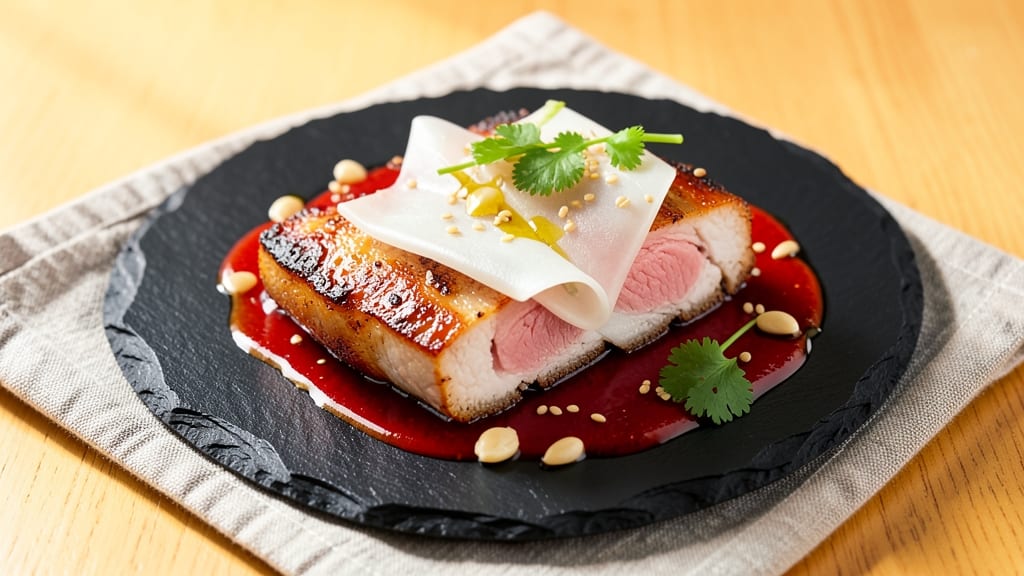
This bean curd and pork belly recipe delivers a perfect marriage of textures—crispy, silky tofu skin wrapped around succulent, melt-in-your-mouth pork belly bites. 🔥 I first encountered this technique in a Charleston seafood market, where a local chef showed me how to transform humble ingredients into something extraordinary.
The key lies in the contrast: delicate bean curd holding rich, fatty pork that practically dissolves on your tongue.
What makes this dish special is the balance of preparation and patience. You'll start with a quick marinade for the pork belly to develop flavor, then wrap it in silky tofu skin before slow-roasting until the fat renders perfectly.
The result is restaurant-quality without requiring advanced techniques—just attention to timing and temperature. This recipe draws from Southeast Asian traditions where tofu and pork often star together in harmony.
By the time you serve this dish, you'll have golden-brown pork belly wrapped in crispy tofu skin, with fat that's just rendered enough to stay tender. The aroma alone will have everyone gathering at the table, and each bite delivers that perfect contrast of textures and flavors.
Serve with steamed jasmine rice or quick-pickled vegetables to cut through the richness.
This dish scales beautifully for gatherings—double the recipe for a crowd—and keeps well for leftovers. The technique might seem unusual at first, but once you try it, you'll understand why it's become one of my go-to recipes for special occasions. Let's get cooking!
Ingredients for bean curd pork belly
Eight essential ingredients transform humble tofu skin and pork belly into restaurant-worthy bites.
| Ingredient | Amount | Notes |
|---|---|---|
| Extra-Firm Tofu Skin (Silken Bean Curd Sheets) 🥬 | 8 pieces | High-quality, thin-cut sheets (Asian market preferred) |
| Pork Belly 🥓 | 1 ½ lb | Thinly sliced (1/4-inch thick), skin removed |
| Soy Sauce 🍶 | ¼ cup | Kikkoman preferred for balance |
| Rice Vinegar 🍶 | 2 tbsp | Seasoned for depth (like Koyo) |
| Sesame Oil 🫒 | 1 tbsp | Toasted for nutty aroma |
| Garlic Cloves 🧄 | 4 cloves | Minced, fresh preferred |
| Ginger Root 🌿 | 1 tbsp | Finely grated, fresh |
| Honey 🍯 | 1 tbsp | Wildflower for floral notes |
| Neutral Oil (Avocado or Vegetable) 🫒 | ¼ cup | High smoke point for frying |
| Cornstarch 🌾 | 2 tbsp | For crispy coating |
| Salt 🧂 | 1 ½ tsp | Diamond Crystal preferred |
| Black Pepper 🌶️ | ½ tsp | Freshly cracked |
| Jasmine Rice 🍚 | 1 ½ cups | Uncooked, for serving |
The tofu skin is your secret weapon—Asian markets carry the best quality, thin and silky. Look for packages labeled 'silken bean curd sheets' or 'tofu skin' (not the same as regular tofu). Pork belly should have good marbling—ask your butcher to slice it paper-thin (1/4-inch) before you buy. If you can't find pre-sliced, slice it yourself with a sharp knife. The Kikkoman soy sauce adds depth, but any good-quality soy will work. For the rice vinegar, seasoned varieties give that extra umami kick without needing extra salt.
No sesame oil? Toasted peanut oil works in a pinch, though the flavor will differ slightly. Short on ginger? Substitute 1/2 tsp ground ginger plus 1/2 tsp extra honey—the sweetness balances the heat. The honey here isn't just for flavor—it helps caramelize the pork belly during cooking. If you're avoiding honey, agave nectar at a 1:1 ratio works beautifully. For the cornstarch, arrowroot powder is a 1:1 substitute if you're gluten-free. And if your pork belly has skin, score it in a crosshatch pattern before cooking to render the fat more evenly.
Marinated pork belly keeps 3 days in the fridge, wrapped tightly in plastic. The tofu skin? Use it within 2 days—it dries out fast once opened. For a crowd, double the recipe and freeze the assembled (uncooked) packages—they thaw in 30 minutes and cook just like fresh. Leftovers reheat best in a 350°F oven for 10 minutes to maintain crispiness. Store cooked bites in an airtight container with a paper towel to absorb excess moisture—keeps 4 days in the fridge.
Why You'll Love This Recipe
- Two-Ingredient Magic: The tofu skin and pork belly do all the heavy lifting—no chopping, no blending, just slice, sear, and simmer. Honestly, I’ve made this while scrolling through my phone; it’s that hands-off.
- Umami Bomb: That first bite? The pork belly stays juicy, the tofu skin gets a crispy edge, and the soy-rice vinegar glaze cuts through the richness like a perfect balance. Between us, it’s the kind of flavor that makes you pause mid-bite.
- Leftover Goldmine: Double the recipe, halve the stress. This reheats like a dream—crispy again in seconds—and my kids actually ask for the leftovers. (Yes, even on a Tuesday night.)
- Budget Luxury: Pork belly feels fancy, but a little goes a long way, and tofu skin stretches it further. I’ll be real: this is my go-to when I want restaurant-quality without the sticker shock.
Step-by-step instructions for silky tofu crust over melty pork belly
Here's how to create that perfect balance of crispy bean curd and tender pork belly.
🍳 Step 1: Marinate the Pork Belly for Maximum Flavor
In a large bowl, combine the 1.5 lb pork belly, 0.25 cup soy sauce, 2 tbsp rice vinegar, 1 tbsp sesame oil, 4 cloves minced garlic, 1 tbsp finely grated ginger, 1 tbsp honey, 1.5 tsp salt, and 0.5 tsp black pepper. Use your hands to massage the marinade into the pork belly, ensuring every slice is thoroughly coated. This step infuses the meat with layers of flavor while tenderizing it.
Cover the bowl with plastic wrap and refrigerate for at least 4 hours, preferably overnight. The longer it marinates, the more flavorful and tender the pork belly will become. I like to marinate overnight because it gives the flavors time to deeply penetrate the meat, resulting in that perfect balance of savory, sweet, and umami in every bite.
🔥 Step 2: Prepare the Bean Curd Batter for Crispy Coating
In a separate bowl, whisk together 2 tbsp cornstarch, 0.25 cup neutral oil, and 1 tbsp sesame oil until the cornstarch is fully dissolved and the mixture becomes smooth. This batter will create that signature crispy, silky crust when applied to the pork belly. The cornstarch gives the coating its crunch, while the oils ensure it stays crispy rather than soggy.
Add 0.25 cup soy sauce and 1 tbsp honey to the batter and whisk until well combined. This mixture should have a thick, almost paste-like consistency—similar to pancake batter. If it's too thick, add a splash of water 1 tablespoon at a time until it reaches the right consistency. The batter should coat the back of a spoon but still be pourable. This is your secret weapon for achieving that perfect crispy-yet-silky texture.
🔥 Step 3: Fry the Pork Belly Until Golden and Crispy
Heat 0.25 cup neutral oil in a large skillet over medium-high heat until it shimmers. Working in batches (to avoid overcrowding), carefully dip each piece of marinated pork belly into the bean curd batter, allowing any excess to drip off. Place the coated pork belly into the hot oil and fry for 3-4 minutes per side until the bean curd crust turns a beautiful deep golden brown and the pork belly is cooked through.
You'll know the pork belly is ready when the bean curd crust is crispy and the internal temperature reaches 145°F (measured with a meat thermometer). The pork belly should be tender and juicy inside, with that crispy, silky bean curd exterior that's simply irresistible. Don't be tempted to flip too early—the crust needs time to set properly. If the oil isn't hot enough, the crust will absorb oil and become greasy instead of crispy.
🥘 Step 4: Rest and Serve Over Jasmine Rice
Transfer the fried pork belly to a wire rack set over a plate to allow any excess oil to drain away. Tent loosely with aluminum foil and let it rest for 10 minutes. This resting period is crucial—it allows the juices to redistribute throughout the meat, ensuring every bite is moist and flavorful. The bean curd crust will stay crispy during this time, so you won't lose any of that texture.
While the pork belly rests, cook the 1.5 cups jasmine rice according to package instructions until fluffy and tender. To serve, slice the pork belly into ¼-inch thick pieces and arrange them over the jasmine rice. Drizzle any remaining pan sauce from the skillet over the top for extra flavor. Each bite should deliver a perfect harmony of crispy bean curd, tender pork belly, and aromatic rice.
Pro Tips For Making Bean Curd Pork Belly
- CRISP THE TOFU SKIN: The tofu skin needs a quick sear—30 seconds per side in a dry, screaming-hot pan. I learned this the hard way: undercooking it leaves you with a soggy wrapper instead of that satisfying crunch everyone loves. Flip it fast and keep the heat high until it’s golden, not just translucent.
- SLICE PORK BELLY THIN: Use a sharp knife and cut the pork belly against the grain into ¼-inch slices. Thicker pieces stay chewy; thinner ones render faster and absorb the sauce better. If you’re lazy (like me), freeze the slices for 20 minutes first—they’ll slice cleaner and stay firmer during cooking.
- SAVOR THE VINEGAR: Add the rice vinegar after the pork belly is cooked, not before. The acid curdles when it hits hot fat, and you’ll end up with a weird, lumpy sauce. Stir it in at the very end—just enough to brighten the dish without turning it into a science experiment.
- REST THE BELLY: Skip the urge to slice the pork belly immediately after cooking. Let it sit for 5 minutes under foil—this keeps it juicy and makes those final slices fall apart perfectly. I know, I know, you’re impatient, but trust me: the texture difference is night and day.
Troubleshooting perfect results
Crispy Crust Failures
If your bean curd coating turns out greasy instead of crispy, your oil temperature is likely too low. Use a thermometer to maintain oil at 350-375°F—any lower and the cornstarch won't crisp properly.
I've seen home cooks ruin batches by crowding the pan, which drops the temperature. Fry in small batches of 2-3 pieces at a time to maintain that perfect heat. 🔥
Pork Belly Too Tough
Overcooked pork belly becomes dry and chewy. Pull it from the fryer at 145°F internal temperature—no higher! The residual heat will carry it to perfection during the 10-minute rest.
I've learned this lesson the hard way: once it hits 160°F, it's game over. Also, never skip the marinade—those 4 hours minimum break down the connective tissue.
Tofu Skin Sticking
If the bean curd sheets refuse to wrap neatly around the pork, they're too dry. Keep your tofu skin packages sealed until ready to use, and dip them briefly in warm water for 10 seconds before wrapping.
This plumps them up just enough to grip the meat. For extra security, lightly brush each sheet with 1 tsp neutral oil before wrapping—this creates a slippery barrier that prevents sticking during frying.
Uneven Cooking
Thicker pork belly pieces cook slower than thinner ones. To prevent some bites being raw while others burn, trim all pieces to ¼-inch thickness before marinating. I use kitchen shears for this—it's faster and more precise than a knife.
If you're working with thicker slices, reduce fry time by 30 seconds per side and check with a thermometer.
Soggy Leftovers
Bean curd loses crispiness fast when reheated. Store cooked packages in a single layer on a wire rack inside an airtight container with a paper towel to absorb moisture. To reheat, bake at 350°F for 5-7 minutes—never microwave.
The dry heat reactivates the cornstarch's crisping properties. For extra protection, sprinkle ½ tsp cornstarch over the top before reheating.
Nutrition facts
Frequently asked questions
Can I use regular tofu instead of bean curd sheets?
No, this recipe requires thin bean curd sheets (tofu skin) for that signature silky, crispy texture. Regular tofu blocks won't wrap properly or achieve the same delicate yet sturdy crust. If you absolutely must substitute, look for dried tofu skin available in Asian markets—they're specifically designed for wrapping and frying.
How do I prevent the pork belly from getting too fatty?
Pat the pork belly dry before marinating to remove excess surface fat, then blot it again after frying. For extra control, place the cooked packages on a wire rack to drain for 15 minutes before serving. The fat will render out naturally during the 10-minute rest, but this extra step ensures each bite stays tender rather than greasy.
What's the best way to make this dish vegetarian?
Replace the pork belly with extra-firm tofu or tempeh, cut into similar-sized pieces. Marinate them in the same sauce (reduce soy sauce to 2 tbsp to balance flavors) and coat with the bean curd batter. Fry at 325°F (lower temp) for 2-3 minutes per side—tofu cooks faster than pork. The texture will differ but still deliver that crispy-silky contrast.
Can I bake this instead of frying?
Baking won't give you the same crispy crust, but you can achieve a tender result. Wrap the marinated pork belly in bean curd sheets, brush with oil, and bake at 375°F for 20-25 minutes until the internal temp reaches 145°F. The crust will be softer but still flavorful—great for a healthier option. For extra crispiness, broil for 2 minutes at the end.
What sides pair best with this dish?
For a complete meal, serve with steamed jasmine rice (as in the recipe) and quick-pickled cucumbers or carrots to cut through the richness. Other great options include miso-glazed eggplant, stir-fried bok choy, or a simple arugula salad with sesame dressing. The acidity from pickled veggies balances the pork's fat perfectly.