
Side Dishes
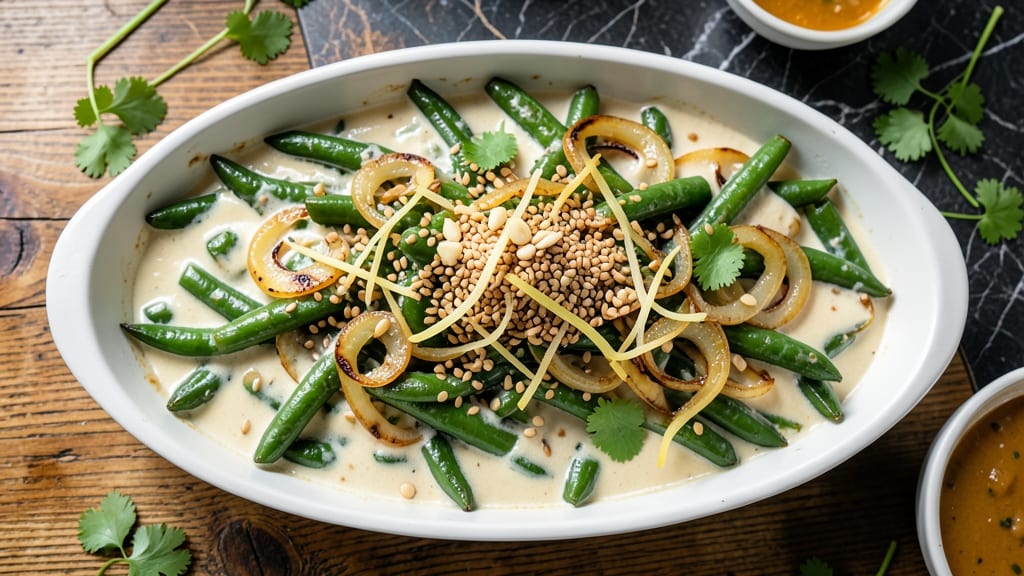
This Asian green bean casserole recipe transforms a classic side into a crispy, savory masterpiece with an irresistible soy-ginger sauce and golden fried onions. The secret lies in stir-frying the green beans until tender-crisp, then layering them with a rich, umami-packed sauce that balances sweet, salty, and aromatic notes.
I developed this recipe after craving something that felt both familiar and exciting—like a fusion of comfort and innovation on one plate.
The foundation of this dish is a foolproof technique: sautéing the green beans until vibrant and slightly blistered, then combining them with a sauce that marries soy sauce, ginger, garlic, and a touch of coconut milk for depth.
The sauce gets thickened just enough to coat every bean while maintaining a silky texture. Topping it with crispy fried onions adds a satisfying crunch that contrasts beautifully with the tender vegetables underneath.
What makes this recipe stand out is its versatility—serve it as a side dish alongside grilled meats or rice, or even as a light main course with a sprinkle of sesame seeds and extra fried shallots.
The flavors are bold yet balanced, making it perfect for weeknight dinners or special occasions. The best part? It comes together in under 45 minutes, with minimal hands-on time, so you can enjoy the process without spending all day in the kitchen.
Once baked, the casserole releases an aroma that fills your home with warmth and anticipation. The top layer of fried onions turns a deep golden brown, while the sauce bubbles around the edges, creating a caramelized finish.
This dish is the kind that disappears quickly, leaving everyone asking for seconds. Ready to elevate your green bean game? Let’s get started.
Ingredients for asian green bean casserole
Fresh green beans, crispy fried onions, and a savory soy-ginger sauce make this dish shine.
| Ingredient | Amount | Notes |
|---|---|---|
| Green Beans 🧅 | 1 ½ lb | Trimmed, ends cut off |
| Yellow Onions 🧅 | 1 whole | Thinly sliced for frying |
| Garlic Cloves 🧄 | 4 cloves | Minced for sauce |
| Fresh Ginger 🌿 | 1 tbsp | Finely grated, fresh preferred |
| Soy Sauce 🥢 | ½ cup | High-quality, low-sodium preferred |
| Coconut Milk 🥥 | ¼ cup | Full-fat for creaminess |
| Honey 🍯 | 1 tbsp | Light or dark variety |
| Vegetable Oil 🫒 | ½ cup | High smoke point for frying |
| Sesame Oil 🫒 | 1 tsp | Toasted for aroma |
| Sesame Seeds 🌰 | 1 tbsp | Toasted lightly for garnish |
| Cornstarch 🌾 | 1 tbsp | For sauce thickening |
| Salt 🧂 | ½ tsp | Kosher or sea salt |
| Black Pepper 🌶️ | ¼ tsp | Freshly ground preferred |
| Shallots 🧅 | 2 whole | Thinly sliced for garnish |
The green beans are the star here—fresh or frozen work, but fresh has better texture. Look for bright green, crisp beans at the store (Whole Foods or Trader Joe's usually have great quality). If using frozen, don't thaw them first—just pat dry after cooking. The onions? Yellow or white both work, but yellow adds a touch of sweetness. For the sauce, high-quality soy sauce makes all the difference—Kikkoman or Tamari are my go-tos. The coconut milk adds richness, but if you're avoiding dairy, this is your perfect substitute.
No fresh ginger? Powdered ginger works at half the amount, but fresh is ideal. Short on sesame oil? Toasted peanut oil gives a similar nutty vibe. The cornstarch is key for thickening—don't skip it, or the sauce will be too thin. For extra crunch, fry the onions in small batches so they get golden, not burnt. The shallots? Skip them if you're in a hurry, but they add a lovely oniony punch. And if you're feeling fancy, add a pinch of white pepper to the sauce for a subtle kick.
This casserole tastes even better the next day, so make extra if you can. Store leftovers in an airtight container for up to 4 days in the fridge. For freezing, let it cool completely, then portion into containers. It reheats beautifully—just cover with foil and bake at 350°F for 20 minutes. The fried onions lose some crispiness when reheated, so I always make a fresh batch to sprinkle on top before serving. Garnish with extra sesame seeds and a drizzle of toasted sesame oil for that restaurant-quality finish.
Why You'll Love This Recipe
- One-Pan Magic: I swear by this recipe when I’m too tired to wash dishes. Toss everything—green beans, onions, garlic, ginger—into one pan with a splash of soy sauce, and let the stove do the work. No chopping boards left in the sink, no fuss.
- Umami Bomb: That first bite? The crisp-tender green beans with the deep, savory punch from soy sauce and fresh ginger? It’s the kind of flavor that makes you pause mid-bite. Honestly, the garlic and onions caramelize just enough to give it this irresistible richness.
- Lunchbox Hero: Between us, this is my go-to for meal prep. The flavors only get better the next day, and it reheats like a dream—no soggy green beans here. Pack it for work or school, and you’ve got a satisfying, protein-friendly side that actually tastes homemade.
- Budget Win: Green beans and onions are cheap, but this recipe feels special. A little fresh ginger and garlic elevate it without breaking the bank. I’ve made this for potlucks, family dinners, and even as a side for takeout—always a hit, always affordable.
Step-by-step instructions for Asian green bean casserole
Here's how to make crispy fried onions and a rich soy-ginger sauce that'll bring this dish to life.
🍳 Step 1: Blanch the Green Beans
Fill a large pot with water and bring to a rolling boil. Add the 1.5 lb green beans (trimmed and cut into 2-inch pieces) and cook for 3-4 minutes until bright green and just tender—you want them to hold their shape but be slightly softened. Drain immediately and transfer to an ice bath to stop the cooking process. This keeps them vibrant and prevents them from turning mushy later.
Once cooled, drain the green beans again and pat them completely dry with a kitchen towel. I can't stress this enough—any moisture will prevent them from getting crispy in the sauce. Spread them on a baking sheet and set aside while you prep the other components. The beans should be at room temperature when you add them to the sauce.
🔥 Step 2: Fry the Onions and Shallots
Heat 0.5 cup vegetable oil in a large skillet over medium-high heat until shimmering but not smoking. Add the thinly sliced yellow onions and 2 whole shallots (sliced into thin rings) in a single layer. Cook undisturbed for 2-3 minutes until the edges start to turn golden brown.
Here's the thing—don't stir them until they're golden. Stirring too early will make them steam instead of crisp up. Once they're golden on one side, carefully flip them and cook another 2 minutes until evenly browned. Transfer to a paper towel-lined plate to drain excess oil. These crispy onions are the star of the dish, so don't rush this step. They should be golden and slightly crispy when you're done.
🍳 Step 3: Make the Soy-Ginger Sauce
In the same skillet (no need to clean it—the browned bits add flavor), reduce heat to medium and add 4 cloves minced garlic and 1 tbsp finely grated fresh ginger. Cook for 30 seconds until fragrant but not browned—ginger burns quickly, so watch it closely.
Pour in 0.5 cup soy sauce and 1 tbsp honey, scraping up any browned bits from the bottom of the pan. Let it simmer for 2 minutes until slightly reduced. In a small bowl, whisk together 1 tbsp cornstarch with 2 tablespoons water to make a slurry. Slowly stir this into the sauce while simmering until it thickens to a glossy consistency—it should coat the back of a spoon.
🥘 Step 4: Combine and Finish
Return the green beans to the skillet and toss to coat them evenly in the sauce. Add 0.25 cup coconut milk and 1 tsp sesame oil, stirring gently to combine. Cook for another 2-3 minutes until the beans are heated through and the sauce has thickened slightly. Season with 0.5 tsp salt and 0.25 tsp black pepper, tasting as you go.
Real talk: If the sauce seems too thick, add a splash of water or a little more coconut milk to reach your desired consistency. The beans should be coated but not swimming in sauce. Remove from heat and stir in the crispy fried onions and shallots you made earlier. Let everything sit together for 1-2 minutes so the onions soak up some of that delicious sauce.
🍽️ Step 5: Garnish and Serve
Transfer the green bean casserole to a serving dish and sprinkle with 1 tbsp toasted sesame seeds. I like to toast them quickly in a dry skillet over medium heat for 30 seconds until fragrant before sprinkling—this adds an extra layer of flavor. Serve immediately while the onions are still crispy and the sauce is warm.
The crispy fried onions should contrast beautifully with the tender green beans and rich sauce. Each bite delivers that perfect mix of textures and flavors—savory, slightly sweet, and umami-packed. Leftovers? Store in an airtight container in the fridge for up to 3 days, but honestly, it's best enjoyed fresh while everything is at its peak.
Pro Tips For Making Asian Green Bean Casserole
- Blanch Beans First: Hit the green beans with a quick 2-minute boil in salted water before stir-frying—this softens them just enough to avoid mush while keeping them crisp enough to bite into. I learned this the hard way after serving rubbery beans that needed a second round of chewing. Drain well and pat dry afterward, or your wok will steam instead of sear.
- Slice Ginger Thin: Use a microplane or knife to shave ginger into paper-thin strips, not chunks or grated pulp. Thin slices infuse flavor without turning the dish into a ginger mudslide. My grandmother swore by this, and she was right: the aroma hits differently when it dissolves into the oil rather than sinking to the bottom.
- Start High, End Low: Crank the heat to medium-high for the first 2 minutes to blister the onions and garlic, then drop to medium-low to let the soy sauce caramelize. Rushing the low-and-slow part leaves you with raw-tasting soy, while burning the garlic turns it bitter. Yes, even if you're impatient like me.
- Toast Soy Sauce: Add a splash of soy sauce to the hot wok before the onions go in, let it sizzle for 10 seconds until it darkens slightly. This deepens the umami flavor more than just tossing it in at the end. I was skeptical until I tried it—now I do it without thinking, like seasoning salt.
Storing and reheating this asian green bean casserole
Refrigerator Storage
Let your Asian green bean casserole cool completely before transferring to an airtight container—I love using glass Pyrex for easy reheating. Store it in the fridge for up to 4 days, but the flavors actually deepen overnight as the soy-ginger sauce melds with the beans.
The crispy fried onions stay crunchy for about 2 days, so I always make a fresh batch to sprinkle on top before serving. 🥗
Freezer Prep
For long-term storage, portion the casserole into freezer-safe containers or ziplock bags, leaving ½-inch headspace for expansion. Label with the date—it keeps well for 3 months.
When ready to eat, thaw overnight in the fridge, then reheat as directed. The texture remains excellent, though the onions will lose some crispness. 🧊
Reheating Methods
Oven method (best for texture): Cover the casserole with foil and bake at 350°F for 20-25 minutes until heated through. Remove foil for the last 5 minutes to crisp any softened onions. Microwave method: Cover loosely and heat on 50% power for 3-4 minutes, stirring halfway. Add 1 tbsp water if it looks dry. 🔥
Reviving Crispiness
If the fried onions lose their crunch, make a fresh batch and sprinkle on top before serving. Heat ½ cup vegetable oil in a skillet over medium-high heat, fry thin onion slices for 2-3 minutes until golden, then drain on paper towels.
The contrast of crispy onions with tender beans is what makes this dish shine! ✨
Garnish Refresh
Before serving reheated casserole, toast 1 tbsp sesame seeds in a dry skillet for 30 seconds until fragrant, then sprinkle over the top. A drizzle of toasted sesame oil (just ½ tsp) adds an extra layer of aroma. This simple step transforms reheated leftovers into restaurant-quality bites. 🌟
Nutrition facts
Frequently asked questions
Can I use frozen green beans instead of fresh?
Yes, but with one key difference: don't thaw them first. Simply pat frozen green beans dry with a paper towel after cooking to remove excess moisture. They'll work perfectly in this recipe, though fresh beans have slightly better texture and flavor. The blanching process handles both types equally well.
What makes this different from a traditional green bean casserole?
This version skips the creamy mushroom sauce in favor of a bold soy-ginger-coconut milk base with crispy fried onions. The Asian-inspired flavors bring umami depth, while the sauce remains lighter than traditional versions. Plus, we're using whole green beans instead of cut ones for better texture.
How can I make this vegan?
Swap the coconut milk for coconut cream, use tamari instead of soy sauce, and ensure your sesame oil is certified vegan. The cornstarch slurry works fine as-is. All other ingredients are naturally vegan, so this adaptation is simple with just those three swaps.
Can I bake this casserole instead of serving it as a side?
Transfer the finished mixture to a 9x9-inch baking dish and bake at 375°F for 15-20 minutes until bubbly and golden. This works especially well if you add a sprinkle of crushed peanuts on top before baking for extra crunch. Serve with steamed jasmine rice for a complete meal.
Why does my sauce turn out too thin?
This usually happens if you didn't cook the cornstarch slurry long enough.