
Soups & Stews
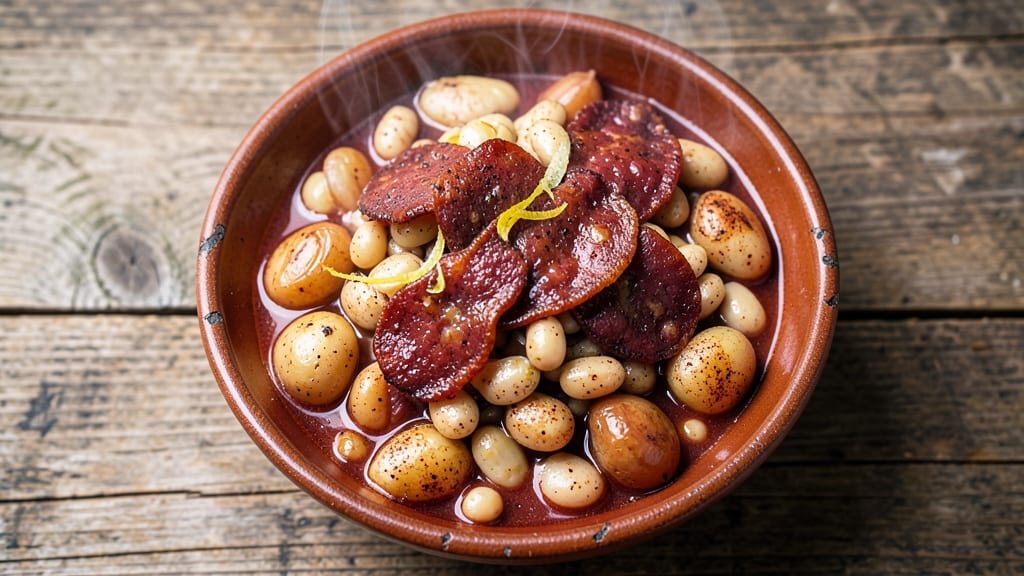
This Asturian bean stew recipe brings the hearty, smoky flavors of Spain's most beloved winter dish to your kitchen. 🌟 Known as fabada, it's a slow-cooked masterpiece where white beans simmer with chorizo, morcilla, and tender potatoes until the meat practically melts in your mouth.
The secret lies in patient cooking—allowing the beans to soak overnight and the stew to develop deep, caramelized richness over hours.
The traditional version relies on simple ingredients you might already have: dried white beans, cured meats, and a touch of smoked paprika for that signature depth.
What sets this dish apart is its balance of textures—crispy chorizo, creamy beans, and fluffy potatoes—all bound together by a broth that grows more flavorful with each passing hour. It's a dish built for sharing, perfect for cold evenings when you crave something warm and comforting.
What makes this recipe special is its adaptability—whether you follow the classic method or add modern shortcuts like pre-soaked beans or pressure cooking. The result is always the same: a hearty, satisfying stew that tastes like home.
The aroma alone will have everyone gathering around the table, while the first bite delivers that perfect harmony of smoky, savory, and slightly sweet flavors that define Asturian cuisine.
Serve it with crusty bread to soak up every last drop of that rich broth, or pair it with a simple green salad to balance the meal.
This is more than just a recipe; it's a taste of tradition that brings warmth and flavor to your kitchen. Let's get started on this comforting classic.
Ingredients for asturian bean stew
Simple pantry staples transform into Spain's most comforting winter dish.
| Ingredient | Amount | Notes |
|---|---|---|
| Dried White Beans 🌱 | 2 cups | Soaked overnight, drained |
| Chorizo 🥓 | 1 lb | Spanish-style, sliced into rounds |
| Morcilla 🌭 | ½ lb | Spanish blood sausage, sliced |
| Russet Potatoes 🥔 | 2 lbs | Peeled, cut into 1-inch chunks |
| Smoked Paprika 🌶️ | 2 tbsp | Sweet or hot variety preferred |
| Garlic Cloves 🧄 | 4 cloves | Peeled, smashed |
| Bay Leaves 🌿 | 2 whole | Fresh if possible |
| Olive Oil 🫒 | ¼ cup | Extra-virgin for richness |
| Red Wine 🍷 | 1 cup | Dry Spanish variety |
| Chicken Broth 💧 | 4 cups | Homemade or quality low-sodium |
| Salt 🧂 | 1 ½ tsp | Kosher or sea salt |
| Black Pepper 🌶️ | ½ tsp | Freshly ground |
| Fresh Parsley 🌿 | ¼ cup | Chopped, for garnish |
The beans are the heart of this stew, so don't cut corners. Great Northern or cannellini beans work best—they hold their shape while soaking up all those smoky flavors. For the cured meats, Spanish chorizo and morcilla are non-negotiable for authentic taste, but if you can't find them, Italian chorizo and blood sausage will do in a pinch. Look for chorizo with visible fat marbling—it's what gives that rich, crispy texture. The potatoes? Russet or Yukon Gold break down perfectly. I always grab the biggest bag I can find at Whole Foods or Trader Joe's—they've got the best selection of Spanish imports.
No smoked paprika? Regular paprika plus a pinch of liquid smoke gets you close, but honestly, it's worth tracking down the real stuff. Penzeys or La Tienda online carry great Spanish brands. Running low on red wine? Dry sherry or even apple juice works in a bind, though the flavor won't be quite the same. The broth is where the magic happens—homemade is best, but even the good low-sodium store-bought stuff will work. Fresh bay leaves? If you've got them, use them. Dried works too at half the amount. The garlic can be pre-minced if you're in a hurry, but smashing whole cloves releases more flavor when it cooks.
This stew tastes even better the next day, so make a double batch if you can. The beans keep well for 3-4 days in the fridge, and the broth freezes beautifully for up to 3 months. I always portion it into containers with a layer of broth on top to keep everything moist. The cured meats? Store them separately in the fridge—they'll last 2 weeks unopened, but once sliced, use them within 5 days. Leftovers reheat perfectly—just add a splash of water or broth to loosen everything up.
Why You'll Love This Recipe
- One-Pot Magic: I swear by this recipe when I’m too tired to scrub pots—just toss everything in one deep skillet, let it simmer, and walk away. The beans soften while the chorizo and morcilla render their rich, smoky flavors right into the stew, no extra steps needed.
- Smoky Depth Bomb: That first bite? Pure satisfaction. The smoked paprika and cured meats infuse the broth with a warmth that lingers, while the potatoes soak up all the savory goodness. It’s the kind of dish that makes you close your eyes and sigh—no fancy plating required.
- Weeknight Workhorse: Between us, this is my go-to for busy nights, potlucks, or when friends drop by unannounced. It reheats beautifully, serves a crowd without fuss, and even my picky-eating cousin asks for seconds. Honestly, it’s the kind of meal that turns "what’s for dinner?" into "let’s eat."
- Pantry Goldmine: I make a double batch on Sundays because it’s cheap, filling, and lasts all week. The beans and potatoes stretch the chorizo and morcilla into a hearty meal, and the leftovers only get better the next day. Budget-friendly? Yes. Reliable? Absolutely.
Step-by-step instructions for Asturian bean stew
Here's how to make this hearty, smoky stew that's all about rich flavors and tender textures.
🍳 Step 1: Sauté the Chorizo and Morcilla
Heat the 0.25 cup olive oil in a large Dutch oven over medium heat. Add the 1 lb chorizo and 0.5 lb morcilla, breaking them into bite-sized pieces as they cook. Let them sizzle for 5-6 minutes until the chorizo releases its fat and becomes lightly crispy around the edges.
This is where all the magic starts—the chorizo and morcilla will infuse the stew with their deep, smoky flavors. Stir occasionally so they cook evenly, and don't be tempted to rush this step. The fat from the sausages will help build the rich base of your stew.
👨🍳 Step 2: Add Aromatics and Paprika
Push the chorizo and morcilla to the side of the pot and add the 4 smashed garlic cloves and 2 tbsp smoked paprika. Cook for 1-2 minutes until the garlic becomes fragrant and the paprika releases its earthy aroma—you'll smell that deep, smoky scent filling your kitchen.
This is the moment that matters: the paprika should be fully incorporated and the garlic shouldn't burn. If it starts to darken too quickly, reduce the heat slightly. The paprika will give your stew that signature smoky depth that makes it taste authentically Asturian.
🍳 Step 3: Deglaze with Wine and Add Potatoes
Pour in the 1 cup red wine and scrape up all those delicious browned bits from the bottom of the pot with a wooden spoon. Let the wine simmer for 2-3 minutes until it reduces by half. Then add the 2 lbs peeled and chunked russet potatoes and stir to coat them in the wine mixture.
Here's the thing—those browned bits are pure flavor. Don't skip the deglazing step, or you'll miss out on the rich, complex taste that builds the foundation of your stew. The potatoes will start to soften slightly as they absorb the wine and sausage juices.
🥘 Step 4: Build the Stew with Beans and Broth
Add the 2 cups drained white beans, 4 cups chicken broth, 2 whole bay leaves, 1.5 tsp salt, and 0.5 tsp black pepper. Stir everything together, then bring the mixture to a gentle boil. Once boiling, reduce the heat to low and let it simmer uncovered for 45-50 minutes.
You'll know it's ready when the potatoes are fork-tender and the beans are creamy but still hold their shape. The stew should be thick and flavorful, with the liquids reduced enough to coat the back of a spoon. This simmering time is crucial—it lets all the flavors meld together perfectly.
🔪 Step 5: Finish and Serve
Remove the bay leaves and adjust the seasoning if needed. The stew should be rich and flavorful, with the chorizo and morcilla adding depth to every bite. Ladle the hot stew into bowls and garnish each serving with 0.25 cup chopped fresh parsley for a pop of color and freshness.
Serve this stew hot with crusty bread to soak up every last bit of that smoky, sausage-infused goodness. The combination of tender beans, hearty potatoes, and flavorful sausages makes this a comforting dish that's perfect for chilly days—or any day, really.
Pro Tips For Making Asturian Bean Stew
- SOAK BEANS 12 HOURS: I learned this the hard way—rushing the soak with dried white beans leaves them tough and mealy. Skip the overnight shortcut unless you’re using canned beans, then drain and rinse them well first. Twelve hours in cold water (with a pinch of baking soda) guarantees they’ll break down silky, not chewy.
- CUT POTATOES UNIFORM: Asturian stew relies on potatoes that cook evenly—no one wants a mushy mess. Dice them into 1-inch cubes, not random chunks. Smaller pieces soften faster, but don’t go too fine or they’ll turn to paste. (Yes, even if you’re impatient like me.)
- CRISP THE CHORIZO: The chorizo should sizzle, not just sit there. Cook it in a dry pan over medium-high heat for 3–4 minutes until the edges darken and it releases its fat. This builds flavor and prevents it from turning rubbery later. (Your future self will thank you.)
- ADD MORCILLA LAST: Morcilla falls apart when overcooked, so toss it in only during the final 10 minutes of simmering. If you’re using the blood sausage variety, slice it thinly first—it’ll melt into the stew without turning to mush. (I skip this when I’m lazy, but the dish is noticeably better when I don’t.)
Pro cooking tips for this dish
Slow Cooking Secrets
This stew thrives on patience—low and slow is the golden rule. I always use a Dutch oven (like the Le Creuset 5.5-quart) because it distributes heat evenly and retains moisture.
Start with a gentle simmer at 325°F for the first 2 hours to let the beans begin breaking down before increasing to 350°F for the final 1-2 hours. This gradual approach prevents the potatoes from turning mushy while ensuring the beans absorb all those smoky flavors. 🌡️
Pro tip: If you're short on time, use a pressure cooker (like the Instant Pot) on high pressure for 30 minutes, then natural release. The beans will still soak up flavors, though the texture will be slightly firmer.
For the most authentic result, though, nothing beats the 6-8 hour oven method at 325°F—it's worth the wait!
Potato Perfection
The potatoes are the stew's backbone, so cut them evenly—about 1-inch chunks—so they cook uniformly. I always parboil them for 5 minutes before adding them to the stew to jumpstart the cooking process.
This ensures they're tender by the end without falling apart. For extra flavor, toss them in a little smoked paprika before adding to the pot. 🥔
If your potatoes turn out gummy, it's usually a sign of overcooking. The stew should be thick but not watery—adjust the broth by ½ cup increments if needed.
For a restaurant-quality finish, mash a few potatoes lightly with a fork before serving to create a creamy contrast to the crispy chorizo.
Meat Mastery
Chorizo and morcilla are the stars, so don't overcook them—they should be just crispy around the edges when you first add them to the pot. I like to slice them into ½-inch rounds for even cooking.
For extra depth, brown them in batches if your pot is too crowded, then set aside until ready to add back. This two-stage approach prevents steaming and ensures maximum flavor extraction. 🥓
If you can't find authentic Spanish chorizo, Italian chorizo works in a pinch, but it lacks the smoky, garlicky depth of the Spanish variety. For morcilla, look for blood sausage with rice or corn—it adds a subtle sweetness that balances the stew's richness.
Always pat them dry before cooking to promote crispiness.
Broth Balance
The broth is where the magic happens, so don't skimp on quality. I use homemade chicken broth (simmered with carrots, celery, and onion for 4 hours) for the deepest flavor, but low-sodium store-bought (like Pacific Foods) works in a pinch.
For extra umami, add 1 tsp soy sauce or ½ tsp fish sauce to the broth—it enhances the savory notes without overpowering. 💧
If your stew tastes bland after simmering, it might need more acidity. A splash of red wine vinegar (just 1 tsp) or a squeeze of lemon juice brightens the flavors.
Conversely, if it's too acidic, balance it with a pinch of sugar or honey. Taste as you go—this is your stew, so adjust to your preference!
Paprika Power
Smoked paprika is non-negotiable for that authentic Asturian flavor, but not all brands are equal. I swear by Pimentón de la Vera (like La Vera or El Yelmo), which has a deep, smoky, slightly sweet profile. Regular paprika won't cut it—it lacks the complexity that makes this stew special. If you can't find it, mix 1 tbsp regular paprika + ½ tsp liquid smoke, but it won't be the same. 🌶️
For a spicier kick, add ½ tsp cayenne pepper when you stir in the paprika. If you prefer milder heat, reduce the smoked paprika to 1 tbsp and add ½ tsp sweet paprika to balance.
The key is to toast the paprika lightly in the pot for 30 seconds before adding the wine—this deepens its flavor and removes any bitterness.
Final Touches
Garnishing isn't just for looks—it elevates the dish. Fresh parsley adds a bright, herbal note that cuts through the richness, while crusty bread (toasted with garlic and olive oil) is a must for soaking up the broth.
For a restaurant-worthy finish, drizzle each bowl with a little extra olive oil and sprinkle with crushed red pepper flakes for heat. 🌿
Leftovers? Even better the next day—the flavors deepen as the beans absorb more liquid and the spices meld. Store in an airtight container with a layer of broth on top to keep everything moist.
Reheat gently on the stovetop with a splash of water or broth to restore the perfect consistency. Trust me, this stew tastes like a hug from Asturias! ❤️
Nutrition facts
Frequently asked questions
Why do I need to soak the beans overnight for Asturian bean stew?
Soaking overnight is essential because it dramatically reduces cooking time and prevents the beans from becoming mushy. The traditional method ensures the beans develop that perfect creamy texture while absorbing all the smoky flavors. For a shortcut, you can use 2 cups pre-soaked canned beans (drained and rinsed), but overnight soaking gives the most authentic result.
Can I make this stew in a slow cooker or Instant Pot?
For a slow cooker, combine all ingredients (except parsley) and cook on low for 8 hours or high for 4-5 hours. For an Instant Pot, sauté the chorizo and morcilla first, then add everything else and cook on high pressure for 30 minutes, followed by a natural release. The Instant Pot version will have slightly firmer beans but still delicious.
What can I substitute if I can't find morcilla?
If morcilla is unavailable, try Italian blood sausage or even extra chorizo (about ½ lb more) for similar richness. For a vegetarian option, use mushrooms or lentils (about 1 cup) to maintain texture, though the flavor will differ. The key is maintaining the stew's hearty, meaty character.
How do I fix gummy potatoes in my Asturian bean stew?
Gummy potatoes usually mean overcooking. If this happens, mash a few potatoes lightly with a fork to restore creaminess, or stir in 1 tbsp olive oil to help break down the starch. For future batches, reduce simmering time by 10-15 minutes or add potatoes later in the cooking process. The stew should be thick but not watery.
Is Asturian bean stew gluten-free?
The base recipe is naturally gluten-free, but always check your chorizo and morcilla labels—some brands contain additives with gluten. For extra safety, use certified gluten-free sausages. The traditional recipe doesn't include any gluten-containing ingredients, making it perfect for gluten-sensitive diets when using the right cured meats.