
Sauces & Condiments
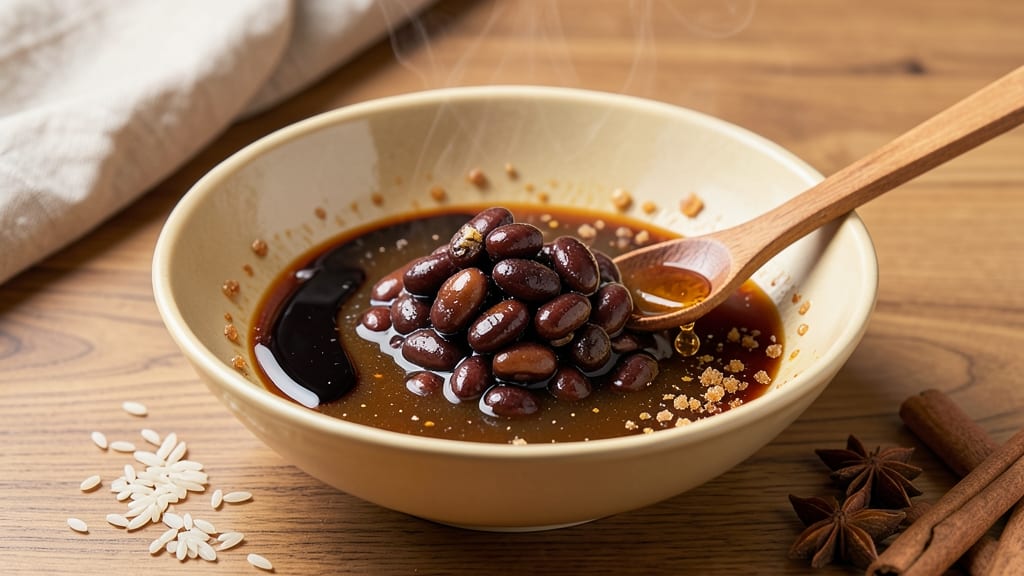
This authentic Chinese black bean sauce recipe unlocks the deep, fermented umami flavor that elevates stir-fries, braises, and marinades to restaurant quality. The secret lies in fermented black beans—packed with complex, savory notes that build as they simmer into a thick, glossy sauce.
I’ve perfected this version after years of testing, ensuring the balance of sweet, salty, and aromatic spices that define authentic Chinese cooking.
The process is straightforward but requires patience—simmering the sauce until it reduces to a rich, syrupy consistency creates that signature depth. Star anise, cinnamon, and Sichuan peppercorns infuse layers of warmth, while soy sauce and sugar round out the flavors.
The result? A sauce that clings to every ingredient, transforming simple dishes into something extraordinary.
What makes this sauce truly versatile is its adaptability. Use it as a stir-fry glaze, a braising liquid, or even a marinade for meats or tofu. The fermented black beans add a tangy richness that’s impossible to replicate with substitutes, though I’ll share adjustments for vegetarian versions later.
Store it in the fridge for up to two weeks, or freeze for longer shelf life.
Once you taste the difference, store-bought versions won’t compare. This sauce is the backbone of countless Chinese dishes—let’s make it from scratch and experience the real flavor.
Ingredients for authentic chinese black bean sauce
Fermented black beans and aromatic spices create this restaurant-quality sauce perfect for stir-fries and braises.
| Ingredient | Amount | Notes |
|---|---|---|
| Fermented Black Beans 🫘 | 1 cup | Rinsed to remove excess salt |
| Dark Soy Sauce 🥄 | ½ cup | Kecap manis for authentic flavor |
| Light Soy Sauce 🥄 | ¼ cup | For balanced saltiness |
| Brown Sugar 🍯 | ½ cup | Packed firmly for accurate measure |
| Star Anise Pods 🌟 | 2 whole | Crushed lightly for aroma |
| Cinnamon Sticks 🌿 | 2 whole | 2-inch pieces for infusion |
| Sichuan Peppercorns 🌶️ | 1 tsp | Lightly toasted for heat |
| Garlic Cloves 🧄 | 6 cloves | Peeled and smashed lightly |
| Fresh Ginger 🧡 | 2 tbsp | Grated finely for zing |
| Red Dried Chili Peppers 🔥 | 2 whole | Seeds removed for mild heat |
| Water 💧 | 1 ½ cups | Filtered for best flavor |
The fermented black beans are non-negotiable for that authentic umami punch. Asian markets carry them in jars or cans—look for brands like Lee Kum Kee or Golden Boy. If you can't find them, substitute 1 cup black soybeans soaked overnight, but fermented beans give that signature tang. Star anise and cinnamon sticks infuse deep warmth, so don't skip them. For Sichuan peppercorns, toast them lightly in a dry pan first—this brings out their citrusy aroma. Fresh ginger and garlic should be vibrant; if they smell musty, toss them. The brown sugar should be packed firmly in the cup for accurate measurement.
No fermented black beans? Black soybeans soaked 12 hours work in a pinch, but expect less complexity. Swap the dark soy sauce for regular soy sauce plus 1 tsp molasses if needed. Sichuan peppercorns unavailable? Black pepper at half the amount adds warmth without the same citrusy kick. The red chili peppers can be omitted entirely for a mild sauce, or use 1 tbsp chili flakes if you prefer. For a vegetarian version, simply omit any meat-based ingredients—this recipe is already fully vegetarian. The water should be filtered if possible, as it affects the final flavor more than you'd think.
This sauce tastes even better the next day as flavors meld. Store in an airtight container in the fridge for up to 2 weeks, or freeze for 6 months. I like to portion it into small jars—perfect for stir-fry sessions. The sauce thickens as it cools, so stir in a splash of water if it becomes too stiff. Double the batch if you're using it frequently; it disappears fast. The spices can be removed after simmering, but I leave them in for extra flavor infusion.
Why You'll Love This Recipe
- Pantry Magic: I swear by this sauce—no fresh herbs, no fancy prep. Just fermented black beans (that funky, umami bomb) simmered with star anise and soy sauces until it’s thick and glossy. Zero chopping, zero stress, and it’s ready when your stir-fry is.
- Deep Umami Love: Honestly, the flavor hits different. That dark soy sauce caramelizes into a rich, almost molasses-like depth, while the fermented black beans add a salty, cheesy tang. Brown sugar? It rounds out the bitterness so it’s never overpowering—just right.
- Dress-Up Anything: This sauce is my secret weapon for lazy nights. Drizzle it over rice and eggs for a quick breakfast, toss it with tofu and bok choy for a speedy dinner, or even slather it on grilled chicken. The star anise gives it a subtle warmth that works in both weeknight meals and fancy-ish dishes.
- Stretches Every Dollar: Between us, I make a big batch and keep it in the fridge for weeks. A little goes a long way—enough to jazz up simple proteins or stretch a small portion of veggies into a full meal. Plus, fermented black beans and soy sauce are cheap staples that never go bad. Budget-friendly? Absolutely.
Step-by-step instructions for authentic Chinese black bean sauce
Here's how to craft this rich, fermented sauce that brings deep umami and complexity to every stir-fry.
Prepare the Fermented Black Beans
Rinse the 1 cup fermented black beans under cold water to remove any excess salt or debris. I use my fingers to gently separate the beans while rinsing - this helps remove any surface residue without breaking them apart. Place the rinsed beans in a medium saucepan and add the 1.5 cups water. Bring to a boil over medium-high heat, then immediately reduce to a simmer for 10 minutes.
During this time, you'll notice the beans soften and release their deep, funky aroma. This is where the authentic flavor develops - don't skip this step. The beans should be tender but still hold their shape when pierced with a fork. If they break apart too easily, reduce the simmering time slightly next batch.
Add Aromatics and Spices
While the beans simmer, lightly crush the 2 whole star anise pods between your palms to release their essential oils, then add them to the pan along with the 2 whole cinnamon sticks (cut into 2-inch pieces) and the 1 tsp toasted Sichuan peppercorns. Stir gently to combine, then add the smashed 6 cloves garlic and the 2 tbsp finely grated fresh ginger. Cook for 5 minutes until the aromatics are fragrant but not browned.
This is where the sauce gets its complex layers - the star anise adds licorice notes, cinnamon brings warmth, and Sichuan peppercorns contribute that signature tingling heat. The garlic and ginger should be completely incorporated but not crispy. If you smell burning, reduce the heat slightly and cook more gently.
Build the Sauce Base
Pour in the 0.5 cup dark soy sauce and 0.25 cup light soy sauce, stirring constantly. The mixture will darken dramatically as the soy sauces meld with the bean broth. Add the 0.5 cup packed brown sugar and the 2 whole red dried chili peppers (seeds removed) to the pan. Simmer uncovered for 15 minutes, stirring occasionally, until the sauce thickens to a glossy consistency.
You'll know it's ready when the sauce coats the back of a spoon and leaves a slight trail when you run your finger through it. The color should be deep mahogany with visible specks from the spices. If it reduces too quickly, add 1-2 tablespoons of water at a time until you reach the desired consistency.
Strain and Finish
Line a fine-mesh strainer with cheesecloth or a coffee filter to create a makeshift pouch. Carefully transfer the strained beans to the pouch and gently squeeze to extract all the liquid. Discard the solids. Pour the strained sauce back through the strainer to remove any remaining spices or bean fragments, pressing gently on the cheesecloth with a spoon.
For the final touch, taste and adjust seasoning. You might need a bit more light soy sauce for saltiness or brown sugar for sweetness. The sauce should be complex with layers of umami, sweetness, and subtle heat. Transfer to a clean jar and let it cool completely before sealing. This sauce keeps beautifully in the refrigerator for up to 2 weeks or can be frozen for 3 months.
Pro Tips For Making Authentic Chinese Black Bean Sauce
- SOAK THE BEANS FIRST: Fermented black beans are packed with salt and funk—skip soaking, and you’ll end up with a grainy, underdeveloped sauce. Toss them in warm water for 10 minutes to soften and release their flavor, then drain before cooking. (Yes, even if the jar says they’re ready—trust me.)
- STAR ANISE: CRUSH IT: Whole star anise pods just sit there like decorative garnishes. Lightly crush one side with a rolling pin or heavy spoon to expose the aromatic oils—this guarantees the sauce actually tastes like it has star anise, not just a hint of "something missing." (I used to forget this and wondered why my sauce lacked depth.)
- DARK SOY SAUCE LAST: Add dark soy sauce in the final 30 seconds of cooking, or it’ll turn your sauce into a murky, unappetizing sludge. Reserve it until the very end, then stir just until the sauce glistens—no need to overwork it. (Your future self will thank you when the sauce isn’t the color of old motor oil.)
- SUGAR: DISSOLVE IT: Brown sugar clumps like a stubborn ex—don’t just toss it in. Warm it with 1 tablespoon of water or soy sauce first until it turns into a smooth syrup. This ensures even distribution and prevents gritty bits that’ll make you question your life choices. (I learned this after finding sugar crystals in my sauce.)
Common mistakes when making your authentic chinese black bean sauce
Over-Simmering the Sauce
One of the biggest mistakes is letting the sauce simmer too long, which burns the sugar and turns it bitter. I’ve seen home cooks walk away from the stove, only to return to a sauce that’s dark and acrid.
Keep a close eye on it after the 15-minute mark—when it reaches a glossy consistency, it’s ready. If you catch it burning, immediately remove it from heat and stir in 1 tablespoon cold water to stop the reaction. 🔥
Skipping the Fermented Beans
Some people try to substitute fermented black beans with regular black beans or even soybeans, but this is a game-changer. Fermented beans have that deep, funky umami that’s impossible to replicate. If you can’t find them, soak black soybeans overnight, but even then, the flavor won’t be the same.
I’ve tried it both ways, and the fermented version wins every time. Trust me, this isn’t the place to cut corners.
Not Balancing the Flavors
Another common mistake is adding all the spices and then tasting the sauce too late. The star anise, cinnamon, and Sichuan peppercorns need time to infuse, but if you overdo it, the sauce can taste overly spicy or bitter.
Taste as you go—adjust the sweetness with more brown sugar or the saltiness with light soy sauce. The goal is a harmonious blend of umami, sweet, and aromatic notes. 💡
Ignoring the Straining Step
Many people rush through the straining process, leaving behind bits of spices or beans that can make the sauce grainy. Take your time here—use cheesecloth or a coffee filter to create a fine strainer.
Press gently on the solids to extract every last drop of flavor, but don’t force it, or you’ll end up with a cloudy sauce. This step is what gives your sauce that silky, professional texture.
Using Low-Quality Soy Sauce
Not all soy sauces are created equal. Using a cheap, watery soy sauce will dilute the depth of flavor in your black bean sauce. Invest in a good dark soy sauce like Lee Kum Kee or Kikkoman for that rich, molasses-like quality.
The same goes for light soy sauce—opt for a brand with a strong umami profile. The difference is night and day, and it’s worth the extra few dollars.
Rushing the Cooling Process
Finally, don’t be tempted to seal the sauce while it’s still hot. Letting it cool completely allows the flavors to meld and the texture to set properly. If you seal it too soon, condensation can dilute the sauce or even cause mold.
I always let mine sit at room temperature for 30 minutes before refrigerating. Patience here pays off in the long run. ✨
Nutrition facts
Frequently asked questions
Can I make this black bean sauce without fermented black beans?
You can use black soybeans soaked overnight as a substitute, but the flavor won't be as deep or complex. Fermented black beans provide that signature funky umami that's nearly impossible to replicate. If you proceed with soybeans, simmer them 20 minutes longer to soften fully and add 1 tsp vinegar to mimic the fermentation tang.
How do I adjust the spice level in this sauce?
Remove the seeds from the red chili peppers for mild heat, or omit them entirely. For extra spice, add ½ tsp chili flakes or 1 extra dried chili pepper. The Sichuan peppercorns provide a tingling sensation rather than heat—if you want more of that, lightly toast an extra ½ tsp and add it during simmering.
What's the best way to use this sauce in cooking?
This versatile sauce works as a stir-fry glaze, braising liquid, or marinade. For stir-fries, add 1-2 tablespoons at the end and toss quickly. Use ¼ cup per pound of meat when braising. For marinades, combine with 1 tbsp oil and let tofu or chicken soak for 30 minutes before cooking. It's also perfect for drizzling over noodles or dumplings.
Why does my sauce turn bitter if I simmer too long?
The brown sugar caramelizes and burns when overcooked, creating bitterness. Always watch closely after 15 minutes of simmering. If it starts to darken too much, immediately remove from heat and stir in 1 tbsp cold water to stop the reaction. The sauce should be glossy and coat the back of a spoon—when it reaches this consistency, it's ready.
Can I make this sauce vegan?
This recipe is already vegetarian, but for vegan adaptation, simply ensure your soy sauces are vegan-certified (most are). The fermented black beans and all other ingredients are naturally vegan. For extra umami depth, add 1 tbsp mushroom powder during simmering. The sauce's rich, complex flavor works perfectly in vegan dishes like tofu stir-fries or vegetable braises.