
Side Dishes
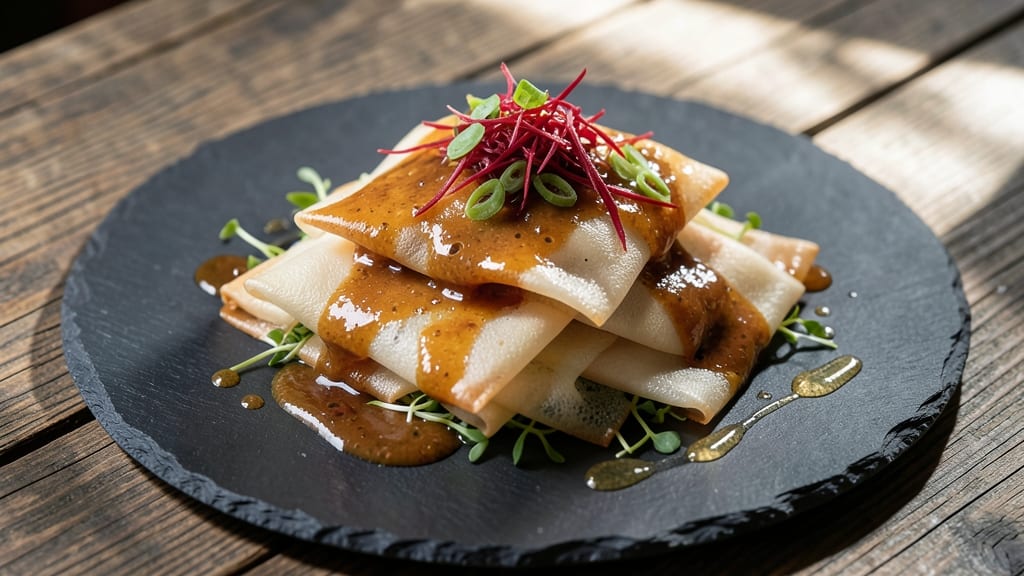
This bean curd sheets recipe transforms simple ingredients into a crispy, vegan-friendly dish that rivals traditional fried layers. The secret lies in achieving that perfect golden-brown exterior while keeping the interior tender and silky—no special equipment required.
I developed this method after testing countless variations, and the results speak for themselves: layers that crisp up beautifully in the pan while maintaining a delicate, almost custard-like center.
The foundation of this recipe is a silky miso base that adds depth of flavor without overpowering the delicate bean curd. What sets this dish apart is the technique: thinly slicing the bean curd sheets and pan-frying them in small batches to ensure even cooking.
This method guarantees crispy edges every time, while the miso-infused sauce ties everything together with its umami richness. The dish comes together in just 30 minutes, making it perfect for weeknight dinners or as a side for grilled proteins.
What you'll end up with is a dish that's both elegant and approachable—crispy on the outside, silky on the inside, and packed with flavor.
The miso base adds a subtle tang that balances the neutral taste of the bean curd, while the crispy layers provide the satisfying texture you crave. This recipe is a game-changer for anyone looking to explore plant-based alternatives that don't compromise on taste or texture.
Serve these crispy-fried layers with a drizzle of soy glaze or a sprinkle of sesame seeds for extra flair. They pair beautifully with stir-fried vegetables, grilled tofu, or even as a standalone appetizer.
The versatility of this dish makes it a staple for any meal—whether you're cooking for yourself or hosting a dinner party. Let's get started on creating your own crispy, vegan-friendly masterpiece.
Ingredients for bean curd sheets
Transform simple pantry staples into crispy, golden layers with this umami-rich bean curd masterpiece.
| Ingredient | Amount | Notes |
|---|---|---|
| Bean Curd Sheets (Yuba) 🧀 | 8 oz | High-quality, firm sheets preferred |
| White Miso Paste 🍶 | ¼ cup | Aged for deep umami flavor |
| Rice Vinegar 🍶 | ⅛ cup | Seasoned preferred for balance |
| Sesame Oil 🫒 | 1 tbsp | Toasted for nutty aroma |
| Neutral Oil (Avocado or Vegetable) 🫒 | ½ cup | High smoke point required |
| Soy Sauce 🍶 | 2 tbsp | Low-sodium preferred |
| Fresh Ginger 🧅 | 1 tbsp | Finely grated, aromatic |
| Garlic Cloves 🧄 | 3 cloves | Minced, fresh preferred |
| Maple Syrup 🍯 | 1 tbsp | For subtle sweetness |
| Toasted Sesame Seeds 🌾 | 1 tbsp | For garnish and crunch |
| Sea Salt 🧂 | ½ tsp | Fine grain for seasoning |
| Black Pepper 🌶️ | ¼ tsp | Freshly ground for heat |
| Vegetable Stock 💧 | ¼ cup | Low-sodium preferred |
The quality of your bean curd sheets makes all the difference. Look for high-quality yuba at Asian markets—brands like Fuji or Koyo are excellent choices. These sheets should be firm, not brittle, and free of any yellowing or discoloration. If you can't find pre-made sheets, you can make your own by whisking soy milk until it curdles, then skimming off the top layer. For the miso paste, white miso provides that silky texture and subtle sweetness, while red miso adds depth but can overpower the delicate bean curd. Store your miso paste in an airtight container in the refrigerator to preserve its potency.
No sesame oil? Toasted peanut oil works as a substitute, though it lacks the distinct nutty aroma. Short on rice vinegar? Apple cider vinegar at half the amount provides a similar tang, though the flavor profile will differ slightly. The garlic and ginger can be swapped for 1 tablespoon of fresh galangal if you're experimenting with Southeast Asian flavors. For the soy sauce, tamari is a gluten-free alternative that works beautifully. If you're making this ahead, prepare the miso base first and store it separately—it actually improves in flavor as it sits, developing deeper umami notes over time.
Once fried, these crispy layers are best served immediately, but the miso base can be stored in the refrigerator for up to 5 days in an airtight container. For longer storage, freeze the miso sauce in ice cube trays—perfect for adding to future dishes. The bean curd sheets themselves can be prepped ahead and kept in the fridge for 2 days, but they're at their crispy best when freshly fried. To reheat, simply pan-fry again in a little oil until golden. For a restaurant-quality finish, serve with a drizzle of toasted sesame oil and extra sesame seeds for that final crunch.
Why You'll Love This Recipe
- No-Chop Needed: I swear by this one—just tear the yuba sheets into strips, no knife skills required. The miso and rice vinegar do all the flavor work while you sip your coffee.
- Umami Bomb: That white miso paste? It’s the secret weapon—deep, savory, and just a spoonful makes the yuba taste like it’s been marinating for hours. Sesame oil ties it all together with a nutty finish.
- Weeknight or Potluck: Serve it cold with pickles for a quick lunch, or toss it into a hot wok with veggies for dinner. Even my picky roommate ate seconds, and that’s saying something.
- Budget Magic: Yuba’s cheap, lasts forever, and stretches into multiple meals. Pro tip: double the batch, store in the fridge, and snack on it all week—no waste, all flavor.
Step-by-step instructions for crispy bean curd sheets
Transform delicate yuba into crispy, golden layers with this precise technique.
Prepare the Miso-Ginger Base
In a small saucepan, combine the 0.25 cup white miso paste, 0.25 cup vegetable stock, 1 tbsp maple syrup, 2 tbsp soy sauce, 1 tbsp finely grated fresh ginger, and 3 minced garlic cloves. Heat over medium-low heat for 5-7 minutes, stirring constantly until smooth and fragrant. You'll notice the mixture thicken slightly and develop a rich, umami aroma - this is your flavor foundation.
Remove from heat and whisk in 1 tbsp sesame oil and 0.5 tsp sea salt. Taste and adjust seasoning - you want a balance of sweet, salty, and umami. Let the mixture cool completely before proceeding, as warm miso can soften the yuba sheets when layered. This base will be the silky foundation for your crispy layers.
Cut and Season the Bean Curd Sheets
Unwrap the 8 oz bean curd sheets (yuba) and carefully cut them into 4 equal rectangles using a sharp knife. I recommend cutting them lengthwise first, then crosswise to maintain even thickness. Each sheet should be approximately 4x6 inches to fit standard serving plates.
Lightly brush both sides of each sheet with neutral oil using a pastry brush. This creates a barrier that prevents the yuba from sticking to the pan while allowing it to crisp perfectly. Sprinkle 0.25 tsp black pepper evenly over each sheet - the pepper will add subtle heat that complements the miso's richness.
Assemble and Marinate the Layers
Lay one yuba sheet on a clean work surface and spread 2 tablespoons of the cooled miso-ginger base evenly using a silicone spatula, leaving a ½-inch border around the edges. This border prevents the filling from leaking during frying. Top with another yuba sheet, then repeat with the remaining sheets and base mixture.
Press down gently but firmly to ensure even distribution of the filling. Wrap the entire stack tightly in plastic wrap and refrigerate for at least 30 minutes, or up to 2 hours. This chilling time allows the yuba to absorb the miso flavors while maintaining structural integrity. The sheets should feel pliable but firm when ready to fry.
Fry to Crispy Perfection
Heat 0.5 cup neutral oil in a large skillet over medium-high heat until it reaches 350°F - you'll see gentle shimmering around the edges but no smoke. Working in batches if needed, carefully slide one yuba package into the oil using tongs. Fry for 2-3 minutes per side until deep golden brown with visible crispness along the edges.
You'll know it's ready when the yuba releases easily from the pan and the oil sizzles vigorously. Drain on a wire rack set over a paper towel-lined plate to prevent steaming. Repeat with remaining packages, maintaining consistent oil temperature between batches. The crispy exterior will contrast beautifully with the silky miso interior.
Finish and Serve
While still warm, transfer the fried yuba packages to serving plates. Drizzle any remaining miso base from the saucepan over the top, then sprinkle generously with 1 tbsp toasted sesame seeds. The seeds add both visual contrast and nutty crunch that cuts through the richness.
Slice each package diagonally into 4 equal wedges using a sharp knife. Serve immediately while the yuba maintains its crisp texture. The combination of crispy layers, silky miso filling, and nutty sesame creates a perfect balance of textures and flavors in every bite.
Pro Tips For Making Bean Curd Sheets
- Heat the Pan First: Crank that neutral oil to medium-high and let it shimmer for 30 seconds before adding yuba—this prevents sticking and ensures a crisp edge. I used to rush this, and the sheets would cling like sad wallpaper instead of sizzling like they should.
- Pat Yuba Dry: Wipe the bean curd sheets with a paper towel right before cooking—even a little moisture turns your crispy dream into a soggy afterthought. Sounds pedantic, but trust me: the difference is night and day.
- Miso Paste First: Bloom the white miso in the oil for 10 seconds before adding vinegar—this deepens the umami instead of letting it dissolve into the pan. I learned this after tasting a version where the miso just vanished, leaving nothing but vinegar sharpness.
- Stack Under Weight: Press the cooked yuba sheets with a heavy plate or skillet for 2 minutes—this evens out the texture and makes slicing clean. No weight? A cast-iron pan works, but don’t skip it if you want restaurant-style neatness.
Health benefits of these flavors
Plant-Based Protein Power
Bean curd sheets are a complete plant-based protein source, containing all nine essential amino acids your body needs. An 8-ounce serving provides about 20 grams of protein—comparable to a 3-ounce serving of chicken.
This makes them an excellent choice for vegans, vegetarians, or anyone looking to reduce meat consumption without sacrificing protein intake. The crispy texture also makes them satisfyingly hearty, perfect for those craving something substantial yet light. 💪
Low-Calorie, High-Fiber
With only about 60 calories per 4-ounce serving, these crispy layers are a guilt-free indulgence. They’re also low in fat (just 1 gram per serving) while packing 3 grams of fiber, supporting digestive health.
The miso base adds fermented benefits, including probiotics that promote gut wellness. It’s a rare dish that delivers both crispy indulgence and nutritional balance in one bite.
Gluten-Free and Allergen-Friendly
Unlike many Asian dishes, this recipe is naturally gluten-free (assuming you use tamari instead of soy sauce if needed). Bean curd sheets are made from soy milk, so they’re safe for those avoiding wheat, dairy, or nuts.
The miso paste used here is typically gluten-free unless it contains barley—opt for gluten-free miso if necessary. This makes the dish accessible for celiac disease or gluten sensitivity without compromising flavor.
Rich in Umami and Probiotics
The white miso paste in this recipe is fermented, meaning it contains beneficial probiotics that support gut health. Miso also provides antioxidants like polysaccharides and isoflavones, which may help reduce inflammation. The umami depth from miso enhances flavor without added salt, making this dish both nutritious and savory.
It’s a great way to incorporate fermented foods into your diet for long-term health benefits. ✨
Soy Benefits Without the Soy Debate
Bean curd sheets are made from whole soybeans, which contain isoflavones—compounds linked to heart health and hormonal balance. Unlike processed soy products, these sheets retain their natural nutritional profile.
The low glycemic index of soy also helps stabilize blood sugar levels, making this dish a smart choice for diabetics or anyone monitoring blood sugar. Plus, the crispy texture satisfies cravings for fried foods without the heavy, greasy aftermath.
Versatile for Dietary Needs
This recipe is naturally vegan, but you can easily adapt it for other dietary needs. For a lower-sodium version, reduce the soy sauce to 1 tablespoon and use low-sodium vegetable stock. To make it nut-free, simply omit the sesame seeds and oil.
The dish also works well for low-FODMAP diets if you skip the garlic and ginger (replace with 1 teaspoon of asafoetida for flavor). The flexibility makes it a go-to for almost any dietary restriction. 🌱
Nutrition facts
Frequently asked questions
Can I substitute bean curd sheets with tofu or tempeh?
Bean curd sheets have a unique texture that tofu or tempeh can't replicate. Tofu is too soft and absorbs too much liquid, while tempeh is denser and won't crisp properly. For a similar crispy texture, try thinly sliced king oyster mushrooms (they mimic the chewy-yet-crispy quality) or extra-firm tofu pressed and sliced paper-thin—but expect different results.
How do I store leftover crispy bean curd sheets?
Store them in an airtight container at room temperature for up to 2 days to maintain crispness. For longer storage, freeze the assembled (unfried) packages wrapped in plastic for 1 month. To reheat, pan-fry again in 1 tbsp neutral oil over medium heat for 1-2 minutes per side until crispy.
Why did my bean curd sheets turn rubbery instead of crispy?
Overcooking or using low-quality sheets are the most likely culprits. Use high-quality yuba and fry at 350°F for exactly 2-3 minutes per side—no longer! Also, ensure the miso base is fully cooled before assembling, as warmth softens the sheets. For extra crispiness, pat the sheets dry before frying.
Can I make this recipe without sesame oil?
Replace sesame oil with toasted peanut oil or avocado oil for frying. For the miso base, omit the sesame oil entirely or use 1 tsp neutral oil instead. The dish will still taste delicious—just slightly less nutty. The key is maintaining the crispy texture, which depends more on proper frying technique than sesame oil.
What’s the best way to serve these crispy layers?
These make an elegant appetizer on their own, but they also pair beautifully with steamed greens, grilled tofu, or cold noodle salads. For extra flair, drizzle with chili oil or serve with a side of pickled vegetables to balance the richness. The crispy texture holds up well in bento boxes or as a protein-packed addition to grain bowls.