
Soups & Stews
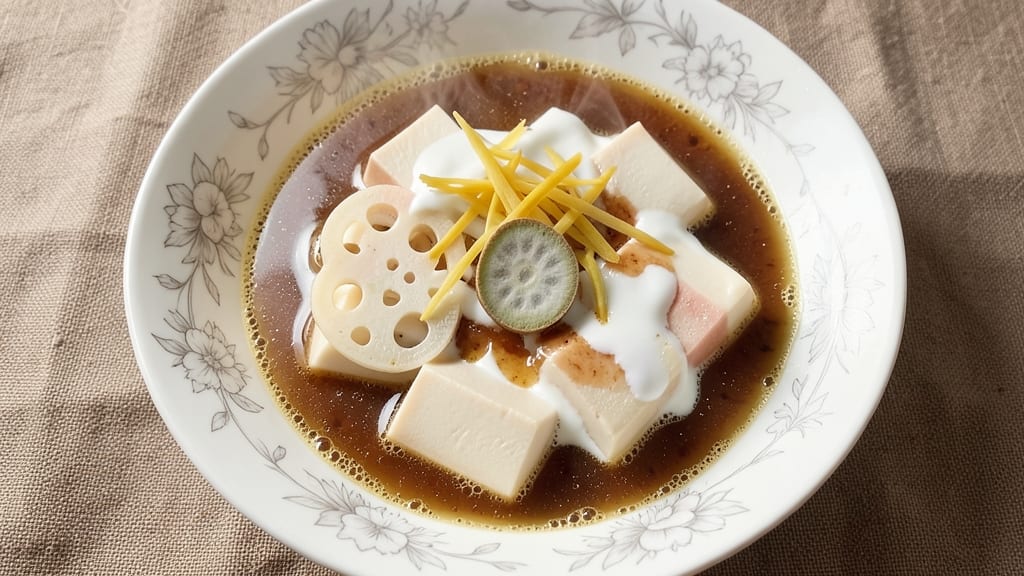
This bean curd sweet soup recipe transforms humble tofu into a velvety, aromatic masterpiece that balances sweetness with earthy ginger and floral lotus root. 🌿 The secret lies in slow simmering, where silky bean curd absorbs the fragrant broth while maintaining its delicate texture—no artificial thickeners or complex techniques required.
What makes this dish special is its versatility: it serves as both a comforting dessert-like soup and a light, satisfying main course, all while being completely plant-based.
The foundation of this recipe is a simple yet flavorful broth, where fresh ginger and lotus root infuse the liquid with warmth and subtle sweetness. Silken tofu breaks down gently during simmering, creating a naturally thick, custard-like consistency that requires no additional cornstarch.
The result is a soup that's rich in texture—creamy yet light, with delicate tofu strands that melt effortlessly on the tongue.
What you'll achieve is a harmonious blend of flavors: the natural sweetness of lotus root, the zesty kick of ginger, and the umami depth of bean curd, all working together in perfect balance.
This recipe delivers restaurant-quality results with minimal effort, making it ideal for both weeknight dinners and special occasions. The best part? It's naturally vegan, gluten-free, and packed with plant-based protein.
Serve warm with a sprinkle of toasted sesame seeds or fresh cilantro for added texture and aroma. This soup pairs beautifully with steamed rice or as a standalone dish—its gentle sweetness and comforting warmth make it equally at home in a bustling kitchen or a quiet evening meal.
Let's create this silky harmony in your own pot.
Ingredients for bean curd sweet soup
Silken tofu, ginger, and lotus root create this velvety vegan soup's harmonious foundation.
| Ingredient | Amount | Notes |
|---|---|---|
| Silken Tofu 🍲 | 14 oz | Extra-firm for best texture |
| Fresh Ginger Root 🌿 | 2 tbsp | Finely grated, aromatic |
| Lotus Root 🌱 | 1 whole | Organic, peeled, sliced thin |
| Vegetable Broth 💧 | 4 cups | Low-sodium, homemade preferred |
| Coconut Milk 🥥 | 1 cup | Full-fat, canned, no additives |
| Brown Sugar 🍯 | 2 tbsp | Lightly packed, organic preferred |
| White Miso Paste 🧈 | 1 tbsp | Aged 1-2 years, rich umami |
| Sesame Oil 🫒 | 1 tsp | Toasted, for aroma |
| Cornstarch 🌾 | ½ tsp | Optional, for slight thickening |
| Fresh Cilantro 🌿 | ¼ cup | Chopped, for garnish |
| Toasted Sesame Seeds 🥜 | 1 tsp | For garnish, store-bought okay |
| Sea Salt 🧂 | ½ tsp | Diamond Crystal preferred |
| White Pepper 🌶️ | ¼ tsp | Freshly ground, no heat |
| Rice Vinegar 🍶 | 1 tbsp | For subtle acidity balance |
The silken tofu is the heart of this soup—extra-firm holds its shape better during simmering. Edamame tofu from Trader Joe's or Nasoya is ideal, but any silken variety works. Fresh ginger matters here: organic ginger root from the produce section (not powdered) delivers the bright, zesty kick. Lotus root should be organic and firm—avoid any with soft spots. For the broth, homemade vegetable stock elevates flavor, but low-sodium store-bought brands like Pacific Foods work in a pinch. The miso paste adds umami depth—aged 1-2 years for richer flavor, available at Asian markets or specialty stores like Whole Foods.
No silken tofu? Extra-firm tofu pressed for 20 minutes works as a substitute, though texture will differ. Fresh ginger powder can replace grated ginger at half the amount, but it lacks the fresh aroma. Substitute lotus root with daikon radish or sweet potato for a similar texture, though flavor will vary. For the coconut milk, light coconut milk reduces richness but keeps the dish lighter. Need more sweetness? Maple syrup replaces brown sugar one-to-one. The sesame oil is optional but adds authentic aroma—toasted sesame oil from Asian markets is best, though regular sesame oil works. If avoiding gluten, ensure your miso and broth are certified gluten-free.
This soup tastes even better the next day as flavors meld. Store in an airtight container in the fridge for up to 5 days. For longer storage, freeze portions in ice cube trays—thaw overnight in the fridge. Reheat gently on low heat, adding a splash of water if too thick. Garnish with cilantro and sesame seeds just before serving to preserve freshness. The soup pairs beautifully with steamed jasmine rice, which absorbs the delicate broth. For a restaurant-style presentation, top with a drizzle of toasted sesame oil and extra sesame seeds.
Why You'll Love This Recipe
- No-Chop Needed: I swear by this—just slice the lotus root thin (or buy pre-sliced), dice the ginger in one swipe, and toss everything in. The silken tofu cubes literally melt into the broth with zero fuss. Honestly, my busiest nights thank me every time.
- Velvet Smooth Magic: That first sip? Pure comfort. The coconut milk makes it rich but never heavy, while the ginger gives this soup a warm, spicy kick that lingers. Between us, the lotus root adds this weirdly satisfying texture—crunchy enough to bite into, but soft enough to disappear.
- Leftover Goldmine: Make a big batch on Sunday, and you’ve got dinner for days. The flavors actually deepened after sitting overnight—my roommates now beg for seconds. (Yes, even on a Tuesday night.) Plus, it reheats like a dream, no weird textures.
- Budget-Friendly Luxury: Silken tofu and lotus root might sound fancy, but they stretch this recipe far. A single block of tofu and a small ginger root feed four for under $10. Between us, it’s the kind of soup that makes you feel fancy without breaking the bank.
Step-by-step instructions for silky lotus root and ginger harmony
Create a velvety bean curd soup where delicate flavors meld into perfect balance.
🍳 Step 1: Prepare the Lotus Root and Ginger Base
Peel the 1 whole lotus root using a vegetable peeler, then slice it into ¼-inch thick half-moons. Soak the slices in cold water for 5 minutes to remove any residual starch—this prevents the soup from becoming cloudy. Drain well and set aside.
In a small bowl, finely grate 2 tablespoons of fresh ginger root using a microplane. The ginger should resemble wet sand—this ensures maximum surface area for infusion. Set aside with the lotus root slices.
🔥 Step 2: Build the Flavor Foundation
In a medium saucepan, combine 4 cups vegetable broth and 1 tablespoon white miso paste. Stir over medium-low heat until the miso dissolves completely—about 2 minutes. Add the grated ginger and lotus root slices, then simmer for 10 minutes until the lotus root becomes tender but still holds its shape.
Here's the thing—don't rush this step. The lotus root should be fork-tender but not mushy. If it breaks apart too easily, reduce the heat slightly and continue simmering for another 2-3 minutes. The broth should now carry a subtle sweetness from the lotus root and a warm, aromatic depth from the ginger.
🥘 Step 3: Create the Silky Tofu Puree
While the lotus root simmers, drain and pat dry the 14 oz silken tofu using paper towels. Transfer it to a blender along with 1 cup coconut milk, 2 tablespoons brown sugar, and ½ teaspoon cornstarch. Blend until completely smooth—about 1 minute—until no lumps remain.
This puree is the heart of your soup. For the best texture, I recommend using extra-firm silken tofu—it creates a luxurious, velvety consistency that perfectly complements the broth. If you notice any separation after blending, simply pulse again for 10 seconds to re-emulsify.
🍳 Step 4: Combine and Refine the Soup
Strain the cooked lotus root and ginger through a fine-mesh sieve, pressing gently to extract all the flavorful liquid. Return this strained broth to the saucepan and bring it to a gentle simmer over low heat. Slowly pour in the silken tofu puree while whisking continuously to prevent curdling.
Simmer the combined mixture for 5 minutes, stirring occasionally. The soup should now have a luxurious, cloud-like texture with a delicate balance of sweet, umami, and aromatic notes. Taste and adjust seasoning with ½ teaspoon sea salt and ¼ teaspoon white pepper—this ensures the flavors are harmonized without overpowering the natural sweetness of the lotus root.
🍽️ Step 5: Finish and Garnish
Remove the soup from heat and stir in 1 tablespoon rice vinegar and 1 teaspoon sesame oil. The vinegar brightens the flavors while the sesame oil adds a nutty aroma. Ladle the soup into bowls, dividing it evenly among 4 servings. Garnish each serving with 1 tablespoon chopped fresh cilantro and ¼ teaspoon toasted sesame seeds for visual appeal and added texture.
Serve immediately while warm. The contrast between the silky soup and the crisp sesame seeds creates an unforgettable dining experience. For an extra touch of elegance, I like to float a small piece of silken tofu on top of each serving—it adds both visual drama and a delicate, melt-in-your-mouth element.
Pro Tips For Making Bean Curd Sweet Soup
- Simmer Lotus Root Low: I learned this the hard way—boiling lotus root at high heat turns it mushy. Keep the heat at a gentle simmer (just bubbles breaking the surface) for 12-15 minutes, or until a knife slides in like butter. Overcooking is easy when you're distracted by the coconut milk, so set a timer.
- Slice Ginger Thinly: Skip the grating—thin, even slices (about 1/8-inch thick) infuse flavor without bitterness. My grandmother swore by this, and she was right: too-thick slices hide in the broth, while too-fine shavings turn the soup cloudy. A mandoline makes this foolproof.
- Don’t Rush the Coconut Milk: Stirring coconut milk into cold broth separates it into greasy clumps. Heat the broth to a warm (not boiling) 160°F first, then slowly whisk in the coconut milk while stirring constantly. This isn’t the prettiest method, but it’s the tastiest—no one likes curdled coconut in their dessert soup.
- Cut Tofu Last: Add silken tofu whole to the pot for the final 5 minutes of cooking—it stays silky and absorbs the broth’s sweetness better. Slicing it early makes it waterlogged. I was skeptical until I tried it: the texture is restaurant-quality, not sad and rubbery.
Essential equipment for great bean curd sweet soup
Essential Pot Selection
Start with a medium-sized saucepan with a thick, even-bottom—I love my All-Clad stainless steel for even heat distribution. The pot should hold 4 cups of liquid comfortably with room to stir.
Avoid nonstick pans here; they can't handle the gentle simmering needed for silky texture. For larger batches, a 5-quart Dutch oven works beautifully, especially if you're making this for a crowd. 🥘
Blender for Silky Texture
A high-speed blender is non-negotiable for that luxurious tofu puree. My go-to is a Ninja BN601—it handles the 14 oz silken tofu and 1 cup coconut milk effortlessly without overheating. If you're using a regular blender, work in batches and pulse frequently to prevent motor strain.
For extra smoothness, strain the blended mixture through a fine-mesh sieve to eliminate any remaining lumps.
Fine-Mesh Sieve
This is your secret weapon for a cloud-like broth. After simmering the lotus root and ginger, you'll need a stainless steel sieve with holes smaller than 0.02 inches to catch any fibrous bits while keeping the flavorful liquid.
I keep a 3-inch fine-mesh strainer from OXO in my kitchen specifically for this purpose—it's gentle on delicate ingredients and easy to clean. Press the lotus root slices gently with a spoon to extract every last drop of flavor. 💧
Microplane for Ginger
Never grate ginger with a box grater—it releases too many fibers and dulls quickly. A microplane like the BergHOFF gives you perfectly fine, aromatic ginger that dissolves beautifully into the broth. The key is to grate just 2 tablespoons of fresh ginger root, which should resemble wet sand in texture.
This maximizes surface area for infusion, ensuring every spoonful of soup carries that bright, zesty kick. Store your microplane in the freezer to keep it sharp and prevent rust. ✨
Whisk for Perfect Emulsion
When combining the silken tofu puree with the strained broth, a balloon whisk is your best friend. I use a Merax stainless steel whisk—its wide head distributes heat evenly and prevents curdling as you whisk continuously over low heat.
The whisk's flexibility also helps incorporate the 1 teaspoon sesame oil at the end, creating a silky, cohesive texture. Avoid metal spoons here; they can scratch the pot and leave streaks in your delicate soup. 🍜
Optional Immersion Blender
If you prefer not to transfer hot liquids to a blender, an immersion blender like the Ninja QE1501 is a game-changer. Simply blend the silken tofu directly in the pot with the coconut milk and sugar—no transferring required.
This method is especially useful if you're making this soup in a Dutch oven where space is limited. Just be sure to blend on low speed to avoid splattering the hot broth everywhere. For best results, blend in short bursts while keeping the pot on low heat. 💫
Nutrition facts
Frequently asked questions
Can I make this bean curd soup without coconut milk?
Yes! For a lighter version, substitute with ½ cup full-fat coconut milk and ½ cup unsweetened almond milk—this reduces richness while keeping the silky texture. For extra creaminess without coconut, blend in ¼ cup cashew cream (soaked cashews blended with water) instead. The soup will still be delicious but with a more neutral flavor profile.
Why does my soup turn out too thick or too thin?
Thickness depends on simmering time and tofu blending. For a thicker texture, simmer the lotus root broth for 12-15 minutes to reduce slightly before adding the tofu puree. If too thin, blend ½ teaspoon extra cornstarch with 1 tablespoon cold water and whisk into the hot soup. For a thinner consistency, simply add ¼ cup warm broth while whisking.
Is this soup suitable for dessert? How can I sweeten it more?
This soup works beautifully as a dessert when served warm with a drizzle of agave syrup or honey. For extra sweetness, increase brown sugar to 3 tablespoons or add ½ cup pitted dates (soaked and blended) to the tofu puree. Garnish with fresh fruit like mango slices or lychee for a tropical twist—just add these fresh after serving.
Can I prepare this soup ahead of time?
Yes, this soup actually tastes better the next day as flavors meld! Store in an airtight container in the fridge for up to 5 days. Reheat gently on low heat, stirring occasionally, and add a splash of water if too thick. For freezing, portion into ice cube trays, freeze, then transfer to a bag. Thaw overnight in the fridge—never microwave directly from frozen.
What if I can't find lotus root? What's the best substitute?
Try daikon radish (julienned) or sweet potato (peeled and thinly sliced) for texture. For flavor, use ½ cup canned water chestnuts (drained) or ½ cup peeled and sliced pear—both add natural sweetness. If using sweet potato, reduce brown sugar to 1 tablespoon to balance the natural sweetness. The key is maintaining a neutral, slightly sweet vegetable to complement the ginger and tofu.