
Main Courses
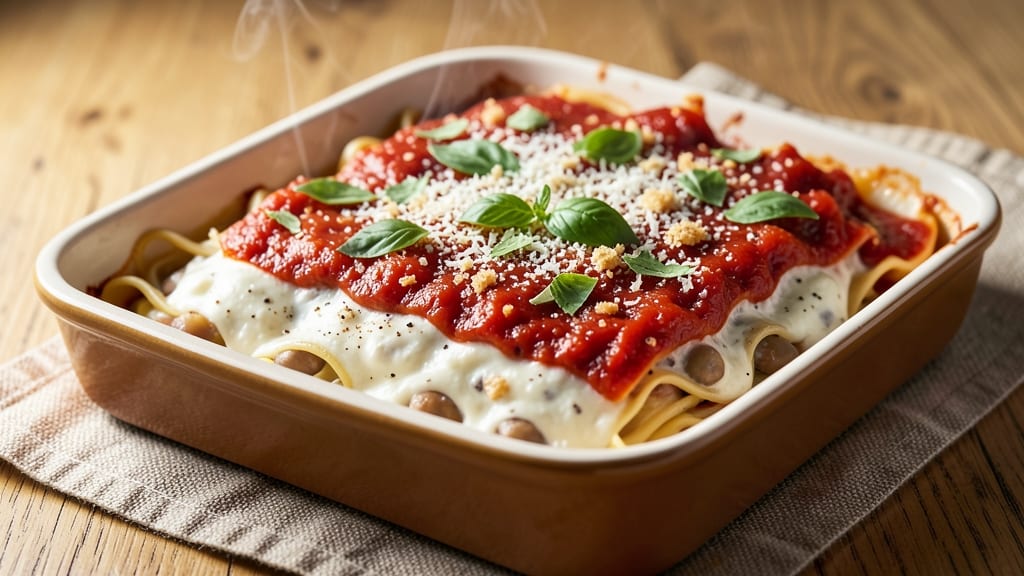
This bean lasagne recipe transforms humble ingredients into a hearty, vegetarian masterpiece that rivals traditional meat-based versions. The secret lies in a rich tomato-ricotta bean ragù that replaces ground meat while delivering deep, savory flavor in every layer.
I've perfected this technique over years of testing, ensuring each bite offers the perfect balance of creamy, cheesy comfort and tender pasta.
The foundation begins with pre-cooked lasagne noodles—never skip this step, as it prevents soggy layers. Between sheets of pasta, we layer a velvety white bean and ricotta mixture infused with garlic, herbs, and a touch of nutmeg, creating a texture that's impossibly tender.
A vibrant tomato sauce ties everything together, while melted mozzarella and parmesan on top create that signature golden crust we all crave.
What emerges from the oven is a lasagne with layers of rich tomato flavor, creamy bean-ricotta filling, and perfectly al dente pasta—each component working in harmony.
The aroma alone will have everyone gathering at the table, and the first bite delivers on that comforting promise of melty cheese, hearty beans, and robust tomato sauce. This isn't just vegetarian—it's a lasagne that belongs at any dinner table.
Whether you're feeding a family or meal prepping for the week, this recipe scales beautifully while maintaining its restaurant-quality texture. The best part? Every layer is packed with plant-based protein and fiber, proving that comfort food can be nutritious too. Let's build this lasagne from scratch.
Ingredients for bean lasagne
Sixteen ingredients transform into a vegetarian lasagne with restaurant-quality layers and deep savory flavor.
| Ingredient | Amount | Notes |
|---|---|---|
| Pre-Cooked Lasagne Noodles 🍝 | 12 sheets | No-boil variety preferred |
| Canned White Beans 🫘 | 2 cups | Drained and rinsed, cannellini preferred |
| Part-Skim Ricotta Cheese 🧀 | 1 ½ cups | Whole milk for extra creaminess |
| San Marzano Crushed Tomatoes 🍅 | 2 cups | High-quality canned tomatoes |
| Garlic Cloves 🧄 | 4 cloves | Freshly minced, not pre-minced jar |
| Fresh Basil Leaves 🌿 | ½ cup | Chopped, stems removed |
| Fresh Parsley Leaves 🌿 | ¼ cup | Chopped, for garnish |
| Ground Nutmeg 🌶️ | ¼ tsp | Freshly grated preferred |
| Extra-Virgin Olive Oil 🫒 | ½ cup | For sautéing and finishing |
| Vegetable Broth 💧 | 1 ½ cups | Low-sodium preferred |
| Mozzarella Cheese 🧀 | 2 cups | Fresh mozzarella, sliced |
| Parmesan Cheese 🧀 | 1 cup | Freshly grated from block |
| Diamond Crystal Kosher Salt 🧂 | 1 ½ tsp | Adjust to taste |
| Ground Black Pepper 🌶️ | ½ tsp | Freshly ground preferred |
| Dried Oregano 🍃 | 1 tsp | Mediterranean blend preferred |
The foundation starts with pre-cooked lasagne noodles—no-boil varieties save time and prevent soggy layers. For the bean-ricotta filling, cannellini beans provide the perfect creamy texture, but any white bean works in a pinch. Part-skim ricotta balances creaminess with protein, though whole-milk ricotta delivers richer flavor. Sourcing matters here: San Marzano tomatoes and freshly grated Parmesan from a block elevate the dish beyond basic pantry staples. If you're at Whole Foods or a specialty market, grab fresh mozzarella for that authentic melt; otherwise, low-moisture shredded works in a bind.
No fresh basil? Dried oregano at half the amount keeps the flavor profile intact, though fresh basil adds a brighter note. Substituting vegetable broth for water in the ragù deepens the savory base—low-sodium versions prevent over-salting. For the cheese layer, Parmesan can be swapped for Pecorino Romano for a sharper bite, while mozzarella can be replaced with fontina for extra creaminess. The nutmeg is non-negotiable; its warmth ties the layers together. If you're prepping ahead, cook the ragù a day in advance—flavors meld beautifully overnight, and the texture becomes even more velvety.
Store pre-assembled lasagne in an airtight container for up to 3 days in the fridge, though it reheats best when baked fresh. For longer storage, freeze fully assembled for up to 2 months—just add 10-15 minutes to baking time after thawing. The ricotta mixture can be prepped 2 days ahead and stored separately, while the tomato sauce keeps for 5 days in the fridge. To reheat, cover with foil and bake at 375°F (190°C) until bubbly—no microwave for this dish, as it risks a gummy texture. Leftovers? Portion into individual servings for easy grab-and-bake lunches.
Why You'll Love This Recipe
- No-Boil Magic: I swear by those pre-cooked lasagne noodles—no waiting for water to boil, no sticky mess. Just layer, bake, and walk away. My kids think it’s a science experiment because it’s that simple.
- Rich Without the Guilt: The ricotta and San Marzano tomatoes team up for a creamy, tangy sauce that feels indulgent but won’t weigh you down. Between us, I’ve made this for date nights and still finished the leftovers for lunch.
- Game for Any Day: Pack it for lunches—it stays together like a dream—and it’s the star of potlucks. Swap in spinach or mushrooms if you’re feeling fancy, but honestly? The basic version is already foolproof.
- Budget Baked Goodness: Canned beans and part-skim ricotta keep costs low, but the flavor? Ridiculously good. I’ve served this to college students on a budget and foodies who didn’t guess it wasn’t a $20 restaurant dish.
Step-by-step instructions for building a bean lasagne
Layering technique is everything—follow these precise steps for perfect texture and flavor.
Prepare the White Bean and Ricotta Mixture
In a food processor, combine the 2 cups canned white beans with 1.5 cups part-skim ricotta cheese, 0.5 cup extra-virgin olive oil, 1.5 tsp diamond crystal kosher salt, 0.5 tsp ground black pepper, 1 tsp dried oregano, and 0.25 tsp ground nutmeg. Process until smooth but still slightly textured—you want a spreadable consistency that holds its shape when layered.
Transfer the mixture to a bowl and fold in 0.5 cup chopped fresh basil leaves. This step ensures the basil distributes evenly throughout the filling. The nutmeg adds subtle warmth that complements the earthy beans, while the olive oil binds everything together for a cohesive texture.
Create the Tomato Sauce Base
In a medium saucepan, heat 0.25 cup extra-virgin olive oil over medium heat. Add the 4 minced garlic cloves and sauté for 1 minute until fragrant—don't let them brown, or they'll turn bitter. Pour in the 2 cups san marzano crushed tomatoes and bring to a gentle simmer.
Stir in 1.5 cups vegetable broth and reduce heat to low. Let the sauce simmer uncovered for 15 minutes, stirring occasionally, until it thickens slightly and the flavors meld. Season with an additional 0.5 tsp diamond crystal kosher salt if needed. The sauce should coat the back of a spoon but remain saucy enough to cling to the noodles.
Assemble the Lasagne Layers
Preheat your oven to 375°F. In a 9x13-inch baking dish, spread a thin layer of tomato sauce on the bottom to prevent sticking. Place 4 sheets of pre-cooked lasagne noodles side by side, slightly overlapping if needed. Spread half of the white bean and ricotta mixture evenly over the noodles, then sprinkle with 1 cup grated parmesan cheese.
Add another layer of 4 sheets lasagne noodles, followed by half of the remaining tomato sauce. Top with 1 cup sliced mozzarella cheese, then repeat the layers: noodles, remaining white bean mixture, remaining tomato sauce, and remaining mozzarella. The final layer should be noodles covered with remaining sauce and 0.25 cup chopped fresh parsley leaves for garnish.
Bake Until Bubbly and Golden
Cover the lasagne tightly with aluminum foil and bake for 30 minutes. Remove the foil and continue baking for an additional 15-20 minutes until the top is golden brown and bubbling vigorously. The edges should be slightly crisp, and the cheese should be melted but not burnt.
Let the lasagne rest for 10 minutes before slicing—this allows the layers to set and makes it easier to serve clean portions. The internal temperature should reach 160°F at the thickest layer. Serve immediately with a side salad or crusty bread to soak up any remaining sauce.
Pro Tips For Making Bean Lasagne
- Sauté Garlic Low and Slow: The crushed tomatoes in this lasagne are sweet and delicate—don’t let them turn bitter. Cook the minced garlic with the tomatoes on medium-low heat for at least 10 minutes, stirring occasionally, until it’s just golden. I used to rush this step, and the whole dish tasted harsh afterward.
- Drain and Rinse the Beans: Canned white beans are packed in saltwater, which can make your lasagne taste flat. Drain them well, then rinse under cold water to remove excess salt. Pat them dry with a towel—this helps them absorb flavors better and keeps the layers from getting soggy.
- Pre-Bake the Ricotta Layer: Ricotta can turn rubbery if it steams too much in the oven. Spread the ricotta-cheese mixture (with your seasonings) on a baking sheet and bake at 350°F (175°C) for 10 minutes before assembling the lasagne. It’ll firm up just enough to hold its shape without turning grainy.
- Layer Noodles Dry, Sauce Wet: Pre-cooked lasagne noodles dry out fast, but you don’t want them soggy either. After spreading sauce on the bottom of the pan, add a layer of noodles completely dry—no extra sauce yet. Then add the beans and ricotta mix, followed by more sauce. Repeat. This keeps each layer distinct and prevents a mushy middle.
Best sauces and condiments for this recipe
Tomato Sauce Essentials
Start with San Marzano crushed tomatoes—their natural sweetness and low acidity create a rich base that won't overpower the bean-ricotta filling. I like to enhance the sauce with 1.5 cups vegetable broth and 4 minced garlic cloves sautéed in 0.25 cup olive oil until fragrant.
For extra depth, add 1 tsp dried oregano and a pinch of ground nutmeg while simmering. The sauce should reduce slightly but remain saucy enough to cling to the noodles. 🍅
Creamy Bean-Ricotta Base
The star of this lasagne is the white bean and ricotta mixture, which replaces meat while adding protein and creaminess. Blend 2 cups cannellini beans with 1.5 cups ricotta, 0.5 cup olive oil, and seasonings until smooth.
Fold in 0.5 cup chopped basil at the end to preserve its bright flavor. For a richer texture, swap part-skim ricotta for whole-milk ricotta—it's worth the extra cost. 🧀
Cheese Layer Secrets
Use fresh mozzarella for that authentic melt, but if unavailable, low-moisture shredded works in a pinch. Sprinkle 1 cup grated Parmesan between layers to bind everything together. For a sharper bite, substitute Pecorino Romano for the Parmesan.
The final layer should be topped with 0.25 cup chopped parsley for freshness and a pop of color. 🧀
Herb and Spice Boosts
Fresh herbs elevate this dish—basil in the bean mixture and parsley on top add brightness. If fresh isn't available, dried oregano (½ tsp) works, but fresh is always better.
A 0.25 tsp nutmeg adds warmth that complements the earthy beans and rich tomato sauce. Don't skip the black pepper—it enhances all the flavors. ✨
Sauce Variations
For a white sauce twist, replace half the tomato sauce with a ricotta-bechamel (mix 1 cup ricotta with 1 cup heavy cream and 1 tbsp flour).
For a spicy kick, stir 1 tsp Calabrian chili paste into the tomato sauce. Both variations keep the lasagne creamy and satisfying while adding new dimensions. 🌶️
Finishing Touches
Before baking, drizzle the top with 1 tbsp olive oil to create a golden crust. After baking, let it rest 10 minutes—this helps the layers set and makes slicing easier.
Garnish with extra parsley or a sprinkle of red pepper flakes for heat. Serve with a garlic bread or arugula salad to balance the richness. 💫
Nutrition facts
Frequently asked questions
Can I make this bean lasagne ahead of time?
Assemble the lasagne up to 24 hours ahead and refrigerate uncovered. When ready to bake, add 10-15 extra minutes to the baking time. For freezing, assemble completely (including sauce on top), cover tightly with foil, and freeze for up to 2 months. Thaw overnight in the fridge before baking.
What's the best way to prevent soggy noodles?
Use pre-cooked lasagne noodles (no-boil variety) and avoid over-saucing between layers. Spread a thin, even layer of sauce on the bottom of the dish and between noodles—never let sauce pool. Bake uncovered for the last 15 minutes to create a crispy top that locks in moisture.
Can I substitute other beans for cannellini?
Yes! Great alternatives include great northern beans or butter beans for creaminess, or kidney beans for heartier texture. Drain and rinse well, then adjust seasoning—some beans need more salt or acid (like a splash of lemon juice) to balance their flavor.
How do I make this vegan?
Replace ricotta with cashew cream (blend soaked cashews with lemon juice and salt), use vegan mozzarella, and swap Parmesan for nutritional yeast. The tomato sauce remains the same, but add 1 tbsp tomato paste to deepen the umami. Bake with the same times, but check for doneness at 155°F internal temp.
Why did my lasagne separate into layers?
This usually happens when layers aren't pressed firmly together or the sauce is too runny. Next time, gently press each layer with a spatula as you assemble, and let the lasagne rest 10 minutes before slicing. For extra insurance, sprinkle 1 tbsp flour mixed with 1 tsp baking powder over the final sauce layer before baking.