
Salads
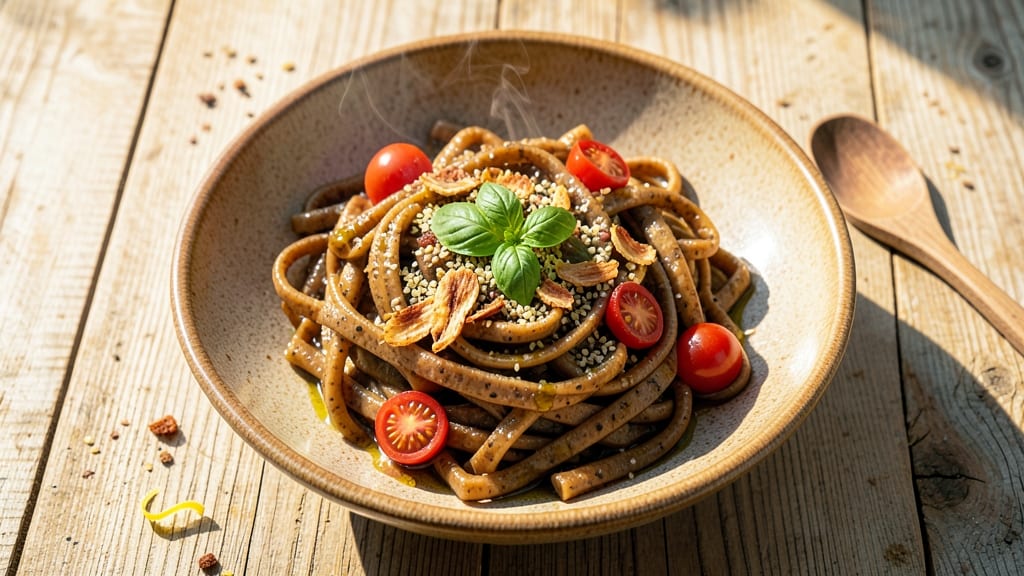
This black bean flour pasta recipe transforms humble ingredients into a protein-packed, al dente noodle that cooks in just 15 minutes. Unlike traditional wheat pasta, black bean flour delivers 15g protein per serving while keeping carbs in check—a game-changer for plant-based diets.
The secret lies in the dough's hydration balance, which creates a firm yet tender texture that holds up perfectly to bold sauces.
What sets this recipe apart is its minimal prep and zero waste: no special equipment, just a bowl and your hands. The dough requires only black bean flour, water, and a pinch of salt, with optional add-ins like nutritional yeast for depth.
After a 30-minute rest, the pasta shapes in minutes and boils in 3-5 minutes—no overcooking, no mush. The result? A nutty, earthy flavor with a satisfying bite that rivals imported pasta.
Pair it with garlic olive oil, marinara, or pesto for a complete meal, or toss with roasted vegetables for a hearty vegan bowl. The high fiber content keeps you full longer, while the complete protein profile makes it ideal for muscle recovery.
This isn’t just pasta—it’s a nutritional upgrade that proves plant-based eating can be both satisfying and simple.
Perfect for meal prep, dinner parties, or weeknight dinners, this recipe proves you don’t need refined flour to make pasta worth making. Let’s get cooking—your taste buds (and macros) will thank you.
Ingredients for black bean flour pasta
Four ingredients create this protein-packed pasta—no special tools needed, just hands and patience.
| Ingredient | Amount | Notes |
|---|---|---|
| Black Bean Flour 🌾 | 2 cups | High-protein, finely milled |
| Water 💧 | ¾ cup | Room temperature preferred |
| Nutritional Yeast 🧀 | 2 tbsp | For cheesy depth |
| Extra-Virgin Olive Oil 🫒 | 1 tbsp | For dough elasticity |
| Sea Salt 🧂 | ½ tsp | Fine grain preferred |
| Garlic Powder 🧄 | ½ tsp | For savory flavor |
| Ground Black Pepper 🌶️ | ¼ tsp | Freshly cracked preferred |
| Lemon Juice 🍋 | 1 tsp | Brightens flavor |
| Chickpea Flour 🌾 | ¼ cup | For extra protein boost |
| Semolina Flour 🌾 | 1 tbsp | For dusting pasta |
| Garlic Cloves 🧄 | 2 cloves | Minced for sauce pairing |
| Extra-Virgin Olive Oil 🫒 | ¼ cup | For finishing sauce |
The black bean flour is the star here—Bob's Red Mill or Anthony's Goods are my go-tos for quality. If you can't find it, Bob's Red Mill chickpea flour works in a pinch, though texture will be slightly different. The nutritional yeast adds that umami punch (I grab the Bragg brand—it's the most consistent). Room-temperature water is key for dough hydration—cold water makes it tough. For extra protein, I always mix in chickpea flour, which also helps with elasticity. The semolina is non-negotiable for dusting—it prevents sticking and gives that classic pasta feel.
No nutritional yeast? White miso paste at half the amount gives a similar depth. Short on chickpea flour? Extra black bean flour works fine, just add a splash more water. The lemon juice brightens everything—freshly squeezed is best, but bottled works in a bind. For the garlic, I always use fresh (the powder is just for flavor in the dough). If you're making a big batch, double the lemon juice and garlic powder—they're the flavor anchors. The olive oil for the dough should be light, not extra-virgin (it can overpower), but the finishing oil? Extra-virgin all the way—that fruity punch makes it sing.
This dough keeps for 3 days in the fridge, wrapped tightly in plastic. For longer storage, freeze shaped pasta for up to 3 months—just thaw before boiling. I portion mine into 1-ounce balls before freezing, so I can toss them straight into boiling water. The pasta cooks in 3-5 minutes—no overcooking! Undercooked pasta is worse than mushy. For extra flavor, reserve some pasta water and toss with the sauce before serving. Trust me, it makes all the difference.
Why You'll Love This Recipe
- Four-Ingredient Magic: I swear, this recipe is the pasta equivalent of a "set it and forget it" casserole. Mix the black bean flour with water, a splash of olive oil, and nutritional yeast—no rolling, no boiling, no waiting for water to boil over. It’s basically a no-fuss dough that comes together in minutes, then cooks in a pan while you chop veggies or stir a sauce.
- Nutty Umami Bomb: That nutritional yeast isn’t just a flavor enhancer—it’s the secret weapon. It gives this pasta a deep, cheesy, slightly funky richness that pairs perfectly with the earthy nuttiness of black bean flour. Honestly, I’ve made it plain with just olive oil and salt, and it’s still ridiculously satisfying.
- Lunchbox Hero: Between us, this pasta holds up like a champ in leftovers. Toss it with roasted veggies on Wednesday, pack it in bento boxes for school lunches, or reheat it for a Friday night takeout vibe. The texture stays al dente-ish, and the flavor only gets better as it sits—no sad, gummy pasta here.
- Pantry Staple Power: Black bean flour is my new budget-friendly obsession. A small bag lasts forever, costs next to nothing, and turns into a meal in under 20 minutes. No eggs, no dairy, no fancy ingredients—just four things you might already have. It’s the kind of recipe that makes me feel like I’m feeding a crowd without breaking the bank.
Step-by-step instructions for black bean flour pasta
Here's how to make protein-rich pasta that's al dente in just 15 minutes.
Mix the Dough Ingredients
In a large mixing bowl, combine the 2 cups black bean flour, 0.25 cup chickpea flour, 0.5 tsp sea salt, 0.5 tsp garlic powder, and 0.25 tsp ground black pepper. Whisk these dry ingredients together until fully blended—this ensures even distribution of flavor and texture throughout the dough.
In a separate small bowl, whisk together the 0.75 cup water, 2 tbsp nutritional yeast, 1 tbsp extra-virgin olive oil, and 1 tsp lemon juice. The nutritional yeast adds that cheesy depth while the lemon juice brightens the earthy bean flavor. Let this mixture sit for 2 minutes to allow the lemon juice to fully integrate with the water.
Combine and Knead the Dough
Pour the wet ingredients into the dry ingredients and stir with a wooden spoon until a shaggy dough forms. The mixture will look dry at first, but don't panic—this is normal with bean-based flours. Gradually work the dough with your hands until it comes together into a smooth, elastic ball.
If the dough feels too sticky, add 1-2 teaspoons of semolina flour (from the 1 tbsp total) to help bind it. You're aiming for a dough that's soft but not tacky—it should feel similar to traditional pasta dough but slightly denser. Knead for 5-7 minutes until the dough is silky and no longer crumbly. Wrap it tightly in plastic wrap and let it rest at room temperature for 30 minutes.
Roll and Cut the Pasta
After resting, divide the dough into 4 equal portions (about ½ cup each). Working with one portion at a time, flatten it slightly with your hands and feed it through a pasta machine set to the widest setting. Fold the sheet in half and repeat this process 2-3 times to develop the gluten and create a smooth surface.
Gradually reduce the pasta machine settings by one notch with each pass, working your way down to the thinnest setting (usually 1 or 2). Dust the dough lightly with semolina flour between each pass to prevent sticking. If the dough feels too dry, spritz it lightly with water. The final sheets should be very thin—almost translucent in places—but still hold together when lifted.
Cook the Pasta Al Dente
Bring a large pot of water to a rolling boil and salt it generously (it should taste like the sea). Add the pasta sheets and cook for 2-3 minutes, stirring occasionally. Black bean flour pasta cooks faster than traditional wheat pasta, so keep a close eye on it. You're looking for al dente texture—when the pasta is tender but still offers a slight resistance when bitten.
Drain the pasta immediately and toss it with 2 cloves minced garlic cloves and 0.25 cup extra-virgin olive oil to prevent sticking and enhance flavor. For a quick sauce, reserve ½ cup of pasta water before draining—this starchy liquid helps create a silky finish. Serve immediately with your favorite garlic-infused olive oil or a simple tomato sauce.
Pro Tips For Making Black Bean Flour Pasta
- Whisk Like You Mean It: Mix the black bean flour and water until the batter is smooth as silk—no lumps, no excuses. I learned this the hard way when my first batch turned out gummy; a fine-mesh strainer after whisking saves you from that chewy regret.
- Salt the Water Like It’s Salty Water: Use more salt than you’d add to regular pasta water—think 1.5 tablespoons per quart. Black bean flour pasta absorbs flavor differently, and you want that salt to penetrate every strand, not just the outside.
- Rest the Dough—Seriously: Let the batter sit for at least 30 minutes before pressing. This step isn’t optional; it’s what keeps your pasta from cracking when you roll it out. (Yes, even if you’re impatient like me.)
- Press Thin, Cook Fast: Roll the dough as thin as you can—about 1/16-inch thick—so it cooks in 2-3 minutes in boiling water. Thicker sheets stay tough, and nobody wants al dente that takes 10 minutes to finish.
Storing and reheating this recipe
Fridge Storage Tips
Store your cooked black bean flour pasta in an airtight container with a damp paper towel to keep it moist. It’ll stay fresh in the fridge for up to 4 days, though the texture becomes slightly firmer after 2 days.
I like to portion it into single-serving containers so I can reheat just what I need. The nutritional yeast and olive oil keep the pasta flavorful even after storage. 🌱
If you notice the pasta drying out, sprinkle a few drops of water over it before sealing the container. The bean flour absorbs moisture differently than wheat pasta, so don’t be surprised if it feels a bit chewier after refrigeration.
That’s normal—just toss it with a splash of pasta water when reheating. 💧
Freezer-Friendly Prep
For longer storage, freeze shaped pasta uncooked on a floured tray for 1 hour to prevent sticking. Transfer to ziplock bags or airtight containers with parchment paper between layers. Label with the date—it’ll keep for up to 3 months.
Thaw overnight in the fridge before boiling, or cook from frozen (add 1 extra minute to boiling time). 🧊
I always freeze pre-portioned dough balls (about 1 oz each) for convenience. When ready to cook, simply drop them into boiling water—no thawing needed. The texture holds up surprisingly well, though it may need 30 seconds extra cooking time from frozen.
This makes it perfect for meal prep Sundays. ⏰
Reheating Methods
For best results, reheat pasta in a stainless steel or cast-iron skillet over medium heat with 2 tbsp water or olive oil. Stir frequently to prevent sticking—black bean flour pasta burns easily.
Add 1 tbsp pasta water if it looks dry. It should take 2-3 minutes to warm through completely. 🔥
If using the microwave, cover with a damp paper towel and heat in 30-second bursts, stirring between each. The bean flour can get gummy if overcooked, so stop when it’s just warm. For extra flavor, toss reheated pasta with fresh garlic and olive oil to revive its taste. 💡
Sauce Pairing Tips
Black bean flour pasta pairs beautifully with creamy or acidic sauces that cut through its earthy flavor. Try a garlic-tahini sauce (tahini + lemon + garlic) or marinara with a splash of balsamic vinegar.
The pasta’s nutty notes complement rich, umami-heavy sauces like mushroom ragù or arugula pesto. 🍅
For a quick fix, toss reheated pasta with extra-virgin olive oil, red pepper flakes, and lemon zest. The acidity balances the bean flour’s heaviness. If your pasta seems dry after reheating, stir in 1-2 tbsp reserved pasta water to restore that silky texture. 🌶️
Nutrition facts
Frequently asked questions
What if I don't have a pasta machine?
No problem! You can roll the dough by hand using a rolling pin or even a wine bottle. Start with the thickest setting you can manage, then gradually roll thinner. For cutting, use a sharp knife or a pasta cutter. The key is patience—bean flour dough is denser than wheat, so it needs more pressure.
Why does my dough feel too dry or crumbly?
Black bean flour absorbs moisture differently than wheat flour. If your dough feels dry, add 1 teaspoon of water at a time while kneading. For crumbly dough, try adding 1 extra tablespoon of olive oil or semolina flour to help bind it. The dough should be soft but not sticky—like playdough.
Can I make this pasta gluten-free?
Yes! This recipe is naturally gluten-free since it uses only bean flours. Just ensure your semolina flour is certified gluten-free (or use cornstarch instead). The texture will be slightly different but still delicious. It’s a great option for those with gluten sensitivities or celiac disease.
How do I prevent the pasta from sticking?
Always dust your work surface and dough with semolina flour while rolling. When boiling, add plenty of salt to the water (it should taste like the sea) and stir frequently. After cooking, toss immediately with a little olive oil to prevent clumping. For extra insurance, reserve ½ cup of pasta water to toss with sauce.
What's the best way to add extra protein?
Boost protein by adding ¼ cup more chickpea flour or 1 tablespoon ground flaxseed to the dough. For a savory kick, stir in 1 tablespoon nutritional yeast or hemp seeds after cooking. These additions keep the pasta hearty while enhancing flavor.