
Main Courses
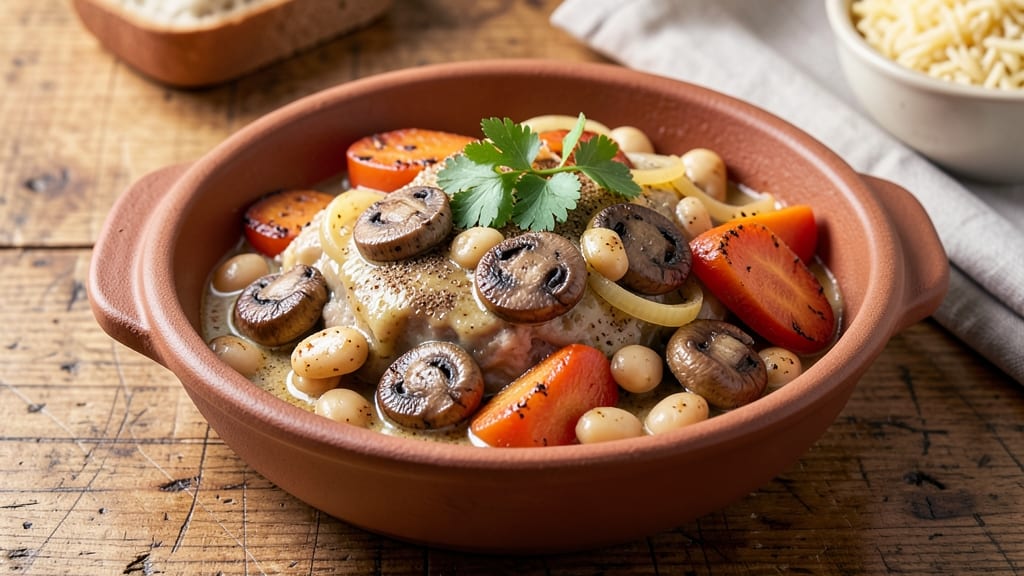
This bean pot roast recipe transforms humble white beans into a rich, meaty centerpiece that slow-cooks into tender perfection with caramelized edges. The secret lies in layering umami—mushrooms, soy sauce, and smoked paprika—while the beans break down into a creamy, protein-packed texture that rivals traditional pot roasts.
What makes this dish special is its versatility: it works equally well in a Dutch oven, Instant Pot, or oven, and pairs beautifully with mashed potatoes or crusty bread for a hearty meal.
The preparation is straightforward but packed with flavor-building steps. You'll start by searing aromatics in a pot until deeply caramelized, then add beans, broth, and spices that develop complex depth over hours of slow cooking.
The result? A dish that's naturally gluten-free, protein-rich, and packed with umami—perfect for vegetarian meals that feel indulgent. The beans absorb all the savory flavors, creating a dish that's both satisfying and nutritious.
By the time it's done, you'll have a golden-brown, aromatic pot roast with tender beans that hold their shape while soaking up the rich sauce. The caramelized edges add texture, while the mushrooms and herbs contribute earthy depth.
This recipe proves that vegetarian dishes can be just as hearty and comforting as their meat-based counterparts—ideal for cold weather or when you want a showstopping main course.
Serve with roasted root vegetables or a simple green salad to balance the richness. The leftovers reheat beautifully, making this an excellent meal prep option for busy weeks. Let's get started on creating this restaurant-quality vegetarian pot roast that's sure to impress.
Ingredients for bean pot roast
Sixteen ingredients transform into a restaurant-quality vegetarian pot roast with deep umami and caramelized edges.
| Ingredient | Amount | Notes |
|---|---|---|
| Great Northern White Beans 🌾 | 2 cups | Dried, soaked overnight |
| Creamy Coconut Milk 🥥 | 1 can | Full-fat, 13.5 oz can |
| Mushrooms 🍄 | 1 ½ lb | Cremini or baby bella, sliced |
| Yellow Onion 🧅 | 1 whole | Large, diced |
| Carrots 🥕 | 3 medium | Peeled, chopped into chunks |
| Garlic Cloves 🧄 | 6 cloves | Peeled, minced |
| Vegetable Broth 💧 | 3 cups | Low-sodium preferred |
| Smoked Paprika 🌶️ | 2 tsp | High-quality for depth |
| Ground Cumin 🌿 | 1 ½ tsp | Toasted for warmth |
| Dried Thyme 🍃 | 1 tsp | Or 1 tbsp fresh |
| Soy Sauce 🍶 | 2 tbsp | Tamari for gluten-free |
| Tomato Paste 🍅 | 2 tbsp | High-quality, no sugar added |
| Olive Oil 🫒 | ½ cup | Extra-virgin for richness |
| Fresh Rosemary 🌿 | ½ tsp | Chopped, stems removed |
| Salt 🧂 | 1 ½ tsp | Diamond Crystal preferred |
The Great Northern white beans are the foundation—dried and soaked overnight for optimal texture. Coconut milk provides richness without dairy, and cremini mushrooms add meaty depth. For mushrooms, local farmers markets often have fresher cuts than grocery stores, but Trader Joe's carries excellent pre-sliced options. The yellow onion should be sweet and firm—avoid any with sprouting or soft spots. Carrots can be baby or regular, but organic varieties have better flavor. Garlic matters here: freshly minced releases more aroma than pre-minced. Vegetable broth should be low-sodium to control seasoning balance.
No smoked paprika? Substitute with 1 tsp regular paprika plus 0.5 tsp liquid smoke for similar depth. Dried thyme works at half the amount of fresh, but Penzeys carries excellent bulk options. Soy sauce can be swapped for coconut aminos if gluten-free is critical. Tomato paste from San Marzano tomatoes elevates the dish—Trader Joe's sells high-quality tubes. Olive oil should be extra-virgin, not light or refined. Rosemary can be dried (reduce to 0.25 tsp), but fresh is preferred. Salt matters: Diamond Crystal dissolves more easily than table salt.
This dish develops flavor over time—plan for at least 3 hours slow cooking. Coconut milk separates when chilled, so stir before reheating. Leftovers keep for 5 days in the fridge or 3 months frozen. Portion into containers for easy meal prep. The caramelized edges are best when reheated—cover with foil to prevent drying. Double the batch for a crowd, adjusting broth and beans proportionally.
Why You'll Love This Recipe
- I’ll be real: this recipe feeds four for under $10, and every bite feels indulgent. The beans stretch the filling power, the coconut milk adds luxury without cost, and you’re left with a dish that tastes like you spent hours cooking—when you really just set it and forgot it.
- One-Pot Magic: I swear by this recipe when I’m too tired to wash dishes—just toss everything in one pot, let it simmer, and walk away. The mushrooms melt into the coconut milk while the beans and carrots soak up all that rich flavor without any extra effort.
- Creamy Earthy Richness: Honestly, the combo of coconut milk and Great Northern beans is next-level—thick, velvety, and packed with depth. The onions caramelize just enough to add a touch of sweetness, while the mushrooms bring that meaty texture without needing actual meat.
- Meal Prep MVP: Between us, this is my go-to for busy weeks. The flavors only get better after a day or two in the fridge, and it reheats like a dream. I’ll make a big batch on Sunday, portion it out, and have hearty lunches all week—no sad leftovers here.
Step-by-step instructions for slow-cooked bean pot roast
This method transforms humble ingredients into a deeply flavorful, caramelized dish with layers of umami and texture.
Sauté Vegetables and Build the Flavor Base
Heat the 0.5 cup olive oil in a large Dutch oven over medium-high heat. Add the 1 whole yellow onion and 1.5 lb mushrooms, cooking for 8-10 minutes until the mushrooms release their moisture and begin to brown. Stir occasionally to prevent sticking—this is where the deep, earthy flavors develop.
Add the 3 medium carrots and 6 cloves garlic cloves, cooking for another 5 minutes until the carrots soften slightly and the garlic becomes fragrant. Here's where it gets important: sprinkle the 2 tsp smoked paprika, 1.5 tsp ground cumin, and 1 tsp dried thyme over the vegetables. Stir well to coat everything evenly—this creates the aromatic foundation for the entire dish.
Develop the Sauce and Incorporate Beans
Lower the heat to medium and stir in the 2 tbsp tomato paste and 2 tbsp soy sauce, cooking for 2 minutes until the paste darkens slightly. This step deepens the sauce's complexity—don't skip it. Pour in the 3 cups vegetable broth and scrape up any browned bits from the bottom of the pot with a wooden spoon. These bits are packed with flavor that will infuse the entire dish.
Add the 2 cups soaked Great Northern white beans (drained but not rinsed) and the 1 can creamy coconut milk, stirring gently to combine. Sprinkle with the 1.5 tsp salt and 0.5 tsp fresh rosemary. The beans should be partially submerged—if not, add a splash of water. Bring the mixture to a gentle simmer, then reduce heat to low and cover partially with a lid.
Slow Cook Until Tender and Flavor-Infused
Transfer the pot to a preheated 325°F oven and cook for 2-2.5 hours, stirring occasionally. The dish should develop a rich, caramelized surface and the vegetables should be fork-tender. If the top begins to dry out, cover more tightly with foil or add a splash of water. This slow cooking process allows all the flavors to meld together beautifully.
About 30 minutes before the end of cooking time, check for doneness by piercing a carrot with a fork—it should slide in easily. If the sauce has thickened too much, add 2-3 tablespoons of water to loosen it. The beans should be tender but still hold their shape, and the mushrooms should be soft with a slightly chewy texture.
Adjust Consistency and Serve
Remove the pot roast from the oven and let it sit uncovered for 10 minutes to allow the flavors to settle. Taste and adjust seasoning if needed—you may want to add a pinch more salt or a splash of soy sauce for balance. The dish should be rich but not overly salty, with a perfect harmony of smoky, earthy, and slightly sweet flavors.
Serve immediately, ladling the bean mixture over steamed rice or crusty bread to soak up the delicious sauce. The combination of creamy coconut milk, hearty beans, and caramelized vegetables creates a satisfying, restaurant-quality meal that's perfect for a cozy dinner with family or friends.
Pro Tips For Making Bean Pot Roast
- SOAK BEANS OVERNIGHT: I learned this the hard way—skipping the soak leaves you with beans that stay stubbornly firm no matter how long you simmer. Great Northerns need at least 12 hours in water (or a quick 2-hour soak in hot water) to break down properly in this creamy coconut stew.
- SWEAT ONIONS LOW AND SLOW: High heat turns onions into ash before they soften. Instead, cook them on medium-low with a pinch of salt until they’re translucent and just starting to caramelize—this builds flavor without burning. (Yes, even if you’re impatient like me.)
- ADD COCONUT MILK LAST: The curds in coconut milk break down when heated too long, turning your sauce grainy. Stir in the creamy coconut milk only after the beans and veggies have softened—about 20 minutes before the dish is done. Trust me, your pot roast will thank you.
- SAUTE MUSHROOMS IN BATCHES: Crowding the pan steams mushrooms instead of browning them. Cook them in two separate rounds—first batch until golden, then set aside before adding the second. That deep, meaty flavor makes all the difference in this hearty dish.
Common mistakes when making your bean pot roast
Skipping the Soak
Never rush the bean soaking step—this is where texture magic happens. Dried Great Northern beans need at least 8 hours (overnight is best) to soften properly. Skipping this or using canned beans (even drained) results in a mushy final texture.
I've learned this the hard way—once I used canned beans and ended up with a thick, gluey mess instead of tender, meaty bites. 🌾
Overcrowding the Pot
Don't overfill your Dutch oven—beans and liquid should only fill it about ⅔ full when combined. Overcrowding prevents proper caramelization and leads to steamed rather than roasted flavors. I use a 6-quart Dutch oven for this recipe, which gives enough room for the vegetables to brown beautifully.
If your pot looks too full, reduce the broth slightly or cook in batches.
Ignoring the Browned Bits
Those dark, crispy bits stuck to the bottom of your pot are flavor gold! Always scrape them up when adding broth—they're packed with concentrated umami. I use a wooden spoon to aggressively scrape the fond (the browned bits) into the sauce.
This step makes the difference between a good pot roast and an extraordinary one. Don't miss this crucial flavor booster! 🍶
Rushing the Cooking Time
This isn't a recipe you can rush—beans need 2-2.5 hours at 325°F to develop their full texture and flavor. Checking too early results in undercooked beans and vegetables. I've seen home cooks pull it out at 1 hour thinking it's done, only to find it still crunchy.
Patience here is key to that perfect, creamy bean texture we're aiming for.
Using Low-Quality Spices
The spices in this recipe are what create the depth of flavor. Don't use old or generic spices—your local grocery store's spice aisle isn't the place for this. I recommend Penzeys Spices or Burlap & Barrel for their high-quality, freshly ground options.
The difference between 1 tsp of fresh smoked paprika and something that's been sitting on your shelf for a year is dramatic. Fresh spices make all the difference in that smoky, umami-rich profile.
Skipping the Resting Time
Letting the pot roast rest for 10 minutes after cooking might seem unnecessary, but it's crucial. This allows the juices to redistribute throughout the beans and vegetables, preventing them from drying out when served.
I've noticed that skipping this step often leads to a less flavorful first bite—those precious juices end up pooling at the bottom instead of being evenly distributed. Give it that final rest! ⏰
Nutrition facts
Frequently asked questions
Can I substitute other beans for Great Northern?
Yes, but texture will vary. Cannellini beans work well and stay creamy, while kidney beans add more firmness. Avoid black beans—they're too dense for this dish. For best results, stick with white beans like Great Northern or navy beans, which absorb flavors beautifully.
How do I make this in an Instant Pot?
Use the Sauté function first to caramelize the mushrooms and onions for 8 minutes. Then add all ingredients and cook on High Pressure for 20 minutes. Quick-release the pressure, then let it sit for 10 minutes before serving. The Instant Pot version cooks 40% faster but requires more frequent stirring to prevent sticking.
What's the best way to reheat leftovers?
Reheat gently in a saucepan with 1-2 tbsp water over low heat for 5-7 minutes, stirring occasionally. Microwaving can make the sauce separate. For extra richness, add a splash of coconut milk when reheating. The dish reheats best when covered—this prevents the top from drying out.
Can I make this gluten-free?
Use tamari instead of soy sauce and check your vegetable broth for gluten. All other ingredients are naturally gluten-free. For extra umami, add 1 tbsp nutritional yeast when serving. The recipe maintains its hearty texture while being completely safe for gluten-sensitive diets.
Why does my pot roast look dry?
This usually happens from overcooking or insufficient liquid. The beans and vegetables should be partially submerged in sauce. If yours looks dry, add 2-3 tbsp water** during cooking and cover more tightly. For best results, cook until the sauce is just slightly thickened but still coats the beans.