
Breakfast & Brunch
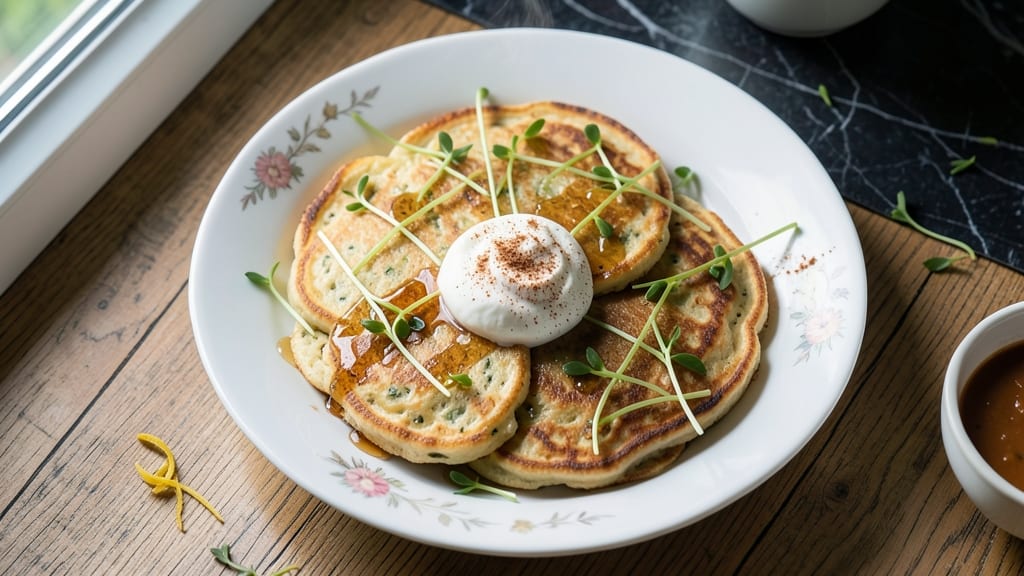
This bean sprout pancake recipe delivers the perfect balance of crispy edges and silky centers with a fresh, crunchy bean sprout surprise in every bite.
The secret lies in a simple batter that transforms ordinary pancakes into a textural masterpiece—where golden-brown edges meet tender, fluffy interiors, all brightened by the delicate crunch of fresh bean sprouts.
I developed this recipe after years of experimenting with plant-based breakfasts, and it’s become a staple in my morning rotation.
The magic happens in the pan with medium-high heat and just the right amount of oil to create that coveted crispiness without sacrificing the soft interior.
Bean sprouts add a subtle crunch and freshness that elevates the pancakes beyond the ordinary, while a touch of baking powder ensures they rise just enough to stay light and airy. This isn’t your typical pancake—it’s a breakfast experience that feels both indulgent and nutritious.
By the time you flip the first pancake, you’ll notice the edges turning a beautiful golden brown while the center remains velvety smooth. The bean sprouts stay crisp, offering a satisfying contrast with every bite.
Serve with a drizzle of maple syrup or a dollop of vegan yogurt to complement the pancakes’ natural brightness.
Perfect for brunch gatherings or a quick weeknight breakfast, these pancakes are foolproof and ready in under 30 minutes. The recipe scales easily, so you can make a batch for the whole family without any fuss. Let’s get cooking!
Ingredients for bean sprout pancake
Fresh bean sprouts and fluffy batter come together for pancakes that surprise with every bite.
| Ingredient | Amount | Notes |
|---|---|---|
| All-Purpose Flour 🌾 | 1 ½ cups | Unbleached preferred for fluffiness |
| Baking Powder 🍞 | 1 tbsp | Aluminum-free for best rise |
| Sugar 🍚 | ½ cup | Granulated, for subtle sweetness |
| Vegan Butter 🧈 | ½ cup | Melted, full-fat preferred |
| Unsweetened Soy Milk 🥛 | 1 cup | Room temperature for smooth batter |
| Bean Sprouts 🌱 | ½ cup | Fresh, chopped into tiny pieces |
| Ground Flaxseed 🌿 | 1 tbsp | Mixed with 3 tbsp water for egg replacer |
| Vanilla Extract 🌸 | 1 tsp | Pure vanilla for authentic flavor |
| Salt 🧂 | ½ tsp | Fine sea salt preferred |
| Vegetable Oil 🫒 | 2 tbsp | For cooking, high smoke point |
| Maple Syrup 🍁 | ¼ cup | For serving, Grade A preferred |
The bean sprouts are the star here—look for crisp, fresh ones at the produce section, not the wilted kind in the back. Trader Joe's or Whole Foods usually have the best quality, but any grocery store's bean sprout bin works. If you can't find fresh ones, substitute with finely chopped jicama, though it won't have the same crunch. The flax egg is non-negotiable for that perfect fluffy texture—mix it well and let it sit for 5 minutes to thicken properly. For the flour, King Arthur unbleached is my go-to, but any all-purpose will work.
No soy milk? Almond or oat milk works just fine, but avoid dairy milk since this is vegan. Running short on vanilla? Vanilla sugar at half the amount is a good swap, though pure extract gives the best flavor. The baking powder is crucial—don't substitute baking soda unless you add an acid like vinegar. For extra crispiness, heat your pan for 2 minutes before adding oil. The maple syrup? Grade A is sweeter and better for pancakes, but Grade B works too if that's all you've got.
Make the batter ahead and refrigerate for up to 24 hours—the flavor actually improves overnight. Store leftovers in an airtight container for 3 days, or freeze for 3 months by wrapping each pancake in parchment paper. Reheat in a toaster or skillet for that fresh-out-of-the-pan crispiness. These pancakes reheat beautifully, so they're perfect for meal prep—just keep them covered to maintain that crunchy edge.
Why You'll Love This Recipe
- No-Fuss Mixing: I swear by this batter—just flour, baking powder, soy milk, and a splash of sugar. No whisking until your arm gives out; a fork does the job in seconds, and the bean sprouts add texture without extra work.
- Sweet-Savory Magic: That crispy edge from vegan butter meets the fresh crunch of bean sprouts—like a pancake and salad had a delicious, unexpected baby. Honestly, the first bite makes you question why you ever skipped sprouts in breakfast.
- Breakfast or Brunch: Serve them stacked for a lazy Sunday morning or tear into halves as a quick lunch. My kids ask for these more than cereal, and they’re just as happy with syrup or a sprinkle of flaky salt.
- Pantry Staple Power: Uses ingredients you already own, costs next to nothing, and keeps for days in the fridge. I double the batch on Sundays—half for breakfast, half for snacks when hunger strikes at 3 PM.
Step-by-step instructions for bean sprout pancakes
Here's how to create pancakes with crispy edges and a silky bean sprout center—every bite is packed with texture and flavor.
Prepare the Flaxseed Egg Replacer
In a small bowl, mix the 1 tablespoon ground flaxseed with 3 tablespoons water. Let it sit for 5 minutes until it thickens into a gel-like consistency—this is your egg replacer. Stir in the 1 teaspoon vanilla extract and set aside. This step mimics the binding properties of eggs while keeping the recipe vegan-friendly.
While waiting, melt the 0.5 cup vegan butter in a small saucepan over low heat until fully liquid. Remove from heat and let it cool slightly—this ensures it blends smoothly with the batter later. The melted butter adds richness that complements the earthy bean sprouts perfectly.
Mix the Wet and Dry Ingredients
In a large mixing bowl, combine the 1.5 cups all-purpose flour, 1 tablespoon baking powder, 0.5 teaspoon salt, and 0.5 cup sugar. Whisk these dry ingredients together until evenly distributed—this prevents lumps and ensures even rising. I like to use a whisk for this step because it incorporates air, which gives the pancakes that light, fluffy texture.
In a separate bowl, mix the 1 cup unsweetened soy milk (make sure it's room temperature), the flaxseed mixture, and the melted vegan butter. Then, gradually pour the wet ingredients into the dry ingredients while stirring gently with a spatula. The batter should be thick but pourable—like heavy cream. If it's too thick, add 1 tablespoon soy milk at a time until it reaches the right consistency.
Fold in the Bean Sprouts
Gently fold in the 0.5 cup chopped bean sprouts using a spatula, being careful not to overmix. The sprouts should be evenly distributed throughout the batter—this ensures each pancake gets that signature silky, crunchy center. Let the batter rest for 10 minutes at room temperature. This resting period allows the flour to fully hydrate and the baking powder to activate, which guarantees a fluffier pancake.
Here's the thing—don't skip the resting time. I've learned the hard way that rushing this step leads to dense pancakes. The bean sprouts will soak up some of the liquid, so the batter might look slightly thicker after resting, but that's normal and actually improves the texture.
Cook the Pancakes to Crispy Perfection
Heat a non-stick skillet over medium heat and add 1 tablespoon vegetable oil. Once the oil is shimmering (about 30 seconds), pour ¼ cup batter into the center of the skillet. Immediately sprinkle a pinch of salt over the top—this enhances the flavor as the pancake cooks. Let the pancake cook undisturbed for 2-3 minutes until bubbles form on the surface and the edges look set.
Flip carefully using a spatula and cook for another 1-2 minutes until the bottom is golden brown and crispy. The bean sprouts will create little pockets of texture in the center, so avoid pressing down on them—you want to preserve that silky, slightly crunchy surprise. Transfer the cooked pancake to a plate and keep it warm in a 200°F oven while you cook the remaining batter.
Serve with Maple Syrup
Stack the pancakes and drizzle generously with the 0.25 cup maple syrup. The syrup's rich, caramel-like flavor complements the earthy bean sprouts and crispy edges beautifully. Serve immediately while the pancakes are still warm and crispy—this is when they're at their absolute best.
Each bite should deliver a perfect balance: a crispy, golden-brown exterior that gives way to a tender, fluffy interior with pockets of silky bean sprouts. The maple syrup ties everything together, adding a touch of sweetness that makes these pancakes irresistible. Enjoy them with fresh fruit or a dollop of vegan yogurt for extra flair.
Pro Tips For Making Bean Sprout Pancake
- Heat the Pan First: I learned this the hard way—cold pans make soggy pancakes. Get that skillet ripping hot before adding butter, then let the butter sizzle for 10 seconds. The extra effort guarantees a crisp base, especially with vegan butter that can be trickier to brown.
- Whisk Soy Milk Well: Soy milk separates like a diva if you’re lazy. Whisk it vigorously for 30 seconds before mixing into the batter—no clumps, no weird textures. I used to skip this and ended up with pancakes that tasted like cottage cheese.
- Skip Overmixing the Batter: The moment your batter looks like glue, stop. Overmixing develops gluten, and these pancakes turn out dense instead of light. Stir just until the dry ingredients disappear—about 15 seconds. Your future self will thank you when they’re fluffy.
- Use a Thin Ladle: Bean sprouts sink like rocks if you dump them in. Use a small, thin ladle to place them gently on top of the batter—just a few per pancake. Too many, and they steam instead of crisp up. Less is more; trust me.
Essential equipment for this dish
Non-Stick Skillet
Your non-stick skillet is non-negotiable for crispy edges without sticking. I recommend a 10-inch cast iron skillet with a non-stick coating—like the GreenPan Smartware—for even heat distribution and easy flipping.
If you don’t have non-stick, a well-seasoned Lodge cast iron works too, but you’ll need to grease it extra well with vegetable oil before cooking. Avoid aluminum or thin stainless steel pans—they won’t hold heat consistently, leading to uneven cooking. 🔥
Mixing Bowls
Use two medium-sized mixing bowls—one for dry ingredients and one for wet—to keep things organized. A glass or stainless steel bowl (like the OXO Good Grips) is ideal because it won’t absorb flavors or react with acidic ingredients.
For the flaxseed egg, a small ramekin or shot glass works perfectly to measure and mix the flaxseed and water. Pro tip: Use bowls with marked measurements on the side to avoid guessing with the soy milk or flour. ✨
Whisk and Spatula
A balloon whisk (like the OXO Good Grips) is essential for combining dry ingredients smoothly, while a heat-resistant silicone spatula (such as EcoTools) helps fold in the bean sprouts without tearing the batter.
Avoid metal spatulas—they can scratch non-stick pans. For extra fluffiness, I also use a rubber spatula to scrape every last bit of batter from the bowl into the pan. 💫
Measuring Tools
Precision matters, so invest in dry and liquid measuring cups (like the Weck brand) and a measuring spoons set (such as OXO’s). For the flaxseed egg, a small kitchen scale (like the Escali Primo) ensures accuracy—1 tablespoon ground flaxseed should weigh about 10 grams.
If you don’t have one, use a standard measuring spoon and trust the 5-minute resting time to thicken the mixture properly. 💡
Oven for Keeping Warm
Set your oven to 200°F to keep pancakes warm while you cook the rest of the batch. A toaster oven works too if you’re making a small batch. Preheat the oven for 5 minutes before transferring pancakes to a wire rack on a baking sheet.
This low-and-slow method prevents sogginess and maintains crispy edges. Avoid stacking pancakes directly on each other—they’ll steam and lose texture. ⚡
Nutrition facts
Frequently asked questions
Can I substitute bean sprouts with another vegetable?
Yes! If you can't find fresh bean sprouts, try finely chopped jicama (for mild sweetness) or water chestnuts (for extra crunch). For a different flavor, shredded carrots or zucchini work too, though they'll be softer. Just chop them very small so they distribute evenly in the batter.
Why do my pancakes turn out dense instead of fluffy?
Dense pancakes usually happen from overmixing the batter or skipping the 10-minute rest. Whisk just until combined, and let the batter sit—this allows the baking powder to activate properly. Also, make sure your flaxseed egg is fully thickened (5 minutes) before mixing. Overcrowding the pan can also cause steam buildup, leading to dense centers.
How do I make these pancakes gluten-free?
Replace the all-purpose flour with a 1:1 gluten-free flour blend (like Bob's Red Mill) and add 1 extra tablespoon of xanthan gum per cup of flour. The flaxseed egg and baking powder ratios stay the same. Test your blend first—some require slightly more liquid. For crispy edges, use a well-seasoned cast iron pan with extra oil.
Can I make the batter ahead of time?
Prepare the batter up to 24 hours ahead and store it in an airtight container in the fridge. The flavors actually improve overnight. When ready to cook, let it sit at room temperature for 10 minutes before using. For extra crispiness, add 1 extra tablespoon of soy milk if the batter thickens too much after chilling.
What's the best way to reheat leftover pancakes?
For crispy edges, reheat in a non-stick skillet over medium-low heat for 1-2 minutes per side with a tiny bit of oil. Toaster ovens work too at 350°F for 3-4 minutes. Microwaving makes them soggy—avoid it! Store leftovers in an airtight container for 3 days or freeze for 3 months (wrap individually in parchment).