
Soups & Stews
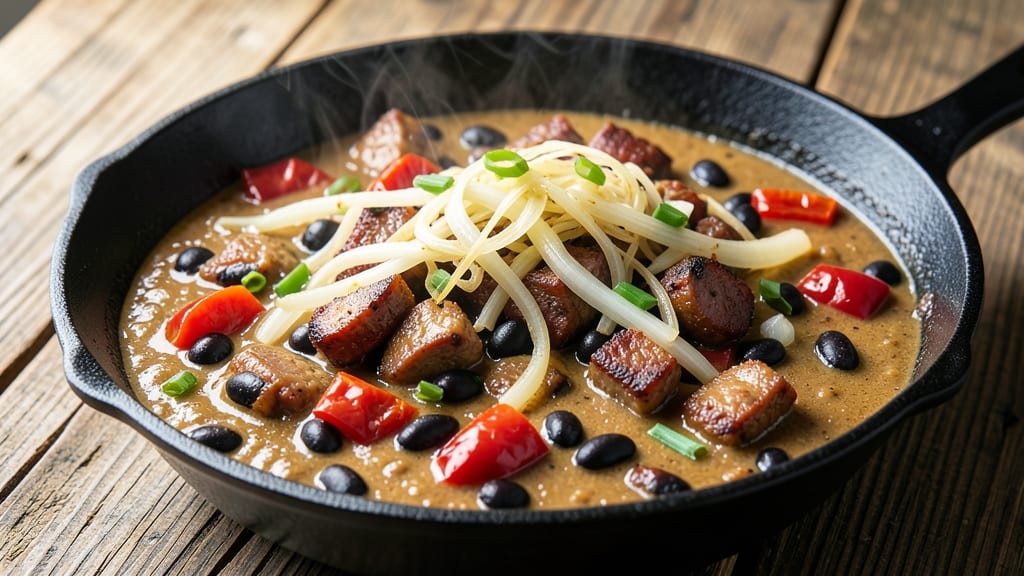
This black bean gumbo recipe delivers the soul-warming depth of Louisiana cuisine—rich, smoky, and packed with Cajun heat—without a single meat ingredient. The foundation? A dark, nutty roux cooked until it reaches the perfect mahogany stage, where flour and oil transform into flavor gold.
I’ve perfected this vegan version over years of testing, ensuring every spoonful delivers that signature gumbo texture and complexity, just like your favorite New Orleans pot.
The secret lies in the holy trinity—onions, bell peppers, and celery—sautéed until tender, then layered with spices like smoked paprika, thyme, and bay leaves. Black beans soak up the smoky broth while okra or filé powder (if using) thickens it naturally, creating that signature gumbo consistency.
The result? A hearty, vegan-friendly stew that’s as comforting as it is bold. By the time you’re done, you’ll have a pot of gumbo that’s deeply aromatic, with a roux so flavorful it needs no meat to shine.
The black beans add heartiness, while the spices and vegetables create a symphony of textures—creamy, tender, and slightly spicy. Serve it with hot cornbread and a crisp green salad for the full Louisiana experience. This recipe is your ticket to restaurant-quality gumbo at home, with no shortcuts.
Let’s get cooking—your taste buds will thank you.
Ingredients for black bean gumbo
Six servings of rich, smoky gumbo start with just 16 ingredients—no meat, all flavor.
| Ingredient | Amount | Notes |
|---|---|---|
| All-Purpose Flour 🌾 | ½ cup | For dark mahogany roux |
| Extra-Virgin Olive Oil 🫒 | ½ cup | High-quality for roux |
| Yellow Onion 🧅 | 2 whole | Diced into small pieces |
| Green Bell Pepper 🍅 | 1 whole | Diced, any color works |
| Celery Stalks 🥬 | 3 whole | Diced, including leaves |
| Garlic Cloves 🧄 | 4 cloves | Minced for depth of flavor |
| Smoked Paprika 🌶️ | 2 tbsp | Key for Cajun heat |
| Dried Thyme 🌿 | 1 tbsp | Or 1 tbsp fresh thyme |
| Bay Leaves 🍃 | 2 whole | Remove before serving |
| Black Beans 🫘 | 2 cups | Cooked or canned, drained |
| Vegetable Broth 💧 | 4 cups | Low-sodium preferred |
| Okra 🌱 | 1 cup | Sliced, optional for texture |
| Lemon Juice 🍋 | 2 tbsp | Freshly squeezed |
| Salt 🧂 | 1 ½ tsp | Adjust to taste |
| Black Pepper 🌶️ | ½ tsp | Freshly ground |
| Cajun Seasoning 🌶️ | 1 tbsp | Store-bought or homemade |
The roux is where magic happens. All-purpose flour and extra-virgin olive oil transform into that signature mahogany color—stir constantly over medium heat for 20-30 minutes. Whole Foods or Trader Joe's carry high-quality olive oil that won't burn too quickly. For the holy trinity, diced onions, bell peppers, and celery should be uniform in size so they cook evenly. I like to buy fresh celery with green tops still attached—they're just as flavorful as the stalks. Penzeys spices are my go-to for smoked paprika and dried thyme—more aromatic than the grocery store basics.
No okra? Filé powder at 1 tsp thickens beautifully (just whisk it in at the end). Short on thyme? Dried oregano at half the amount works in a pinch. The black beans should be cooked but still slightly firm—not mushy. For extra depth, toasted cumin seeds (1 tsp) add a smoky note. The vegetable broth matters—Imagine or Pacific Foods brands have the richest flavor. If using canned beans, rinse them well to remove excess sodium. The lemon juice brightens everything—freshly squeezed is non-negotiable.
This gumbo tastes even better the next day as flavors meld. Store in an airtight container for up to 5 days in the fridge or freeze for 3 months. I like to portion it into quart-sized containers for easy lunches. The roux can be made ahead and refrigerated for 3 days—just reheat gently before adding to the pot. For reheating, add a splash of water or broth to prevent thickening. The okra, if using, should be added last to maintain its texture.
Why You'll Love This Recipe
- One-Pot Magic: I swear by this—just toss the trinity (onion, bell pepper, celery) in olive oil, let it soften, then stir in the roux (flour + a little oil) until it’s rich and golden. No extra pots, no mess. The gumbo thickens itself while you chop veggies for the side.
- Smoky Depth: That dark roux isn’t just a trick—it’s the soul. When you toast the flour in olive oil until it’s nutty and deep brown, then deglaze with broth, the black beans soak up all that caramelized flavor. It’s not just gumbo; it’s good gumbo.
- Leftover Goldmine: Between us, this tastes better the next day. The flavors meld overnight, and reheating it stirs up all those toasty, smoky notes. Pack it for lunches or freeze half—your future self will thank you.
- Budget Feast: Black beans stretch this dish into a full meal for less than $10. The roux makes it feel fancy, but the ingredients? Basic. Onion, bell pepper, celery—stuff you already have. Feed four people or just me for three nights. No guilt.
Step-by-step instructions for black bean gumbo with smoky roux
This gumbo delivers rich, smoky depth through a perfect mahogany roux foundation.
Develop the Dark Mahogany Roux
Heat the 0.5 cup extra-virgin olive oil in a heavy Dutch oven over medium-low heat. Add the 0.5 cup all-purpose flour all at once and whisk constantly with a wooden spoon. The mixture will bubble immediately—this is when the cooking begins.
Watch closely as the roux transforms through stages: from pale yellow to golden, then to a deep mahogany color. This takes 15-20 minutes of constant stirring. The key is patience—the roux must develop this rich color to carry the gumbo's flavor. If it smells nutty and sweet, you're on track. Remove from heat immediately once it reaches the mahogany stage—burnt roux ruins everything.
Sauté the Holy Trinity Vegetables
Return the Dutch oven to medium heat and add the diced 2 whole yellow onions, 1 whole green bell pepper, and 3 whole celery stalks. Cook for 8-10 minutes, stirring occasionally, until the vegetables soften and release their juices. You want them tender but not browned—this prevents bitterness in the final dish.
Add the 4 minced garlic cloves and cook for 30 seconds until fragrant. Here's where the flavor builds—don't rush this step. The vegetables should be completely coated in the roux's rich oils by now, creating the gumbo's signature base. If they stick, add 1 tablespoon vegetable broth to deglaze and scrape up any browned bits.
Build the Spice Base
Stir in the 2 tablespoons smoked paprika, 1 tablespoon dried thyme, 1 tablespoon Cajun seasoning, 1.5 teaspoons salt, and 0.5 teaspoon black pepper. Cook for 1-2 minutes until the spices are aromatic and the mixture smells deeply earthy. This is the gumbo's soul—where the heat and depth of flavor develop.
Add the 2 whole bay leaves and pour in the 4 cups vegetable broth, scraping up any browned bits from the bottom of the pot. Bring to a gentle simmer and let it cook for 10 minutes to allow the spices to bloom fully. The broth should now be infused with all those rich, smoky flavors we worked so hard to develop.
Incorporate the Black Beans and Okra
Add the 2 cups black beans and 1 cup sliced okra to the simmering broth. Stir gently to combine, then reduce heat to low. Let the gumbo simmer for 20-25 minutes, stirring occasionally, until the beans are heated through and the okra has softened slightly. The gumbo should be thick but not gluey—if it's too thick, add ½ cup more vegetable broth.
Taste and adjust seasoning—this is where you can really fine-tune the balance. I usually add another ½ teaspoon salt at this stage. The gumbo should have a deep, complex flavor with a nice balance of heat from the Cajun seasoning and smokiness from the paprika.
Finish with Lemon and Serve
Remove the 2 whole bay leaves and stir in the 2 tablespoons fresh lemon juice. This bright acidity cuts through the richness of the gumbo, balancing all the deep flavors. Simmer for 2-3 minutes to let the lemon integrate fully.
Serve the gumbo immediately over steamed white rice or with crusty bread to soak up every last bit of that rich, smoky goodness. The gumbo should be thick enough to coat the back of a spoon but still have a lovely sheen from the roux. Each spoonful should deliver layers of flavor—smoky, spicy, earthy, and slightly tangy—all working together in perfect harmony.
Pro Tips For Making Black Bean Gumbo
- Sweat the Holy Trinity: Cook your onion, bell pepper, and celery until they’re actually soft—not just slightly translucent, but breaking down into the pot like a well-worn sock. I used to rush this, and my gumbo always tasted like it needed more time. Five minutes of steady sweating makes the roux later smoother and deeper in flavor.
- Toast the Flour Low and Slow: Skip the high-heat roux drama—black bean gumbo doesn’t need a peanut butter consistency. Cook the flour in olive oil over medium-low until it’s a rich, chocolate-brown color (about 10-12 minutes), stirring constantly. Burnt flour? That’s just sad. Trust me, you’ll smell it before it happens.
- Deglaze with Stock, Not Water: After browning your protein (if using) or sweating the veggies, splash in hot stock (chicken or veggie) instead of cold water. The residual heat pulls every last bit of flavor off the pot—water just makes you chase it. A quick 30-second deglaze here saves you from a bland base later.
- Salt the Beans Early: Add the black beans to the gumbo before the final 30 minutes of simmering, and season them with a pinch of salt right away. This keeps them tender and prevents them from turning mushy or absorbing too much liquid at the end. (Yes, even if the recipe says “add later.”)
Make-ahead tips for this recipe
Roux Prep Ahead
Make your mahogany roux the night before and store it in an airtight container in the fridge. It’ll keep for 3 days—just reheat gently in a saucepan over low heat for 5-10 minutes, stirring constantly, before adding to your gumbo.
This shortcut saves 20-30 minutes of active cooking time on the day you serve it. 💡
Bean Prep Shortcut
Use canned black beans for convenience, but rinse them thoroughly to remove excess sodium. For extra flavor, add 1 teaspoon cumin seeds to the roux while cooking—these toast quickly and add a smoky depth.
If you prefer texture, hold back ¼ cup beans to add at the very end for a pop of warmth. 🌶️
Broth Boost
Double your vegetable broth batch and freeze it in 1-cup portions for future gumbo-making. A rich, homemade broth elevates the dish—simmer carrots, celery, onion, and garlic with a bay leaf for 1 hour before straining. Store in quart-sized freezer bags for up to 3 months. ❄️
Okra Substitutes
Skip the okra if you’re short on time—it’s optional for texture. Instead, whisk in 1 teaspoon filé powder (made from ground sassafras leaves) at the end for a silky, traditional gumbo consistency.
If using okra, slice it ¼-inch thick and add it 10 minutes before serving to keep it tender. 🌱
Freezer-Friendly Assembly
Assemble the gumbo up to the okra/filé powder stage, then cool completely before transferring to freezer-safe containers. Leave 1-inch headspace for expansion and freeze for up to 3 months.
To reheat, thaw overnight in the fridge, then warm on the stovetop over low heat with 2 tablespoons water to restore thickness. 🔥
Spice Pre-Mix
Combine all your dry spices—smoked paprika, thyme, Cajun seasoning, salt, and pepper—in a small jar. Store it in your pantry for up to 3 months to use in future gumbo batches or even rice dishes. This gumbo spice blend saves time and ensures consistent flavor every time. ✨
Nutrition facts
Frequently asked questions
Can I make this black bean gumbo without okra?
Okra is optional and adds a unique texture, but you can skip it entirely. For a similar thickening effect, whisk in 1 teaspoon filé powder at the very end—it creates that signature gumbo consistency without the slimy texture some people dislike. If you prefer extra heartiness, add ½ cup diced sweet potatoes instead.
How do I adjust the spice level for kids or sensitive eaters?
Start by reducing the smoked paprika to 1 tablespoon and the Cajun seasoning to ½ tablespoon. For extra mildness, omit the cayenne pepper entirely and add ½ teaspoon ground cinnamon instead—it adds warmth without heat. Always taste as you go and adjust with more broth or a splash of lemon juice to balance flavors.
What’s the best way to reheat leftover gumbo?
Reheat gently on the stovetop over low heat with 2-3 tablespoons water or broth to prevent thickening. Stir frequently and simmer for 5-7 minutes until warmed through. For microwave reheating, cover with a damp paper towel and heat in 30-second intervals, stirring between each. Never reheat to a boil—it can make the gumbo gluey.
Can I substitute the black beans for another type?
While black beans work best for their earthy flavor, you can use pinto beans or kidney beans in a pinch. For a creamier texture, try ½ cup white beans mixed with the black beans. Just ensure they’re cooked to the same tenderness—undercooked beans will make the gumbo grainy. Drain and rinse canned beans thoroughly to reduce sodium.
Why did my roux turn black instead of mahogany?
Burnt roux happens when heat gets too high or stirring stops. For a perfect mahogany roux, keep heat at medium-low and stir constantly with a wooden spoon. If it darkens too quickly, reduce heat immediately. A burnt roux will taste bitter—discard it and start over. The key is patience: a good roux takes 20-30 minutes of steady attention.