
Salads
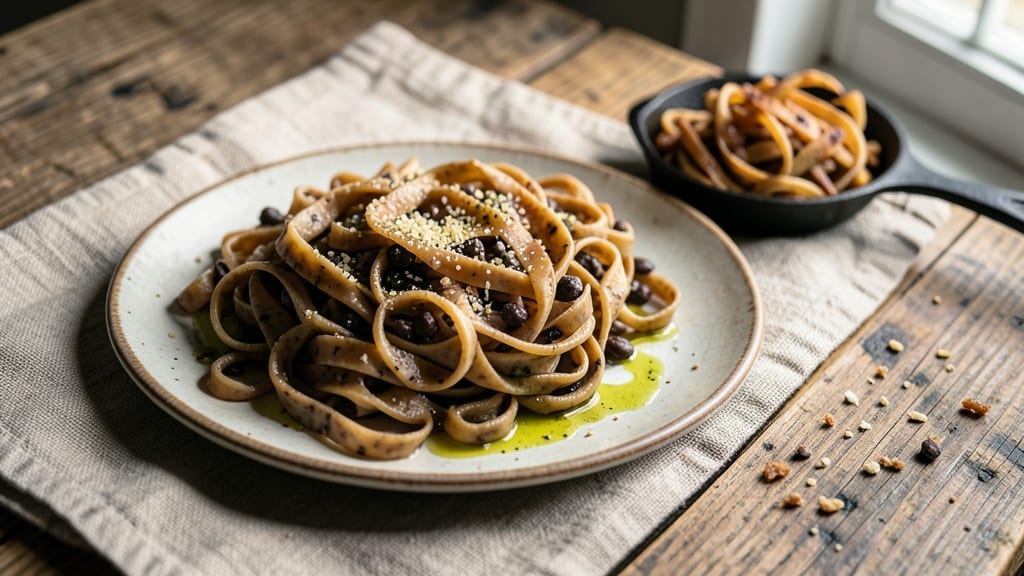
This black bean pasta dough recipe transforms humble ingredients into a crispy, plant-powered crust that rivals traditional flour-based pasta. The secret lies in blending cooked black beans with simple pantry staples, creating a dough that's both sturdy and tender—perfect for boiling into noodles or baking into crispy flatbreads.
I developed this recipe after realizing how versatile black beans could be beyond salads and soups, and the results were nothing short of game-changing for vegan cooking.
The magic happens when you blend the black beans until completely smooth, then gradually incorporate flour and water to form a workable dough. Unlike traditional pasta dough, this version stays crispy when cooked properly and delivers a satisfying texture that's both chewy and sturdy.
The beauty of this recipe is its adaptability—you can shape it into long pasta strands, cut it into tortilla-sized rounds, or even roll it out for lasagna noodles.
What makes this dough truly special is its ability to hold up to bold flavors while adding substantial protein and fiber to any meal.
The crispy edges you'll achieve when baking or boiling create an appealing contrast to the silky interior, making it ideal for hearty salads, vegan lasagnas, or even crispy appetizers. Each bite delivers the satisfying texture of traditional pasta while offering the nutritional benefits of black beans.
Once you master this dough, you'll discover endless possibilities—from crispy fried tortilla chips to delicate angel hair pasta. The recipe scales perfectly for meal prep or entertaining, and the ingredients are simple enough to keep on hand for spontaneous cooking.
Let's get started on creating your first batch of this versatile, plant-based dough.
Ingredients for black bean pasta dough
Simple pantry staples transform into a crispy, protein-rich dough that rivals traditional pasta.
| Ingredient | Amount | Notes |
|---|---|---|
| Cooked Black Beans 🫘 | 2 cups | Drained and rinsed thoroughly |
| All-Purpose Flour 🌾 | 1 ½ cups | White or whole wheat blend |
| Cold Water 💧 | ½ cup | Room temperature preferred |
| Extra-Virgin Olive Oil 🫒 | 2 tbsp | For elasticity and binding |
| Salt 🧂 | ½ tsp | Kosher or sea salt preferred |
| Nutritional Yeast 🧀 | 2 tbsp | For cheesy flavor and B vitamins |
| Garlic Powder 🧄 | 1 tsp | For added depth of flavor |
| Ground Black Pepper 🌶️ | ¼ tsp | Freshly ground preferred |
| Ground Flaxseed 🌰 | 1 tbsp | For binding and omega-3s |
| Vegetable Oil 🫒 | 1 tbsp | For crisping (optional) |
The black beans are the foundation—canned, no-salt-added is ideal, but rinse thoroughly if using regular brands. Bob's Red Mill or Trader Joe's organic black beans work beautifully for this recipe. For the flour, a 50/50 blend of all-purpose and whole wheat gives you that perfect balance of chewiness and crispiness. The nutritional yeast isn't just for flavor; it adds a satisfying umami depth and boosts the protein content. If you're making this for crispy tortillas, the extra vegetable oil is worth the splurge—it creates that irresistible crunch.
No black beans on hand? Lentils or chickpeas work in a pinch, but blend them extra smooth to mimic the texture. Short on flaxseed? Chia seeds at double the amount do the trick, though flaxseed has a milder taste. Want to cut the flour? Add 2 tbsp ground almonds for a nutty twist. The dough should be firm but pliable—if it's too sticky, add a little more flour; if too dry, a splash of water helps. And trust me, the garlic powder and pepper make all the difference when you're baking those crispy edges.
Store the dough in an airtight container between parchment paper for up to 3 days in the fridge. For longer storage, wrap tightly in plastic and freeze for up to 3 months. When ready to use, let it sit at room temperature for 15 minutes before rolling or shaping. The dough reheats beautifully—just a quick boil or bake brings back that crispy texture. I like to portion mine into small balls before freezing, so I can grab exactly what I need for a quick meal.
Why You'll Love This Recipe
- No Pantry Panic: I swear by this dough when I forget to buy store-bought—just mash those black beans, mix in flour and water, and you’ve got a dough that clings to the rolling pin like a dream. The olive oil keeps it supple, so no dry, crumbly messes here.
- Earthy Umami Magic: That first bite? Rich, nutty, and slightly sweet from the beans, with a subtle saltiness that lingers. It’s like regular pasta’s more interesting cousin—no bland aftertaste, just deep, satisfying flavor.
- Meal Prep MVP: Between us, this dough stores for days in the fridge, and even freezes beautifully. Toss a batch in the freezer on Sunday, and you’ve got fresh pasta for stir-fries, salads, or baked dishes all week—no last-minute grocery runs.
- Budget Stretch: A single can of black beans replaces half the flour, cutting costs while packing in protein. Honestly, it’s the kind of recipe where you end up making twice as much because it’s just so dang economical.
Step-by-step instructions for black bean pasta dough
Here's how to craft a versatile dough that balances crispy texture with silky black bean richness.
Mash the Black Beans to Perfect Consistency
Start by draining and rinsing the 2 cups cooked black beans thoroughly to remove excess starch. Transfer them to a food processor and pulse until completely smooth—no visible chunks should remain. This creates the foundation for your dough's elasticity and flavor.
I like to add the 2 tbsp nutritional yeast and 1 tbsp ground flaxseed at this stage. Pulse these together with the beans for 10-15 seconds until fully incorporated. The flaxseed adds binding properties while the nutritional yeast contributes that cheesy depth we want in the final texture. The mixture should resemble thick hummus at this point.
Combine Wet Ingredients for Optimal Binding
Transfer the bean mixture to a mixing bowl. Add the 2 tbsp extra-virgin olive oil, 0.5 cup cold water, 0.5 tsp salt, 1 tsp garlic powder, and 0.25 tsp ground black pepper. Using a sturdy spatula, mix vigorously for 2-3 minutes until completely homogeneous.
The olive oil here serves as both a binder and flavor enhancer, while the cold water prevents the dough from becoming too dry. You're looking for a smooth, slightly sticky paste that coats the back of your spoon. If it feels too thick after mixing, add 1 teaspoon of water at a time until it reaches this ideal consistency.
Gradually Incorporate the Flour for Dough Formation
With the mixer on low speed, gradually add the 1.5 cups all-purpose flour through a fine-mesh sieve or directly into the mixing bowl. This prevents lumps from forming in the dough. Mix for 3-4 minutes until the dough begins to pull away from the sides of the bowl and forms a cohesive mass.
At this stage, you might need to use your hands to work the dough together. It should be slightly tacky but not sticky enough to leave residue on your fingers. If it feels too dry, add 1 teaspoon of water at a time. The dough should be pliable and elastic—similar to traditional flour-based pasta dough but with a richer texture from the black beans.
Rest the Dough for Improved Texture
Divide the dough into 4 equal portions (about 4 ounces each) and flatten each portion into a ¼-inch thick disc. Wrap each disc tightly in plastic wrap and refrigerate for at least 30 minutes. This resting period allows the gluten to relax and the flavors to meld, resulting in a more tender final product.
I've found that resting also prevents the dough from shrinking excessively during cooking. After 30 minutes, the dough should be firm enough to handle without sticking to your fingers. If you're making the dough ahead of time, it can be refrigerated for up to 24 hours or frozen for 1 month—just be sure to let it come to room temperature before using.
Cook to Achieve Crispy Edges and Silky Centers
Heat 1 tablespoon vegetable oil in a non-stick skillet over medium heat until shimmering. Working with one disc at a time, press it gently into the pan and cook for 2-3 minutes per side until the edges develop a golden-brown crust and the center remains soft and pliable.
Here's the key: you want the exterior to crisp while keeping the interior tender. The black bean base prevents the dough from becoming tough, even when cooked to crispy perfection. For a crispier version, you can brush the cooked dough with a little more olive oil and return it to the pan for 30 seconds on each side. Serve immediately while still warm for that perfect contrast of textures.
Pro Tips For Making Black Bean Pasta Dough
- MASH BEANS WELL: I learned this the hard way—skipping a food mill or fine-mesh sieve leaves gritty bits in your dough, no matter how much you knead. If you’re using a fork, smash those beans until they’re almost paste-like, then strain out the skins. (Yes, even if you’re impatient like me.)
- CHILL THE DOUGH: After mixing, wrap the dough in plastic and refrigerate for at least 30 minutes. This isn’t just about handling—cold dough rolls cleaner and sticks less to the board. I used to skip this, and my pasta always felt gummy. (Your future self will thank you.)
- WEIGH THE FLOUR: Ditch the scooping. Black bean dough absorbs moisture differently, and too much flour makes it dense. Use a scale for precision—start with 200g flour per 1 cup cooked beans, then adjust by 10g increments. (I know, measuring cups are easier, but this makes a real difference.)
- STRETCH, DON’T ROLL: Skip the pasta machine at first. Use your hands to stretch the dough thin—it’s more work but gives you control over thickness. If it tears, patch it with a bit of water and olive oil. (This isn’t the prettiest method, but it’s the tastiest.)
Regional styles of this dish
Mexican-Inspired Flatbreads
In Mexico, black bean masa has been used for centuries to create hearty, flavorful flatbreads like tortillas and quesadillas. For this regional take, blend 1 cup cooked black beans with 1 cup masa harina (corn flour) instead of all-purpose flour.
Add 1 tsp cumin and ½ tsp smoked paprika to the dough for authentic depth. Roll out thin and cook in a dry cast-iron skillet over medium-high heat for 30 seconds per side—they’ll crisp up beautifully while keeping the center tender.
Serve with guacamole or salsa verde for a vegan-friendly taco night. 🌶️
Italian-Inspired Pasta
Southern Italy’s love for legume-based pasta makes this dough a natural fit for orecchiette or pappardelle. Replace ½ cup of the all-purpose flour with ½ cup semolina flour for a rustic texture.
Shape the dough into long strips or ear-like pasta shapes, then boil for 4-5 minutes in salted water. Toss with garlic, olive oil, and fresh basil for a vegan aglio e olio—or pair with a creamy cashew Alfredo sauce.
The black bean base adds a satisfying heartiness to classic Italian dishes. 🍝
Middle Eastern Hummus Pita
For a twist on traditional pita, blend 1 cup tahini into the dough mixture along with the black beans. Roll out into thin rounds and bake at 375°F for 8-10 minutes until puffed and golden. Brush with a mix of olive oil and za’atar for a Middle Eastern-inspired crispy flatbread.
Serve warm with hummus, baba ganoush, and pickled vegetables—the nutty tahini and smoky spices elevate the black bean flavor. This version is perfect for falafel bowls or as a wrap for shawarma-style vegan meat. 🥙
Caribbean-Inspired Fritters
In the Caribbean, black beans are often fried into crispy fritters or patties. Shape the dough into small, flat patties and pan-fry in vegetable oil at 350°F until golden and crispy (about 3-4 minutes per side).
Toss with lime juice, cilantro, and a pinch of cayenne for a zesty contrast. These fritters make a fantastic appetizer or side dish—pair them with mango salsa or avocado crema for a vibrant, protein-packed bite.
The dough’s crispy exterior and tender interior mirror the texture of beignets, but with a legume-based twist. 🌴
Southwest-Inspired Crispy Chips
Transform your dough into crunchy tortilla chips by cutting it into triangles and baking at 375°F for 12-15 minutes until golden and crisp. Toss with sea salt, smoked paprika, and lime zest for a Southwest-inspired snack. These chips hold up perfectly for dipping in salsa, guacamole, or vegan queso.
For extra crunch, brush with a light coat of olive oil before baking. This version is ideal for game day or as a topping for vegan nachos**. 🧈
Nutrition facts
Frequently asked questions
Can I make this dough without a food processor?
If you don't have a food processor, mash the 2 cups cooked black beans with a potato masher or fork until completely smooth. For extra smoothness, you can even blend them in a blender with 2 tablespoons of water first, then transfer to a mixing bowl. The key is achieving a completely smooth texture to prevent graininess in your final dough.
How do I prevent the dough from sticking to my hands?
Lightly flour your work surface and dust your hands with flour before handling the dough. The dough should be slightly tacky but not wet—if it's too sticky, add 1 tablespoon of flour at a time until it becomes more manageable. For extra insurance, keep a small bowl of flour nearby to dip your fingers in as needed. The resting period also helps reduce stickiness.
What's the best way to store leftover dough?
Wrap the dough tightly in plastic wrap or place it in an airtight container between parchment paper. It will keep in the fridge for up to 3 days or in the freezer for 1 month. For best results, let it sit at room temperature for 15 minutes before rolling or shaping. The dough reheats beautifully—just a quick boil or bake brings back that crispy texture.
Can I use canned black beans instead of cooked dried beans?
Yes! Use no-salt-added canned black beans and rinse them thoroughly to remove excess starch. Drain well before blending. The texture will be slightly smoother than dried beans, but the flavor remains rich. For extra flavor, add 1 teaspoon of cumin or ½ teaspoon of smoked paprika to the dough mixture.
Why is my dough too dry or crumbly?
This usually happens when too much flour is added. Gradually incorporate flour while mixing and stop as soon as the dough begins to pull away from the sides of the bowl. If it's already too dry, try adding 1 teaspoon of water at a time while kneading. The dough should be pliable but not sticky—think of it as a cross between traditional pasta dough and a soft cookie dough.