
Main Courses
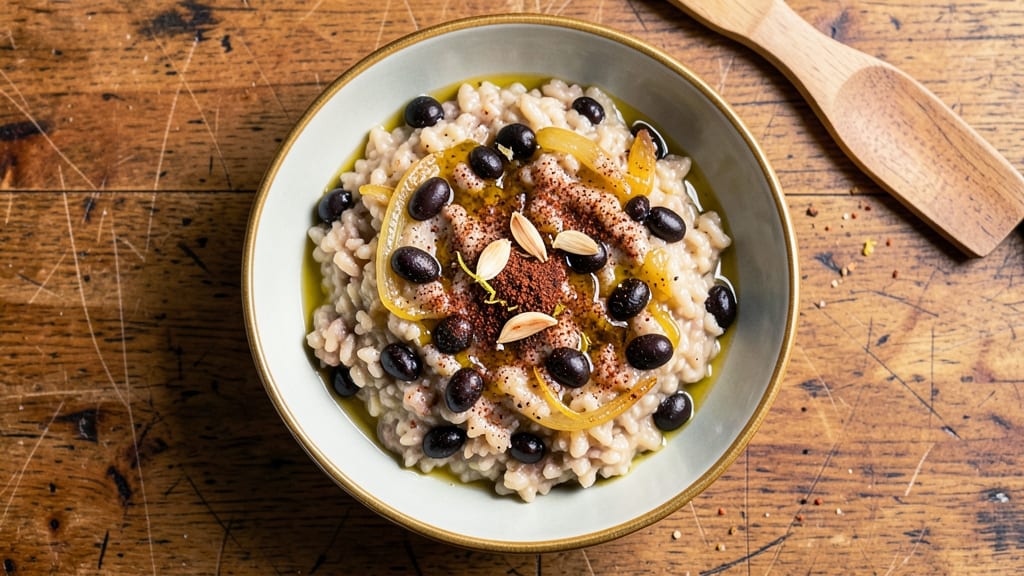
This black bean risotto recipe transforms creamy Arborio rice into a hearty, vegan-friendly dish with smoky tortilla crunch and rich, earthy black beans. The secret lies in gradual broth incorporation and proper stirring—techniques that build depth while keeping the texture perfectly al dente.
What makes this version special is the tortilla crust topping, which adds a satisfying crunch without compromising the dish's velvety consistency.
The process begins with toasting Arborio rice until nutty, then deglazing the pot to unlock layers of flavor. Black beans join the mix later, absorbing the risotto's creamy sauce while adding protein and texture.
For extra richness, a touch of nutritional yeast or vegan cheese elevates the dish into something restaurant-worthy, all while keeping it plant-based and satisfying.
By the end, you'll have a creamy, smoky risotto with crispy tortilla bits that contrast beautifully against the soft rice. The dish pairs perfectly with a simple arugula salad or roasted vegetables, creating a balanced meal that's both comforting and impressive.
Ready in about 30 minutes, this recipe proves plant-based cooking can be just as indulgent as traditional versions.
Whether you're serving dinner guests or treating yourself to a weeknight meal, this risotto delivers on flavor and texture. The key is patience—stirring frequently and adding broth gradually ensures a creamy, cohesive result. Let's get cooking!
Ingredients for black bean risotto
These carefully chosen ingredients create a restaurant-quality vegan risotto with smoky depth and satisfying crunch.
| Ingredient | Amount | Notes |
|---|---|---|
| Arborio Rice 🍚 | 1 ½ cups | Unrinsed for optimal starch release |
| Canned Black Beans 🫘 | 1 ½ cups | Drained, rinsed, and drained again |
| Vegan Vegetable Broth 💧 | 4 cups | Low-sodium preferred for flavor control |
| Yellow Onion 🧅 | 1 whole | Diced into 1/4-inch pieces |
| Garlic Cloves 🧄 | 4 cloves | Minced for aromatic depth |
| Smoked Paprika 🌶️ | 1 tbsp | For authentic smoky flavor |
| Nutritional Yeast 🧀 | ¼ cup | Fortified, for cheesy umami |
| Extra-Virgin Olive Oil 🫒 | ½ cup | High-quality for richness |
| Corn Tortillas 🌽 | 6 whole | Cut into 1/4-inch strips for topping |
| Lemon Juice 🍋 | 1 tbsp | Freshly squeezed for brightness |
| Salt 🧂 | 1 ½ tsp | Diamond Crystal kosher preferred |
| Ground Black Pepper 🌶️ | ½ tsp | Freshly cracked for heat |
| Fresh Cilantro 🌿 | ¼ cup | Chopped for garnish (optional) |
The Arborio rice is non-negotiable—its high starch content is what creates that signature creamy texture. Lundberg Organic or Barilla are reliable brands, and always check the package for 'Arborio' specifically (not basmati or jasmine). For the black beans, low-sodium canned varieties save you from rinsing excess salt, but if you prefer, rinse thoroughly to remove any residual sodium. The smoked paprika should be 100% paprika with no anti-caking agents—look for brands like Penzeys or Simply Organic for the cleanest flavor. Fresh garlic and onion are essential here—their sweetness balances the earthy beans perfectly.
No Arborio rice? Carnaroli rice is your next best option, though it's pricier. Short on black beans? Substitute with white beans or lentils, but reduce the broth by 1/2 cup to maintain texture. The nutritional yeast can be swapped for vegan Parmesan if you prefer a more pronounced cheesy flavor, though it won't have the same umami punch. For the tortilla topping, flour tortillas work too, but corn adds that authentic Mexican touch. If you're making this ahead, toast the tortilla strips separately and store them in an airtight container—they lose crispness quickly once mixed in.
This risotto tastes even better the next day, so portion it into shallow containers for easy reheating. Store leftovers in the fridge for up to 4 days, or freeze for 3 months—the texture holds up surprisingly well. The tortilla topping is best added fresh, but if you're freezing, toast it separately and sprinkle on top when serving. For extra richness, stir in a splash of cashew cream when reheating. The dish pairs beautifully with a simple arugula salad tossed in lemon vinaigrette, balancing the hearty risotto perfectly.
Why You'll Love This Recipe
- One-Pot Magic: I swear by this—no fancy equipment, just a pot, a spoon, and 20 minutes. The Arborio rice soaks up that veggie broth while I chop the onion and garlic, and by the time the beans are warmed through, everything’s ready. No separate pans, no stress.
- Umami Bomb: That first spoonful? Rich, deep, and alive with flavor. The black beans add a meaty texture while the garlic-toasted onions caramelize into something irresistible. Honestly, it’s the kind of dish that makes you pause mid-bite just to savor it.
- Leftover Hero: This risotto actually gets better the next day—creamy, sturdy, and perfect for lunchboxes or quick reheats. I double the batch on Sundays because it’s my go-to for busy mornings, and no one ever complains about the leftovers.
- Budget Game-Changer: Canned beans and Arborio rice won’t break the bank, but the result feels fancy. Between us, this is how I trick myself into eating well when paychecks are tight. The broth stretches far, and the garlic makes everything taste like a restaurant dish.
Step-by-step instructions for black bean risotto
Here's how to craft this smoky, textured risotto with perfect al dente rice and crispy tortilla topping.
Sauté Aromatics for Flavor Foundation
Heat 0.25 cup extra-virgin olive oil in a heavy-bottomed pot over medium heat. Add the diced yellow onion and cook for 5-6 minutes until softened and translucent. The onions should release their moisture and begin to caramelize slightly at the edges.
Add the 4 cloves minced garlic and 1 tbsp smoked paprika, stirring constantly for 30 seconds until fragrant. The paprika will infuse the oil with its signature smokiness, while the garlic adds depth. This aromatic base is crucial—don't rush this step or the flavors won't develop properly. The mixture should smell rich and earthy, with a hint of smokiness that will carry through the entire dish.
Toast the Arborio Rice
Increase heat to medium-high and add the 1.5 cups unrinsed Arborio rice, stirring to coat the grains evenly with the oil. Toast the rice for 2-3 minutes until it turns opaque and begins to develop a slight golden hue. This toasting step is essential—it enhances the nuttiness of the rice and prevents a raw, starchy texture in the final dish.
Add the 1.5 cups drained black beans and 0.25 cup nutritional yeast, stirring to combine. The beans will absorb some of the oil and begin to warm through. Sprinkle with 1 tsp salt and 0.25 tsp ground black pepper, mixing well. The nutritional yeast adds a cheesy umami that pairs beautifully with the smoky paprika and earthy black beans.
Deglaze and Simmer with Broth
Pour in 1 cup vegan vegetable broth and stir vigorously, scraping up any browned bits from the bottom of the pot. The liquid should be absorbed quickly as the rice begins to release starch. Add another 1 cup broth and continue stirring frequently—about every 2 minutes—until mostly absorbed.
Repeat this process, adding 1 cup broth at a time, for 18-20 minutes total. The rice should be tender but still have a slight bite—what chefs call "al dente." If the rice finishes cooking before all the broth is used, reduce the heat to low and let it sit off the heat for 2-3 minutes to finish absorbing any remaining liquid. The risotto should be creamy but not soupy, with each grain distinct yet coated in flavorful sauce.
Finish with Crispy Tortilla Topping
While the risotto simmers, cut the 6 whole corn tortillas into ¼-inch strips. Heat 1 tbsp extra-virgin olive oil in a dry skillet over medium-high heat until shimmering. Add the tortilla strips in a single layer and cook for 2-3 minutes, stirring occasionally, until golden brown and crispy. Transfer to a paper towel-lined plate to drain excess oil.
Once the risotto reaches the al dente stage, stir in the 1 tbsp lemon juice and remaining 0.5 tsp salt. The acidity brightens the dish, cutting through the richness of the black beans and nutritional yeast. Spoon the risotto into serving bowls, top generously with the crispy tortilla strips, and garnish with 0.25 cup chopped fresh cilantro. The contrast between the creamy risotto and crunchy tortilla topping creates the perfect texture combination.
Pro Tips For Making Black Bean Risotto
- Toast the Beans First: Drain and rinse those canned black beans, then toss them in a dry pan over medium heat for 3-4 minutes until they’re speckled with brown spots. This step deepens their flavor and prevents that sad, waterlogged texture—trust me, it’s worth the extra minute.
- Stir Like You Mean It: Arborio rice needs constant stirring, but don’t just go through the motions. Use a wooden spoon and scrape the bottom of the pot every 30 seconds during the first 5 minutes—this builds that creamy starch instead of letting it turn to glue. (Yes, even if you’re multitasking like I usually am.)
- Salt the Broth Early: Season your vegan vegetable broth before adding it to the rice—about 1 teaspoon per cup. Risotto absorbs flavor gradually, and waiting until the end means your dish will taste flat. I learned this the hard way when my first batch ended up tasting like plain porridge.
- Deglaze with Garlic: After cooking the onions until soft, add minced garlic and let it sizzle for 30 seconds until fragrant. Then, immediately pour in ¼ cup of the warm broth to deglaze the pot—this pulls up all the browned bits and adds a rich, savory depth. (Skip this, and your risotto will taste like it’s missing something.)
Essential equipment for this dish
Heavy-Bottomed Pot
A wide, heavy-bottomed pot with a capacity of at least 3-4 quarts is essential for even heat distribution. I swear by a Le Creuset Dutch oven—it retains heat beautifully and prevents hot spots that can burn your risotto.
If you're on a budget, a stainless steel pot from All-Clad works perfectly. Avoid nonstick or thin aluminum pots, as they can't maintain consistent temperatures during the gradual broth addition. 🔥
Wooden Spoon
You'll need a long-handled wooden spoon (at least 12 inches) to stir your risotto vigorously without splashing. I prefer olive wood spoons from OXO because they're gentle on your pot and won't scratch the surface.
The spoon should be wide enough to reach all corners of your pot while stirring frequently—this is crucial for that signature creamy texture. Never use metal spoons with Arborio rice, as they can damage the grains.
Fine-Mesh Strainer
A fine-mesh strainer is non-negotiable for rinsing your black beans thoroughly. I use a stainless steel strainer from OXO—it's durable and rinses easily. Properly drained beans prevent your risotto from becoming watery.
If you're using canned beans, give them an extra rinse to remove any residual sodium from the broth. The strainer should fit comfortably in your sink and allow water to drain quickly while catching all the beans.
Instant-Read Thermometer
While not strictly necessary, an instant-read thermometer helps perfect your risotto's texture. I recommend the Thermoworks ThermoPop—it's affordable and accurate. The ideal risotto temperature is 195-205°F when done. This tool lets you monitor the broth temperature (should be 195°F when added) and final risotto temperature without guessing.
For beginners, it's worth the investment to avoid mushy or undercooked rice.
Skillet for Tortillas
A 10-inch cast iron skillet is perfect for crisping your tortilla strips. I keep a Lodge cast iron skillet on hand for this exact purpose—it heats evenly and develops a natural nonstick surface over time. If you don't have cast iron, a stainless steel skillet works too.
The key is getting those tortilla strips golden and crispy while maintaining their structural integrity. A paper towel-lined plate nearby is essential for draining excess oil immediately after cooking.
Measuring Tools
Precision matters in risotto, so invest in quality measuring tools. I use a stainless steel measuring cup set from OXO for the rice and broth, and a digital kitchen scale for the nutritional yeast (though cups work fine).
For the smoked paprika and spices, a small measuring spoon set with clearly marked ½ teaspoon increments is crucial. The Arborio rice should be measured by volume, not weight—pack it lightly into your measuring cup for consistency. 💡
Nutrition facts
Frequently asked questions
Can I make this black bean risotto without Arborio rice?
While Arborio rice is ideal for its creamy texture, you can substitute with Carnaroli rice (also high-starch) or even bomb rice. Avoid long-grain varieties like basmati—they won't release enough starch for that signature velvety consistency. If substituting, reduce broth by 1/4 cup and cook 2-3 minutes less to prevent mushiness. The flavor will be slightly different but still delicious!
How do I prevent my risotto from getting mushy?
The key is patience and technique! Stir frequently (every 2 minutes) to release starch gradually, and never walk away from the pot. If the risotto finishes cooking before all broth is used, remove it from heat and let it sit 2-3 minutes off the stove to absorb remaining liquid. Also, avoid adding all broth at once—this dilutes the starch and creates a soupy texture.
Can I make this risotto ahead of time?
Yes, but handle the tortilla topping separately! Cook the risotto up to the final step (before adding lemon juice), then refrigerate in an airtight container for up to 4 days. Reheat gently with a splash of broth or water, stirring frequently. Toast the tortilla strips fresh and add them just before serving to maintain crispness. The texture holds up surprisingly well, though it'll be slightly firmer when cold.
What's the best way to store leftovers?
Portion the risotto into shallow containers to cool quickly, then store in the fridge for 4 days or freeze for 3 months. For reheating, cover with a damp paper towel and warm in a 350°F oven for 15-20 minutes or on the stovetop with 1-2 tbsp broth. The tortilla topping is best added fresh, but you can toast it separately and sprinkle on top when serving.
Why does my risotto taste bland?
Most likely, your broth wasn't flavorful enough or you didn't deglaze properly. Always use homemade or high-quality store-bought broth (like Pacific Foods or Imagine brands). After toasting the rice, pour in broth while stirring vigorously to scrape up all the browned bits from the pot—this unlocks deep, savory flavors. Also, don't skip the nutritional yeast or smoked paprika—they add crucial umami and smokiness that balances the earthy black beans.