
Sauces & Condiments
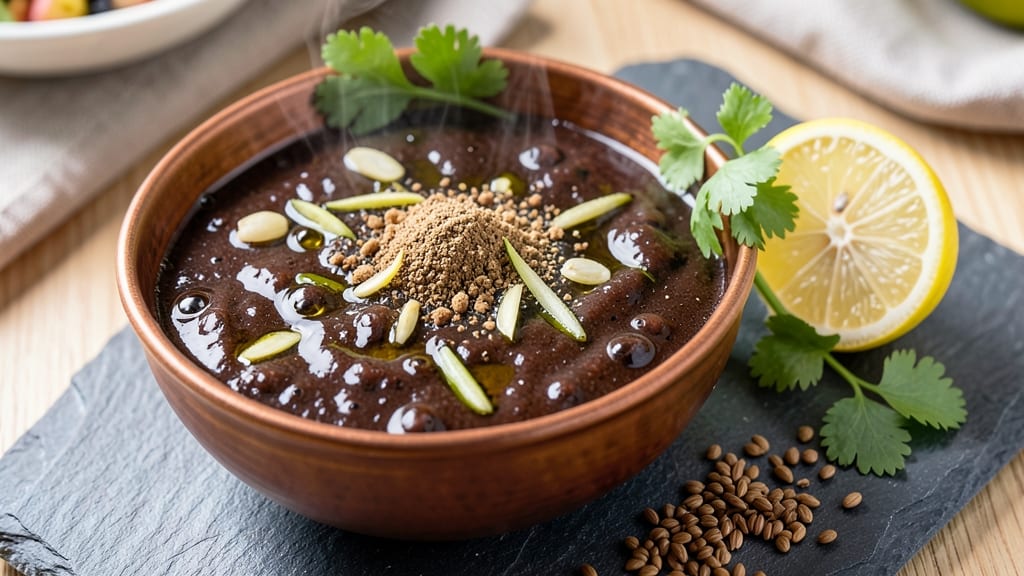
This black bean sauce recipe Indian style transforms humble black beans into a smoky, tangy condiment that bridges Mexican and Indian flavors with perfect harmony. The secret lies in slow-cooked spices—cumin, coriander, and garam masala—that develop deep, earthy notes while tamarind and ginger add a bright, complex tang.
Unlike traditional Mexican sauces, this version simmers until the beans break down into a velvety paste, creating a sauce that’s rich enough for dipping but versatile enough to elevate grilled meats, rice, or even as a marinade.
The process is straightforward but requires patience: dry-roasting whole spices first to intensify their aroma, then simmering everything until the sauce thickens naturally. No blender? No problem—the beans mash against the pot walls as they cook, creating that signature smooth yet textured consistency.
The result is a sauce that’s boldly spiced but balanced, with just enough heat to linger without overpowering. It’s the kind of condiment that turns simple dishes into restaurant-worthy meals with minimal effort.
What makes this sauce truly special is its adaptability—use it as a dip for crispy papadums, a marinade for chicken tikka, or a tangy side for dosas.
The tamarind adds a sour depth that cuts through richness, while the black beans provide a meaty, umami base that holds its own against bold spices. Unlike store-bought versions, this one builds flavor layer by layer, ensuring every spoonful delivers that authentic, homemade taste you can’t find in jars.
Ready in about 45 minutes with just 10 ingredients, this sauce proves that complex flavors don’t require complicated techniques. The key is letting the spices and tamarind work their magic during the simmer—no rushing, no shortcuts.
Once you taste the difference, you’ll never go back to bottled sauces again. Let’s get cooking.
Ingredients for black bean sauce recipe indian style
Ten ingredients, bold flavors—this sauce delivers smoky cumin and tangy tamarind depth without shortcuts.
| Ingredient | Amount | Notes |
|---|---|---|
| Black Beans 🌱 | 1 ½ cups | Dried, soaked overnight |
| Tamarind Paste 🍈 | ½ cup | Unadulterated, no sugar added |
| Fresh Ginger 🌿 | 2 tbsp | Grated, aromatic |
| Ground Cumin 🌶️ | 1 ½ tbsp | Toasted for deeper aroma |
| Ground Coriander 🌿 | 1 tbsp | Freshly ground preferred |
| Garam Masala 🌶️ | 1 tsp | High-quality blend |
| Red Chili Powder 🔥 | ½ tbsp | Adjust for heat preference |
| Onion 🧅 | 1 whole | Yellow, finely chopped |
| Garlic Cloves 🧄 | 4 cloves | Peeled, minced |
| Extra-Virgin Olive Oil 🫒 | 2 tbsp | For dry-roasting spices |
The black beans are the heart of this sauce, so pick dried over canned—they break down better and deliver that signature texture. Trader Joe's or bulk bins at Indian markets have great options. For tamarind paste, avoid the sugary versions—look for pure tamarind pulp at Asian grocery stores. The ginger should be fresh, not powdered, for that bright kick. Toasting the cumin and coriander in olive oil first? Non-negotiable—it unlocks their full aroma. If you can't find garam masala, MADHUR or MDH brands are reliable staples, but any good blend works.
No tamarind? Lemon juice plus a pinch of sugar mimics the tang, though it won't be identical. Running low on fresh ginger? Powdered works at half the amount, but you'll lose some depth. The red chili powder can be swapped for cayenne, but go easy—this sauce builds heat gradually. Onion and garlic are classic, but asafetida (hing) at a pinch adds umami if you're feeling adventurous. For extra richness, stir in 1 tbsp coconut milk at the end—trust me, it's worth it.
This sauce tastes even better the next day as flavors meld. Store in a glass jar in the fridge for up to 1 week, or freeze in ice cube trays for 3 months. I double the batch every time—one for immediate use, one to stash. The texture thickens as it cools, so add a splash of water if it gets too stiff. Pairs perfectly with papadums, dosas, or grilled chicken tikka—whatever you're craving that night.
Why You'll Love This Recipe
- Pantry Magic: I swear by this sauce—no fresh herbs needed, just cumin and coriander from the spice rack. The tamarind paste does all the heavy lifting, balancing that earthy bean richness with a tangy kick that’s chef’s kiss without effort.
- Tamarind Tang: Honestly, the tamarind paste is the star—it turns something simple into ridiculously good in minutes. That sour-sweet punch cuts through the beans’ creaminess, making every bite feel like a little flavor explosion.
- Weeknight Hero: This sauce is my go-to when I’m too tired to plan. Toss it with rice, dollop on toast, or mix into curries—it’s the kind of thing that makes me look like I tried hard when I barely lifted a finger.
- Budget Stretch: Black beans and spices are dirt cheap, but they taste like a restaurant dish. I make a big batch, freeze half, and still have leftovers for days—no waste, all flavor. (Yes, even on a Tuesday night.)
Step-by-step instructions for black bean sauce Indian style
Here's how to build this bold, aromatic sauce from scratch—layering smoky spices with tamarind's tangy depth.
Toast the Spices for Maximum Flavor
Heat the 2 tablespoons extra-virgin olive oil in a heavy-bottomed saucepan over medium heat. Add the 1 whole onion, chopped finely, and cook for 5-6 minutes until the edges turn translucent and the onion releases its sweet aroma. This is your flavor foundation.
Push the onions to the side of the pan and add the 1.5 tablespoons ground cumin and 1 tablespoon ground coriander. Toast the spices for 30 seconds until you see them lightly darken and smell intensely aromatic. This dry-toasting step unlocks their full flavor potential—don't rush it. Immediately add the 4 minced garlic cloves and cook for another 30 seconds until fragrant. The garlic should sizzle slightly without browning.
Build the Sauce Base with Tamarind and Chili
Add the 1.5 cups black beans (drained and rinsed if previously soaked) to the pan along with the 0.5 cup tamarind paste and 0.5 tablespoon red chili powder. Stir well to combine, then pour in 1 cup water. The mixture will look thick and pasty at first, but that's normal—it's the tamarind's magic.
Bring to a gentle simmer over medium-low heat and let it cook uncovered for 10-12 minutes until the beans begin to break down slightly and the sauce starts to thicken. The tamarind will dissolve completely, creating that signature tangy depth. Stir occasionally to prevent sticking—this is where the sauce's texture begins to transform from chunky to velvety.
Finish with Garam Masala and Ginger
Reduce the heat to low and stir in the 2 tablespoons grated fresh ginger and 1 teaspoon garam masala. The ginger will release its bright, zesty aroma instantly, while the garam masala adds that warm, complex finish. Let the sauce simmer gently for another 5-7 minutes until it reaches your desired consistency—it should coat the back of a spoon but still be pourable.
Taste and adjust the seasoning if needed. If you want more heat, add a pinch more chili powder. For extra depth, a splash of water can loosen the sauce while maintaining its intensity. The sauce should have a perfect balance: sweet from the beans, tangy from the tamarind, spicy from the chili, and aromatic from the spices. Remove from heat and let it sit for 5 minutes to thicken further.
Adjust Texture and Serve
If the sauce is too thick for your liking, thin it with 1-2 tablespoons water at a time until it reaches a smooth, spoonable consistency. For a glossy finish, stir in 1 teaspoon olive oil—this adds richness and helps the sauce cling better to whatever you're serving it with.
This versatile sauce works beautifully as a marinade for grilled meats, a dip for fresh bread, or a bold condiment for rice dishes. The flavors will deepen as it sits, so if you're not using it immediately, store it in an airtight container in the refrigerator for up to 5 days. When ready to use, gently reheat over low heat, stirring occasionally to maintain its velvety texture.
Pro Tips For Making Black Bean Sauce Recipe Indian Style
- SOAK BEANS OVERNIGHT: I learned this the hard way—rushing soaked beans makes your sauce grainy and unappealing. Black beans need at least 8 hours in water (or a quick 2-hour soak in warm water) to soften properly. Drain and rinse twice before cooking to remove excess starch, which keeps the sauce silky.
- TOAST SPICES LOW: Skip the high-heat spice burn—ground cumin and coriander turn bitter fast. Warm them in a dry pan over medium-low for 30 seconds until fragrant, stirring constantly. This releases their aroma without scorching, which ruins the tamarind’s tang.
- JULIENNE GINGER THIN: Thick ginger chunks just sit there while your sauce simmers. Grate it into matchsticks (or pulse in a food processor) so it dissolves evenly. Add it with the tamarind paste—this guarantees the heat infuses smoothly, not clumping.
- DILUTE TAMARIND GRADUALLY: Dumping tamarind paste all at once makes your sauce cloyingly sweet. Mix it into a splash of warm water first, then whisk it into the simmering beans. Start with half the recipe’s amount, taste, then adjust—this keeps the balance sharp, not sugary.
Regional styles of this black bean sauce recipe indian style
North Indian Style
In North India, this black bean sauce often takes on a richer, creamier profile thanks to the addition of yogurt or cashew paste at the end. I like to stir in ¼ cup plain yogurt during the final 5 minutes of simmering, which adds a cooling contrast to the spices.
For extra decadence, blend ½ cup soaked cashews with the beans before cooking—they create a velvety texture that pairs beautifully with tandoori chicken or naan bread. The key is balancing the tangy tamarind with the mild sweetness of cashews. 🥛
South Indian Twist
South Indian adaptations focus on coconut and mustard seeds for a lighter, more aromatic sauce. After toasting the cumin and coriander, add 1 tablespoon coconut oil and 1 teaspoon mustard seeds to the pan. Once the mustard pops, pour in ½ cup coconut milk along with the tamarind and beans.
The result is a sauce with a fragrant, nutty depth that works wonderfully with dosa or idli. I often finish it with a sprinkle of curry leaves for an authentic touch. 🥥
Hyderabadi Fusion
For a Hyderabadi-inspired version, incorporate 1 tablespoon biryani spices (a blend of cinnamon, cardamom, and cloves) during the initial spice toasting. The biryani spices add a floral warmth that complements the smoky cumin.
After simmering, fold in 2 tablespoons chopped mint leaves and a pinch of asafoetida (hing) for an umami kick. This richer, more complex sauce pairs perfectly with biryani rice or keema. The biryani spices should be toasted until fragrant—about 30 seconds in the oil. 🌿
Goan-Inspired Adaptation
Goan cuisine brings a sweet-savory balance to this sauce. After simmering the beans and tamarind, stir in 1 tablespoon jaggery or brown sugar to caramelize slightly. Add ½ cup grated coconut and 1 tablespoon vinegar (preferably coconut vinegar) for a tangy-sweet profile.
The vinegar cuts through the richness, while the jaggery adds a subtle sweetness that’s characteristic of Goan cooking. This version works beautifully as a dip for bebinca or a marinade for Goan fish curry. 🍯
Punjabi-Inspired Heat
Punjabi cuisine loves bold, fiery flavors. For this version, increase the red chili powder to 1 tablespoon and add ½ teaspoon garam masala plus ½ teaspoon Kashmiri red chili powder (for color and heat). Finish with 1 tablespoon chopped cilantro and a squeeze of lemon juice to brighten the sauce.
This spicier adaptation pairs well with tandoori lamb chops or makki ki roti. The Kashmiri chili powder adds a vibrant red hue without overpowering the heat. 🔥
Bengali-Inspired Mildness
Bengali cuisine often features milder, more aromatic flavors. For this version, reduce the chili powder to ¼ teaspoon and add ½ teaspoon fennel seeds during the initial spice toasting. Stir in 1 tablespoon grated coconut and ½ teaspoon turmeric for a golden hue and earthy warmth.
This milder sauce is perfect for dipping luchi or pairing with machher jhol. The fennel seeds add a subtle anise-like note that complements the tamarind’s tang. 🌿
Nutrition facts
Frequently asked questions
Can I use canned black beans instead of dried?
Yes, but the texture will be different. Canned beans work in a pinch, but they won't break down as much during cooking, so your sauce may stay chunkier. For best results, use 1.5 cups drained canned beans and simmer for an extra 5-7 minutes to soften them. The flavor will still be great, but the traditional velvety consistency requires dried beans.
How do I adjust the heat level?
Start with the 0.5 tablespoon red chili powder called for, then adjust to taste. For milder heat, reduce to ¼ teaspoon and add ½ teaspoon smoked paprika for depth without spice. For extra heat, increase to 1 tablespoon and add a pinch of cayenne. Always taste before serving—you can't remove heat once added!
What if my sauce is too thick or too thin?
For a thicker sauce, simmer uncovered for 5-10 more minutes to reduce. If too thin, stir in 1 tablespoon cornstarch mixed with 2 tablespoons water and simmer for 2 minutes. For a smoother texture, blend briefly with an immersion blender after cooking. The sauce should coat the back of a spoon but still be pourable.
Can I make this sauce without tamarind?
Replace the 0.5 cup tamarind paste with 0.5 cup lemon juice plus 1 teaspoon sugar to mimic the tang. For deeper flavor, use 0.3 cup lemon juice + 0.2 cup vinegar (apple cider or white wine vinegar). The sauce will be brighter but still delicious—just add a pinch more salt to balance.
How long will this sauce keep, and can I freeze it?
Store in an airtight container in the fridge for up to 5 days. For longer storage, freeze in ice cube trays for 3 months or in a sealed jar for 6 months. Thaw overnight in the fridge and reheat gently on low heat, stirring occasionally. The texture may thicken slightly after freezing—add a splash of water if needed.