
Soups & Stews
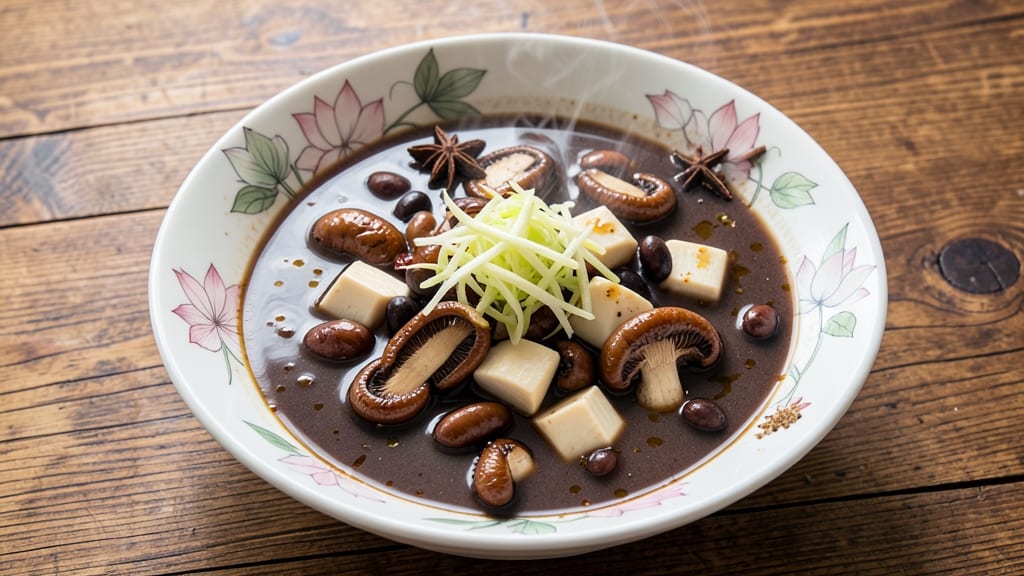
This Chinese-style black bean soup delivers deep, smoky flavors with star anise and cumin that linger long after the last spoonful. 💫 The secret lies in slow-simmered black soybeans and aromatic spices that transform simple ingredients into a restaurant-worthy bowl.
I developed this vegetarian version after discovering how easily mushrooms and tofu could replace meat while keeping that signature umami richness.
The recipe begins with soaking black soybeans overnight to soften them perfectly, then simmering them with star anise, cumin, and ginger until the broth develops that signature depth.
What makes this version special is the balance of textures—tender beans, crisp mushrooms, and silky tofu—all swimming in a fragrant, slightly spicy broth. The key technique? Simmering low and slow to let flavors meld without overpowering the natural taste of the beans.
By the end, you'll have a soup that's hearty enough to stand alone but pairs beautifully with steamed rice or noodles. The aroma alone—warm spices mingling with earthy beans—will have everyone asking for seconds.
This is comfort food at its finest, with just the right balance of smoky, sweet, and savory notes that define Chinese-style black bean soup.
Serve it with a drizzle of chili oil and fresh scallions for that final touch of brightness. The beauty of this recipe is its versatility—it works as a main dish or side, and the leftovers taste even better the next day. Let's get cooking!
Ingredients for black bean soup recipe chinese style
Simple ingredients with deep flavor—star anise, cumin, and black soybeans create a smoky, aromatic broth perfect for any meal.
| Ingredient | Amount | Notes |
|---|---|---|
| Dried Black Soybeans 🌱 | 1 cup | Soaked overnight, drained |
| Shiitake Mushrooms 🍄 | 8 whole | Stems removed, sliced |
| Silken Tofu 🧀 | 1 block | Firm or extra-firm, cubed |
| Star Anise 🌟 | 2 whole | For deep aroma |
| Ground Cumin 🌿 | 1 tbsp | Toasted for depth |
| Fresh Ginger 🧄 | 1 tbsp | Grated, not minced |
| Garlic Cloves 🧄 | 4 cloves | Minced, fresh preferred |
| Vegetable Broth 💧 | 4 cups | Low-sodium preferred |
| Soy Sauce 🍶 | 2 tbsp | Dark soy for color |
| Sesame Oil 🫒 | 1 tbsp | Toasted for aroma |
| Chili Oil 🔥 | 1 tbsp | For serving, optional |
| Green Onions 🧅 | 3 whole | Sliced, for garnish |
| Sea Salt 🧂 | 1 tsp | Adjust to taste |
| White Pepper 🌶️ | ½ tsp | Freshly ground |
The black soybeans are the heart of this soup—look for them in Asian markets or well-stocked grocery stores like Whole Foods. They need that overnight soak to soften properly, so plan ahead. For mushrooms, shiitake is ideal, but cremini or oyster work too. The tofu should be firm or extra-firm to hold up during simmering. If you can't find star anise, anise seeds work in a pinch, but the flavor won't be identical. Toast your cumin seeds before grinding for a deeper, nuttier taste—just dry-toast in a pan for 30 seconds until fragrant.
No star anise? Fennel seeds or a pinch of anise extract can mimic the aroma, though it won't be the same. Skip the soy sauce? Coconut aminos or tamari work well, but the dark soy adds that signature Chinese-style color. Fresh ginger is best, but if you're using powdered, reduce to half the amount. The vegetable broth can be homemade or store-bought—just make sure it's low-sodium. For extra richness, stir in 1 tbsp of miso paste at the end. The chili oil is optional but adds that perfect finishing kick—Lao Gan Ma brand is my go-to, but any good-quality chili oil will do.
This soup tastes even better the next day as the flavors meld. Store leftovers in an airtight container in the fridge for up to 5 days, or freeze for 3 months. The broth thickens as it cools, so add a splash of water when reheating. For serving, I like to keep the chili oil and green onions separate until the last minute so the green onions stay crisp. Double the recipe—it freezes beautifully and makes an easy lunch for days. The aroma alone will have your whole house smelling like a Chinese restaurant.
Why You'll Love This Recipe
- One-Pot Magic: I swear by this recipe because it’s literally one pot—no chopping chaos, no last-minute pan scrambling. Soak those dried black soybeans overnight (or use canned in a pinch), toss in whole shiitake mushrooms and star anise, and let the broth do the work. By the time you’re done, your kitchen’s cleaner than your grandma’s.
- Earthy Umami Bomb: That combo of cumin and star anise? Chef’s kiss. The black soybeans bring deep, nutty richness, while the shiitake mushrooms add a meaty depth that’ll make vegetarians forget they’re not eating beef. And silken tofu? It’s like a cloud melting into the broth—creamy, satisfying, and zero guilt.
- Meal Prep MVP: This soup tastes even better the next day (seriously, the flavors meld like old friends). Double the batch, store it in jars, and you’ve got lunch for three days—no sad desk lunches here. Honestly, I make it every Sunday because it’s my go-to when I’m too tired to think past “what’s for dinner?”
- Pocketbook Hero: Dried black soybeans and shiitake mushrooms are way cheaper than their fresh counterparts, and they stretch this soup into a full meal. A single batch feeds four for under $10, and the leftovers? Even my picky teen devours them. Budget-friendly and impressive? Yes, please.
Step-by-step instructions for smoky cumin black bean soup
Here's how to build deep, aromatic layers that define this Chinese-style soup.
🍳 Step 1: Toast Spices and Bloom Aromatics
Heat a heavy-bottomed pot over medium heat. Add the 1 tablespoon toasted ground cumin and 2 whole star anise, stirring constantly for 30 seconds until fragrant. This step unlocks their full potential—cumin should smell earthy and star anise deeply aromatic.
Add the 4 cloves minced garlic and 1 tablespoon freshly grated ginger, cooking for another 30 seconds until the garlic turns golden and the ginger loses its raw bite. Here's the thing—don't rush this stage. Properly blooming your spices creates the soup's signature depth that you can't get from just adding them later.
🍳 Step 2: Sauté Mushrooms and Prepare Tofu
Increase heat to medium-high and add the 8 sliced shiitake mushrooms. Cook for 4-5 minutes until they release their moisture and develop golden edges. Remove mushrooms with a slotted spoon and set aside temporarily.
In the same pot, add 1 tablespoon sesame oil and 1 block cubed silken tofu. Cook for 2 minutes until the tofu develops a slight golden crust. The oil helps create texture contrast between the soft tofu and hearty beans we'll add later. Keep the tofu with the mushrooms for now.
🔥 Step 3: Simmer the Bean Base
Pour in the 4 cups vegetable broth and bring to a boil. Reduce heat to medium-low and add the 1 cup drained black soybeans, 2 tablespoons soy sauce, 1 teaspoon sea salt, and 0.5 teaspoon white pepper. Return the mushrooms and tofu to the pot.
Simmer uncovered for 45-50 minutes until the beans are tender but still hold their shape. You'll know they're ready when they're fork-tender but not mushy. Stir occasionally to prevent sticking, especially during the first 20 minutes when the beans release starch.
🥘 Step 4: Finish with Umami and Garnish
Remove the 2 whole star anise pieces. Stir in the 1 tablespoon chili oil and adjust seasoning with additional soy sauce or salt if needed. The soup should be rich but balanced—savory from the soy, slightly spicy from the chili oil, and deeply aromatic from the spices.
Ladle into bowls and garnish with 3 sliced green onions. Serve immediately with steamed rice to soak up the flavorful broth. The contrast between the silky tofu, meaty mushrooms, and tender beans creates a satisfying texture profile that makes this soup truly memorable.
Pro Tips For Making Black Bean Soup Recipe Chinese Style
- SOAK BEANS TWICE: Dried black soybeans need a good 8+ hours of soaking, but don’t just dump them in water once. After the initial soak, drain and rinse them—this removes excess starch that can make your soup gummy. Trust me, your spoon will glide through the broth like butter after this step.
- SAUTE MUSHROOMS DRY: Skip the watery stir-fry. After slicing shiitake mushrooms, wipe them with a damp cloth to remove grit, then sear them in a dry pan for 3-4 minutes until they release their moisture and develop a golden crust. This builds flavor that simmering alone won’t match.
- CRUSH STAR ANISE: Whole star anise just floats and underperforms. Lightly crush it between a glass and cutting board before adding to the pot—this releases the oils and aroma without turning your soup into anise-flavored toothpaste. (Yes, I’ve made that mistake.)
- ADD TOFU LATE: Silken tofu turns to mush if it sits in hot broth too long. Tear it into chunks and fold it into the soup only in the last 5 minutes of cooking. If you’re serving it separately, poach it for 2 minutes max in a small pot of simmering water—just enough to warm, not break it down.
Flavor customization for this dish
Spice Level Control
Adjust the heat to your preference using chili oil or fresh red pepper flakes. Start with 1 tablespoon chili oil for mild heat, then increase to 2 tablespoons for a spicier kick. For a smoky twist, add ½ teaspoon smoked paprika when toasting the cumin.
I like to keep a small bowl of chili oil on the table so everyone can customize their bowl. 🌶️
Sweet-Tangy Balance
Add a touch of sweetness with 1 teaspoon honey or ½ teaspoon brown sugar during the final 5 minutes of simmering. This balances the earthy beans and smoky spices beautifully. For tanginess, stir in 1 teaspoon rice vinegar or ½ teaspoon black vinegar at the end.
The contrast makes the soup more complex—think of it like the yin-yang of flavors. 🍯
Umami Boosters
Deepening the umami is key for authentic Chinese-style flavor. Stir in 1 tablespoon miso paste during the last 10 minutes of simmering for extra richness. Another trick? Add 2 dried shiitake mushrooms (not the fresh ones) to the pot during simmering—they dissolve and infuse incredible depth.
For a meaty texture without meat, try adding ½ cup chopped king oyster mushrooms when sautéing. 🍄
Texture Variations
Swap out silken tofu for crispy fried tofu cubes to add crunch. For heartier bites, stir in ½ cup cooked quinoa or ½ cup cooked jasmine rice during the final 5 minutes.
If you love noodles, add 2 cups cooked udon or ramen noodles just before serving. The texture contrast makes every spoonful more exciting. 🍜
Regional Twists
For a Sichuan-style version, add 1 tablespoon chili bean paste when sautéing the mushrooms. The Cantonese style focuses on delicate flavors—skip the chili oil and add ½ teaspoon white peppercorn instead.
In Shanghai-style, you might see a lighter touch with 1 teaspoon fermented black beans for extra savory depth. Each region brings its own unique character to this classic soup. 🗺️
Herb and Aroma Upgrades
Boost freshness with 1 sprig fresh cilantro or 1 teaspoon dried basil during the final 5 minutes of cooking. For a floral note, add 1 teaspoon orange zest when simmering—the citrus pairs surprisingly well with the earthy beans.
I also love adding ½ teaspoon fennel seeds when toasting the cumin for a subtle licorice note. 🌿
Nutrition facts
Frequently asked questions
Can I substitute black soybeans with regular black beans?
No, they're not the same! Black soybeans (douchi) have a distinct nutty, earthy flavor and firmer texture that's essential for this Chinese-style soup. Regular black beans will make the soup too mushy and lack that signature depth. If you can't find black soybeans, try fermented black beans (douchi) for a similar umami punch, but adjust the quantity to ½ cup since they're more concentrated.
How do I make this soup vegetarian if I want to add meat?
For a pescatarian version, add ½ pound sliced shrimp or ½ pound firm white fish (like cod or halibut) during the final 10 minutes of simmering. For a meat version, use ½ pound ground pork or ½ pound shredded chicken, cooking it first with the mushrooms. Just reduce the vegetable broth by ½ cup to account for the added moisture from meat.
Why does my soup taste bitter? And how can I fix it?
Bitterness usually comes from overcooking the beans or using too much star anise. To fix it, stir in 1 teaspoon honey or ½ teaspoon brown sugar during the last 5 minutes of simmering. For prevention, remove the star anise pieces earlier (after 20 minutes) and reduce the amount to just 1 pod if you're sensitive to its flavor. Also, make sure your black soybeans are fully drained after soaking.
Can I make this soup in an Instant Pot?
Sauté the cumin, star anise, garlic, and ginger as directed. Then add all ingredients except the green onions. Seal the lid and cook on high pressure for 15 minutes, followed by a natural release. The beans will be tender but still hold their shape. Finish with chili oil and green onions as usual. The pressure cooker cuts prep time by 30 minutes while keeping all the flavors intact.
What's the best way to store and reheat leftovers?
Store in an airtight container in the fridge for up to 5 days or freeze for 3 months. The broth will thicken when cold, so add ¼ cup water when reheating. For best texture, reheat on the stovetop over medium-low heat until just warmed through—microwaving can make the tofu rubbery. The flavors actually improve overnight as the spices meld further!