
Main Courses
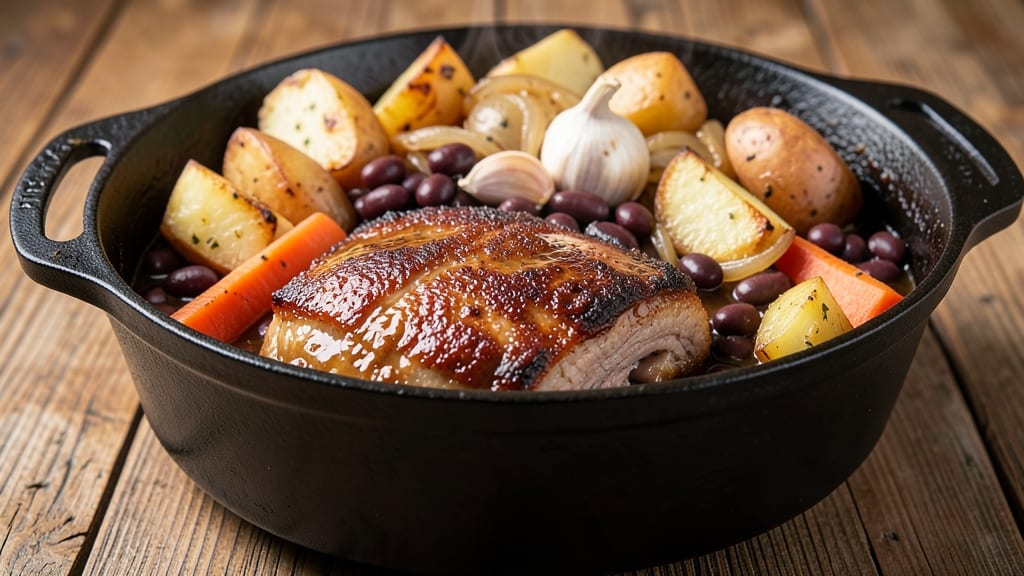
This Boston bean pot recipe delivers the ultimate New England comfort in one cast-iron pot—where tender beans, savory pork, and hearty vegetables braise together into a rich, flavorful stew.
The secret lies in slow simmering, which transforms tough cuts into melt-in-your-mouth perfection while letting the beans absorb all that smoky, savory goodness. I’ve perfected this version to stay true to tradition while offering modern shortcuts for busy cooks.
The beauty of this dish is its simplicity: just a few ingredients, one pot, and hours of hands-off cooking time. You’ll start with a base of navy beans and pork shoulder, then layer in carrots, onions, and potatoes, all simmered until the flavors meld into a deeply satisfying stew.
The pork becomes fork-tender, the beans creamy, and the vegetables caramelized—each bite is a taste of New England’s most beloved comfort food.
What makes this recipe special is its versatility. Serve it with crusty bread for soaking up every last drop or alongside cornbread for a true New England experience. The flavors only deepen over time, making it perfect for meal prep or feeding a crowd.
Whether you’re recreating a classic or adapting it for modern tastes, this bean pot is a hearty, foolproof centerpiece for any table.
The key to success is patience—let it simmer until the pork falls apart and the beans are tender. The result is a dish that’s equal parts comforting and impressive, with layers of flavor that make it worth every minute of wait.
Ready to make the most of your cast-iron pot? Let’s get started.
Ingredients for boston bean pot
Cast-iron essentials for New England's heartiest one-pot tradition—where slow-cooked pork and beans become a symphony of comfort.
| Ingredient | Amount | Notes |
|---|---|---|
| Pork Shoulder 🐖 | 2 ½ lb | Bone-in for maximum flavor |
| Navy Beans 🌱 | 2 cups | Dried, soaked overnight preferred |
| Yellow Onions 🧅 | 2 whole | Large, cut into wedges |
| Carrots 🥕 | 4 whole | Medium, peeled and halved |
| Russet Potatoes 🥔 | 4 whole | Large, cut into chunks |
| Garlic Cloves 🧄 | 6 cloves | Crushed for depth of flavor |
| Tomato Paste 🍅 | ½ cup | High-quality, no sugar added |
| Chicken Broth 💧 | 4 cups | Low-sodium preferred |
| Bay Leaves 🌿 | 2 whole | Fresh for best aroma |
| Thyme 🌿 | 1 tbsp | Fresh, stems removed |
| Black Peppercorns 🌶️ | 1 ½ tsp | Freshly cracked for heat |
| Salt 🧂 | 2 tsp | Diamond Crystal preferred |
| Olive Oil 🫒 | 2 tbsp | Extra-virgin for richness |
| Balsamic Vinegar 🍷 | 1 tbsp | For depth of flavor |
The pork shoulder is the star here—look for a cut with good marbling at Whole Foods or your local butcher shop. Bone-in is key for maximum flavor, and don't worry if it's not perfectly trimmed. Navy beans are traditional, but Great Northern or cannellini work too if that's what you've got. Soak them overnight for the creamiest texture, but a quick 2-hour soak in boiling water works in a pinch. For the vegetables, organic carrots and potatoes hold up best during the long simmer, but conventional will do. The onions should be large yellow—Spanish or Vidalia are great if you can find them.
No pork shoulder? Smoked sausage or ham hock adds a similar depth of flavor, though the texture will differ. Using canned beans? Drain and rinse them well—low-sodium versions are best to avoid over-salting. Fresh thyme is ideal, but dried works at half the amount. The tomato paste can be swapped for crushed tomatoes at double the quantity, though it'll be less concentrated. For extra richness, stir in a splash of apple cider vinegar at the end—it brightens all the flavors without overpowering. The balsamic vinegar is non-negotiable though—it's what gives that classic New England tang.
This stew tastes even better the next day—3-4 days in the fridge, honestly. For meal prep, portion into containers with a little extra broth on top to keep everything moist. Freezes beautifully for up to 3 months, though I recommend reheating gently on the stove with a splash of water to restore that silky texture. The cast-iron pot is your best friend here—it keeps the heat even and adds that perfect crust to the bottom. If you don't have one, a heavy Dutch oven works just as well.
Why You'll Love This Recipe
- One-Pot Magic: The pork shoulder slows down into melt-in-your-mouth tenderness while the potatoes and carrots soften—all in the same pot. No chopping like a fine chef, just rough dice and let it simmer. (Yes, even if you’re still in your pajamas.)
- Rich, Deep Flavor: That pork shoulder? It turns into juicy, savory shreds that soak up the navy beans’ earthiness and the onions’ sweet caramelization. Honestly, the first bite makes you want to skip dessert.
- Meal Prep Goldmine: Double the recipe and freeze half—it reheats beautifully for lazy lunches or tailgate feasts. My freezer’s always stocked with this; it’s my go-to for game days or when I can’t be bothered to cook.
- Budget-Friendly Feast: Pork shoulder and dried beans stretch into a hearty meal for four (or six if you’re feeding teenagers). Between us, this is the dish that makes grocery night less stressful—no fancy ingredients, just pure satisfaction.
Step-by-step instructions for Boston bean pot recipe
This New England classic delivers deep, smoky flavor in one pot—just follow these simple steps.
Sear the Pork Shoulder for Rich Depth
Heat a large Dutch oven over medium-high heat and add the 2 tablespoons olive oil. Once shimmering, place the 2.5 lb pork shoulder fat-side down and sear for 8-10 minutes until deeply browned on all sides. This step builds the foundation for flavor—don't rush it, even if it takes a bit longer for the larger cuts.
While searing, I like to press down gently on the pork shoulder during the first minute to prevent curling and ensure even contact with the pan. Remove the meat and set it aside on a plate, leaving all the browned bits in the pot—these will dissolve into the sauce later. This is where the magic starts.
Sauté Vegetables and Build the Flavor Base
In the same Dutch oven, add the 2 whole yellow onions (cut into wedges) and 4 whole carrots (halved). Cook for 5-6 minutes until the onions soften and begin to caramelize. Add the 4 whole russet potatoes (cut into chunks) and the 6 cloves garlic cloves (crushed), stirring to combine. Cook for another 3-4 minutes until the potatoes start to brown slightly.
Here's where the aromatics really wake up—you'll smell the onions caramelizing and garlic releasing. This is the moment that matters: the vegetables should be tender but still hold their shape, not mushy. If they're browning too quickly, reduce the heat slightly to prevent burning.
Layer in Beans and Seasonings
Add the 2 cups navy beans (soaked overnight if possible), 0.5 cup tomato paste, 4 cups chicken broth, 2 whole bay leaves, 1 tablespoon thyme, 1.5 teaspoons black peppercorns, and 2 teaspoons salt. Stir everything together, scraping up any browned bits from the bottom of the pot. This ensures all the flavors meld beautifully.
Return the pork shoulder to the pot, fat-side up. The beans should be mostly submerged in the broth, but don't worry if they're not completely covered—they'll absorb liquid as they cook. Add the 1 tablespoon balsamic vinegar now for that signature tangy depth that defines New England cooking.
Simmer Until Tender and Flavorful
Bring the mixture to a gentle simmer over medium-low heat, then cover and let it cook for 2.5 to 3 hours. The key here is patience—you want the pork shoulder to become fork-tender and the beans to break down slightly but still hold their shape. Check occasionally and add a splash of water if the broth reduces too much.
About 45 minutes before the end of cooking, uncover the pot and increase the heat to medium to let the sauce thicken slightly. You'll know it's ready when the pork shoulder pulls apart easily with a fork and the beans are tender but still have some bite. The broth should coat the back of a spoon with a rich, velvety texture.
Rest and Serve with Warm Bread
Remove the pork shoulder and let it rest for 10 minutes before shredding it directly into the pot. This resting step ensures the meat stays juicy and tender. Taste and adjust the seasoning—you might need a bit more salt or pepper to balance the flavors, especially if you used low-sodium broth.
Serve the bean pot immediately with warm crusty bread to soak up every last bit of that hearty, smoky sauce. The potatoes should be fork-tender, the beans creamy, and the pork shoulder falling apart at the touch. This is comfort food at its finest—perfect for chilly New England nights.
Pro Tips For Making Boston Bean Pot
- Sear the Pork First: Brown that pork shoulder in batches—don’t skip it. The Maillard reaction on the outside gives the whole dish depth, and it won’t fall apart if you cut it into 2-inch chunks first. I used to rush this, and the beans just tasted flat until I learned better.
- Parboil the Potatoes: Russets soak up liquid like sponges. Give them a 5-minute boil in salted water before adding them to the pot—this keeps them from turning to mush later. (Yes, even if you’re impatient like me.)
- Don’t Crowd the Pot: Pack everything in too tight, and the pork stays tough. Arrange the pork shoulder in a single layer first, then nestle the potatoes and veggies around it. The beans will expand, but they’ll thank you for the space.
- Use a Dutch Oven: A heavy pot locks in heat and moisture better than a flimsy one. If you’re short on time, use a deep skillet, but don’t skimp on the liquid—aim for at least 2 cups of broth or water. (Your future self will thank you.)
Flavor customization for this dish
Classic New England Tang
The signature tang of traditional Boston bean pot comes from balsamic vinegar and apple cider vinegar—I use 1 tablespoon balsamic in the base recipe, but add ½ teaspoon apple cider vinegar at the end for brightness.
This acidity cuts through the richness of the pork and beans, balancing the sweetness of the carrots and onions. For extra depth, stir in 1 teaspoon molasses during the final 30 minutes of cooking—it adds a subtle caramel note that's pure New England tradition. 🍯
Smoky Heat Variations
Add smokiness by swapping ½ teaspoon smoked paprika for regular paprika or using liquid smoke—just ¼ teaspoon is enough to give that campfire aroma. For a deeper smoky flavor, sear the pork shoulder with 1 chopped chipotle pepper in adobo along with the garlic.
If you love heat, finish with ½ teaspoon cayenne pepper or 1 teaspoon hot sauce like Crystal or Tabasco—it adds a kick without overpowering the dish.
Sweet and Savory Balance
Sweetness is key in New England cooking. Along with the tomato paste, I often add 1 tablespoon brown sugar or 2 teaspoons maple syrup to caramelize the onions and potatoes.
For a richer sweetness, stir in ½ cup crushed pineapple (drained) during the last hour of simmering—it adds a tropical contrast that surprises and delights. If you prefer a more traditional approach, 1 teaspoon honey works beautifully too.
Herb and Spice Boosts
Fresh herbs elevate this dish. Along with thyme, try 1 tablespoon fresh rosemary or 1 sprig fresh sage tied with kitchen twine and removed before serving. For warmth, add ½ teaspoon ground allspice or 1 star anise pod (remove before serving).
A pinch of ground cloves (just ¼ teaspoon) adds a subtle warmth that pairs perfectly with the pork. Don’t forget fresh parsley for garnishing—it brightens the plate and adds freshness.
Vegetable Swaps for Seasonality
Adjust vegetables based on what’s fresh. In summer, swap potatoes for sweet potatoes—their natural sweetness shines. In winter, add 1 cup diced celery or 1 cup chopped kale for earthiness.
For a spring twist, include 1 cup corn kernels (fresh or frozen) and ½ cup diced bell peppers—they add a bright, fresh contrast to the hearty flavors. Always keep the onions and carrots as the base for balance.
Protein Alternatives
Skip the pork? Use 2 cups smoked sausage (like kielbasa) for a smoky, meaty flavor. For a vegetarian version, swap the pork for 2 cups extra-firm tofu (pressed and cubed) or 2 cups chickpeas—add them with the beans and simmer until tender.
If you prefer beef, 2 cups shredded beef chuck works beautifully, especially if you marinate it in 1 tablespoon soy sauce and 1 teaspoon Worcestershire sauce before adding it to the pot. 🌱
Nutrition facts
Frequently asked questions
Can I make this Boston bean pot in a slow cooker?
Transfer all ingredients to your slow cooker after searing the pork shoulder in a skillet. Cook on low for 7-8 hours or high for 4-5 hours, stirring occasionally. The slow cooker method actually enhances the flavors by keeping everything warm and tender for longer. Just add ½ cup extra broth since slow cookers evaporate more liquid.
What's the best way to store leftovers?
Store in an airtight container in the fridge for 3-4 days or freeze for up to 3 months. For reheating, warm gently on the stove with 2 tablespoons broth to restore moisture. The flavors actually improve overnight—this is a make-ahead dish at its finest!
Can I use canned beans instead of dried?
Yes, but drain and rinse them well to remove excess sodium. Use 2 (15-oz) cans navy beans instead of dried, and reduce the broth by 1 cup since canned beans contain more liquid. For best texture, add them during the last 30 minutes of cooking so they don't get mushy.
Why does my bean pot taste bland?
Most likely, the pork wasn't seared enough or the beans didn't simmer long enough. Always brown the meat deeply to build flavor, and let it cook uncovered for the final 30 minutes to reduce the sauce. Add 1 tablespoon balsamic vinegar or ½ teaspoon smoked paprika at the end for extra depth.
What's the traditional serving suggestion?
Serve with warm cornbread or crusty sourdough to soak up the rich sauce. For a complete New England meal, add collard greens or steamed broccoli on the side. The beans and pork are hearty enough to stand alone, but the bread makes it feel like a true comfort food feast!