
Side Dishes
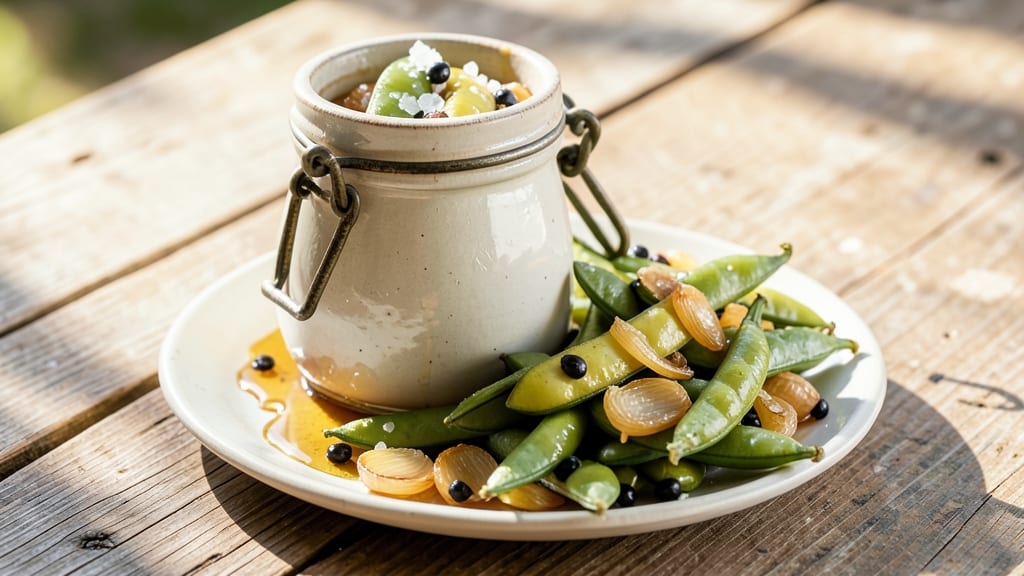
This broad bean pickle recipe transforms simple green beans into vibrant, tangy preserves that keep for months—perfect for elevating sandwiches, charcuterie boards, or pairing with grilled meats.
The secret lies in a precise balance of vinegar, mustard seeds, and bay leaves, which create a bright, complex flavor that deepens with time. I developed this method after years of experimenting with Mediterranean-style pickles, where the acidity not only preserves but also enhances the natural sweetness of the beans.
What sets this recipe apart is its 3-month shelf life, achieved through proper sterilization and a vinegar brine that prevents spoilage while infusing bold flavor.
The process is straightforward: blanching the beans to soften them, packing them into sterilized jars with aromatic spices, and covering them in a tangy liquid that ensures crisp texture and vibrant color.
Unlike quick pickles, this method allows flavors to meld over time, resulting in a product that tastes better with each passing week.
The result is a crisp, zesty preserve with just the right bite—bright enough to cut through rich foods but subtle enough to complement them.
The mustard seeds add a gentle heat, while the bay leaves lend an earthy depth that pairs beautifully with cured meats, cheeses, or even as a topping for roasted vegetables. This isn’t just a side dish; it’s a versatile condiment that transforms ordinary meals into something extraordinary.
Once you’ve mastered the technique, you’ll find endless ways to use these pickles—spread them on toast, mix them into salads, or serve them alongside grilled fish. The best part? You can make a big batch and enjoy it for months, knowing every jar is packed with flavor.
Let’s get started on creating your own stash of homemade broad bean pickles.
Ingredients for broad bean pickle
Fresh broad beans meet bright vinegar and aromatic spices for zesty preserves that keep for months.
| Ingredient | Amount | Notes |
|---|---|---|
| Fresh Broad Beans 🌱 | 1 ½ lb | Trimmed, blanched for 3 minutes |
| White Vinegar 💧 | 2 cups | Distilled, 5% acidity preferred |
| Water 💧 | 2 cups | Filtered or bottled |
| Granulated Sugar 🍚 | ½ cup | White or raw cane |
| Salt 🧂 | ¾ tsp | Non-iodized, fine grain |
| Mustard Seeds 🌶️ | 1 ½ tsp | Whole, yellow or brown |
| Bay Leaves 🌿 | 2 whole | Fresh or dried |
| Black Peppercorns 🌶️ | 1 tsp | Crushed lightly |
| Garlic Cloves 🧄 | 3 cloves | Smashed, not minced |
| Clean Mason Jars 🥫 | 4 pieces | Pint size, sterilized |
| Lemon Juice 🍋 | 1 tbsp | Freshly squeezed |
| Red Wine Vinegar 🍷 | 1 tbsp | For depth of flavor |
The beans are the star, so pick firm, young broad beans—they should snap when bent. Trader Joe's and Whole Foods usually carry them in season, but if you're out of luck, green beans work in a pinch (just halve them lengthwise). The vinegar is non-negotiable for preservation—distilled white vinegar gives the cleanest tang, but red wine vinegar adds complexity. For the jars, Ball or Kerr brand mason jars work best—they're designed for canning and seal properly. Sterilize them by boiling for 10 minutes before filling.
No mustard seeds? Substitute 1/4 tsp ground mustard, but you'll lose that nice crunch. Fresh bay leaves are ideal, but dried works at half the amount. Short on garlic? Garlic powder at 1/2 tsp gets you close. The sugar isn't just for sweetness—it helps preserve the beans and balances the acidity. If you're concerned about sugar, you can reduce it to 1/4 cup, but the pickles might be slightly less crisp over time. The red wine vinegar adds depth, but if you don't have any, extra lemon juice works too.
These pickles keep for 3 months unopened in a cool, dark pantry. Once opened, refrigerate and use within 2 weeks. The flavor actually improves over time—like a fine wine! For extra shelf life, freeze any opened jars. I like to make a big batch and give jars as gifts—they're always a hit. The jars are reusable, so you can turn this into a zero-waste project too.
Why You'll Love This Recipe
- No-Fuss Simmer: I swear by this recipe when I’m too tired to fuss—just trim those beans, toss them in boiling vinegar and water, and let it bubble for 15 minutes. The sugar and salt do all the work while I sip my tea.
- Tangy-Sweet Magic: That vinegar-sugar balance? It’s chef’s kiss—the beans stay crisp with a bright, almost citrusy bite, while the sugar rounds it out just enough to make you want to eat it straight from the jar.
- Party Pantry Hero: I always keep a jar of this in my fridge because it’s the ultimate last-minute side. Drop it into grain bowls, serve it with grilled meats, or just eat it with crackers—it’s the kind of thing that makes you look like you planned ahead.
- Budget-Friendly Staple: Fresh broad beans can be pricey, but this recipe stretches them far—plus, vinegar and sugar are pantry basics. A single batch lasts weeks, and I’ve even gifted jars to neighbors. (They always ask for seconds.)
Step-by-step instructions for zesty broad bean pickle
Here's how to create bright, tangy preserves that'll keep for months.
Prepare the Fresh Broad Beans
Start by trimming the ends off all 1.5 pounds of fresh broad beans using a sharp knife. I like to make a small cut just below the stem to remove any woody parts—this makes them easier to peel later. Place the trimmed beans in a large pot and cover with cold water by about 1 inch.
Bring to a boil over high heat, then immediately reduce to medium-high and blanch for exactly 3 minutes. You'll see the skins start to loosen and the beans turn a vibrant green. Drain them in a colander and immediately transfer to an ice bath to stop the cooking process. This quick blanching ensures tender beans while preserving their bright color.
Peel and Prepare the Beans
While the beans are still warm, gently rub them between your palms under running water to remove the skins. You'll notice the skins come off easily now—this is why blanching is crucial. Once peeled, inspect each bean and discard any that look damaged or discolored. I like to make a small slit along one side of each bean with a paring knife to help them absorb the pickle flavor more quickly.
Arrange the peeled beans in your 4 sterilized pint-sized mason jars, packing them tightly but not crushing them. You want them to stand upright rather than lying flat, which makes for a more attractive presentation. Leave about 1 inch of headspace at the top of each jar—this prevents overflow during processing.
Make the Pickling Liquid
In a large saucepan, combine the 2 cups white vinegar, 2 cups water, 0.5 cup granulated sugar, and 0.75 teaspoon salt. Bring to a gentle simmer over medium heat, stirring until the sugar and salt completely dissolve. This creates the flavor base for your pickle—don't skip stirring, or you might end up with grainy sugar at the bottom.
Add the 1.5 teaspoons mustard seeds, 2 whole bay leaves, 1 teaspoon crushed black peppercorns, and 3 smashed garlic cloves to the simmering liquid. Let it steep for 5 minutes to infuse the flavors. Then remove from heat and stir in the 1 tablespoon lemon juice and 1 tablespoon red wine vinegar. This final combination gives your pickle that perfect balance of tangy, sweet, and slightly complex flavors.
Pack and Process the Jars
Using a ladle or funnel, carefully pour the hot pickling liquid over the beans in each jar, making sure they're completely submerged. Tap the jars gently on the counter to remove any air bubbles that might have formed. Wipe the rims with a clean, damp cloth to ensure a perfect seal, then place the lids on tightly.
Process the jars in a water bath canner for 15 minutes after the water reaches a rolling boil. This sterilization step is crucial for that 3-month shelf life promise. Once processed, remove the jars and let them cool completely on a towel-lined counter. You'll hear the satisfying "ping" as the lids seal—this means your pickles are properly preserved and ready for storage.
Pro Tips For Making Broad Bean Pickle
- STRIP BEANS THOROUGHLY: I learned this the hard way—skimp on the shelling, and you’ll bite into a chewy, undercooked bean that ruins the whole jar. Use a sharp knife or a broad bean sheller (they’re cheap and worth it) to remove every fiber and string. If you’re doing it by hand, soak them in cold water for 10 minutes first—they’ll soften and release easier.
- BOIL BEANS JUST UNTIL TENDER: Overcook those beans, and they’ll turn to mush in the jar. Start with a rolling boil, then drop the heat to a simmer once the water hits—about 5 minutes after the beans float. They’re done when a knife slips in easily but still holds shape. Drain immediately to stop cooking.
- USE LESS SUGAR: The classic ratio (1:1 sugar to vinegar) makes for a syrupy, overly sweet pickle. Cut it to ¾ cup sugar per cup of vinegar—your taste buds will thank you later. The acidity in the vinegar carries the flavor, so let it shine. (Yes, even if you’re impatient like me.)
- PACK BEANS HOT, THEN COOL: Fill sterilized jars with the hot beans and liquid, leaving ½-inch headspace. Tap the jars gently on the counter to remove air bubbles, then wipe the rims clean. Seal while warm—the vacuum will pull tighter, keeping those beans crisp for months. Let them cool completely before storing.
Regional styles of these flavors
Mediterranean Style
In Mediterranean regions like Greece and Turkey, broad bean pickles often include dill and oregano alongside mustard seeds for a fresher, herbaceous profile. I add 1 tablespoon fresh dill and 1 teaspoon dried oregano to the brine, along with a pinch of red pepper flakes for subtle heat.
The result is a lighter pickle that pairs beautifully with grilled lamb or fresh flatbread. 🌿
Middle Eastern Twist
For a Middle Eastern-inspired version, swap the white vinegar for apple cider vinegar and add 1 teaspoon ground cumin and ½ teaspoon coriander seeds to the brine.
This variation works wonderfully with hummus or as a topping for shawarma. The cumin adds an earthy warmth that complements the tangy beans perfectly.
Indian Chutney-Inspired
Inspired by Indian chutneys, this variation uses tamarind paste instead of sugar and incorporates 1 teaspoon grated ginger and ½ teaspoon turmeric into the brine. The tamarind adds a unique sourness that deepens over time, while the turmeric gives the pickles a golden hue.
These pickles shine when served with dosas or as a condiment with curries. 🌶️
Italian-Inspired Fennel Pickles
For an Italian-inspired twist, add thinly sliced fennel bulb and ½ teaspoon fennel seeds to the jars before packing the beans. The fennel’s anise-like flavor pairs beautifully with the broad beans, creating a complex, aromatic pickle. This version is perfect for antipasto platters or as a side with roasted pork.
Spicy Carolina-Style
Inspired by Southern US traditions, this version includes 1 tablespoon hot honey and ½ teaspoon cayenne pepper in the brine. The hot honey adds a sticky sweetness that balances the tang, while the cayenne brings serious heat.
These pickles are fantastic with fried chicken or on top of burgers for a tangy kick. 🔥
Herbed French Version
For a French-inspired take, use white wine vinegar instead of white vinegar and add 1 sprig fresh thyme and 2 sprigs fresh tarragon to the brine. The tarragon lends a subtle anise note, while the thyme adds earthiness.
This version is elegant enough for charcuterie boards but still bold enough to stand up to rich cheeses like Brie or Camembert.
Nutrition facts
Frequently asked questions
Can I use green beans instead of broad beans?
Yes, but you'll need to halve them lengthwise for even cooking. Green beans work well, though they won't have the same delicate texture as broad beans. For best results, use young, tender green beans and follow the same blanching time of 3 minutes.
How do I know if my pickles are properly sealed?
Check for the satisfying "ping" sound when jars cool completely. The lids should also be concave with no flex when pressed. If a jar doesn't seal, refrigerate and use within 1 week. Unsealed jars won't keep for 3 months.
Can I adjust the spice level for kids?
For milder pickles, omit the mustard seeds and reduce black peppercorns to ½ teaspoon. You can also skip the red wine vinegar and use extra lemon juice for brightness. The flavor will still be tangy but much gentler.
What if my pickles turn cloudy or smell off?
Cloudiness can happen if the sugar didn't fully dissolve during cooking. For safety, always check for mold or foul odors—if present, discard immediately. Proper sterilization and vinegar levels should prevent spoilage, but store jars in a cool, dark place to maintain quality.
How can I use these pickles beyond sandwiches?
Try them as a topping for tacos, mixed into grain bowls, or as a crunchy garnish for soups. They also make a fantastic snack with cheese cubes or crackers. For a Mediterranean touch, fold into salads or serve alongside grilled meats. The possibilities are endless!