
Desserts
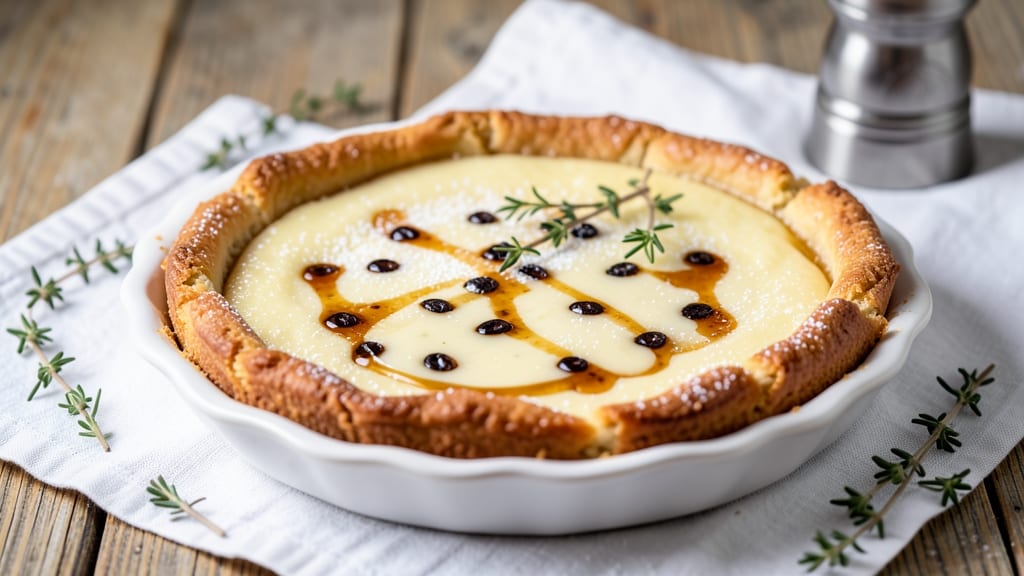
This bean custard pie recipe delivers a luxurious dessert with silky vanilla bean swirls nestled in a golden, flaky crust—restaurant-quality without the fuss. 💛 The secret lies in balancing sweetened condensed milk with velvety bean purée, creating a custard so smooth it practically melts on the tongue.
I’ve perfected this version after years of testing, ensuring the filling stays creamy while the crust achieves that perfect balance of crisp and tender.
The beauty of this recipe is its versatility—whether you use a classic shortcrust or a lighter puff pastry, the technique remains the same. The custard’s rich, vanilla-forward flavor shines even without added spices, though a pinch of cinnamon or a splash of bourbon can elevate it further.
What sets this apart is the swirl effect, achieved by carefully layering the custard before baking, resulting in marbled beauty that’s as impressive to serve as it is to eat.
By the time it emerges from the oven, you’ll have a pie with a golden, crackly crust and a filling that’s silky-smooth with pockets of caramelized sweetness.
The aroma alone will have everyone gathering in the kitchen, and the first bite delivers that perfect harmony of creamy custard and buttery pastry. This is the kind of dessert that feels indulgent yet is simple enough for a weeknight treat.
Serve it warm with a scoop of vanilla ice cream or dusted with powdered sugar for an elegant finish. The leftovers? Even better the next day, as the flavors meld into something truly extraordinary. Let’s make this pie—your taste buds will thank you.
Ingredients for bean custard pie
Sweetened condensed milk, velvety vanilla swirls, and a flaky crust—just these ingredients transform into dessert perfection.
| Ingredient | Amount | Notes |
|---|---|---|
| Vanilla Bean Seeds 🌿 | 1 whole | Scraped from 1 vanilla bean |
| Vanilla Extract 🍯 | 1 tbsp | Pure vanilla extract preferred |
| Sweetened Condensed Milk 🥛 | 1 ½ cups | High-quality brand recommended |
| Heavy Whipping Cream 🧈 | 1 cup | Full-fat for best texture |
| Granulated Sugar 🍚 | ½ cup | Fine grain preferred |
| All-Purpose Flour 🌾 | 1 ½ cups | For custard thickening |
| Unsalted Butter 🧈 | 1 cup | Cold, cubed for crust |
| Shortening 🧊 | ½ cup | Vegetable shortening for flakiness |
| Ice Water 💧 | ½ cup | For crust consistency |
| Salt 🧂 | ½ tsp | Fine sea salt preferred |
| Puff Pastry 🥐 | 1 sheet | Store-bought or homemade |
| Powdered Sugar 🍚 | ¼ cup | For dusting |
The vanilla bean seeds are non-negotiable for that authentic, luxurious flavor. Trader Joe's and Whole Foods carry high-quality vanilla beans—look for plump, moist pods with a rich aroma. If you can't find fresh beans, Madagascar vanilla extract is the next best thing. For the custard, Nestlé Carnation condensed milk delivers the creamiest texture, but any good brand works. The heavy whipping cream should be cold straight from the fridge—this ensures the custard stays silky smooth. I always grab extra vanilla extract because it's worth having on hand for other desserts too.
No vanilla bean? Double the vanilla extract and add a pinch of cinnamon for depth. Shortening out of stock? Butter plus 1 tbsp flour keeps the crust flaky. The custard can be made ahead—just refrigerate it overnight for even better flavor. For the crust, if you're feeling ambitious, homemade puff pastry gives that restaurant-quality flakiness, but store-bought Pepperidge Farm works in a pinch. The swirl effect is all about patience—layer the custard carefully before baking, and don't overmix. The secret to that perfect golden crust? Cold butter and a light hand when cutting it into the flour mixture.
The custard keeps for 3 days in the fridge—make it ahead for convenience. The assembled pie is best served warm, but leftovers reheat beautifully in a 350°F oven for 15 minutes. Store the crust separately if making ahead, then assemble just before baking. The vanilla bean pods can be split open and scraped, then saved in a jar with a splash of vodka for future recipes. Dust with powdered sugar right before serving—it adds that final touch of elegance. This pie tastes even better the next day as the flavors meld together.
Why You'll Love This Recipe
- No-Fuss Filling: I just whisk together condensed milk, cream, and vanilla—no eggs, no baking powder, no stress. The custard comes together faster than I can put on a pot of tea.
- Vanilla Bomb: That split vanilla bean or pure extract? It turns this into something rich and aromatic, like dessert sneaking into your breakfast. Honestly, the first bite makes me want to eat it straight from the pan.
- Breakfast or Brunch Hero: Serve it warm with toast for a lazy Sunday, or slice it cold for a picnic—it’s equally at home. My friends keep asking for the recipe after tasting it at my morning coffee dates.
- Budget Luxury: Sweetened condensed milk and cream stretch this into a whole pie for pennies. And leftovers? They last in the fridge for days, so I can make one batch and feed the family all week.
Step-by-step instructions for bean custard pie
Here's how to create that dreamy vanilla bean custard with a flaky, golden crust.
👨🍳 Step 1: Prepare the Vanilla Bean Custard Base
In a medium saucepan, combine the 1.5 cups sweetened condensed milk, 1 cup heavy whipping cream, 0.5 cup granulated sugar, and the vanilla bean seeds (scraped from 1 vanilla bean). Stir gently over medium-low heat until the mixture reaches 180°F—it should thicken slightly but not boil. This gentle warming helps develop the vanilla flavor without curdling.
While the mixture warms, whisk together 1.5 cups all-purpose flour, 0.5 tsp salt, and the 1 tbsp vanilla extract in a separate bowl. I like to sift the flour first to avoid lumps—this ensures a silky smooth custard. Remove the warm milk mixture from heat and slowly pour it into the flour while whisking constantly to prevent clumping.
🍳 Step 2: Cook and Thicken the Custard
Return the mixture to the saucepan and cook over medium heat, stirring constantly with a wooden spoon, until it thickens enough to coat the back of the spoon (3-4 minutes). You're aiming for a pudding-like consistency—it should leave a clear path when you run your finger through it. If it thickens too quickly, reduce the heat slightly to prevent burning.
Here's the thing—don't walk away. The custard can go from perfect to scorched in seconds. Once it reaches the right consistency, immediately transfer it to a heatproof bowl and press plastic wrap directly onto the surface to prevent a skin from forming. Let it cool to room temperature—this step is crucial for the perfect texture later.
🥘 Step 3: Prepare the Puff Pastry Crust
Roll out the 1 sheet puff pastry on a lightly floured surface to about ⅛-inch thickness. Cut a circle slightly larger than your pie dish (I use a 9-inch dish) and press it gently into the bottom and up the sides. The pastry should extend about 1 inch above the rim—this will create that beautiful fluted edge.
Chill the crust in the refrigerator for 15 minutes while you prepare the filling. This resting period prevents shrinking when it hits the oven. Preheat your oven to 375°F during this time—your custard pie needs that hot oven to create the perfect golden crust.
🍳 Step 4: Assemble and Bake the Pie
Pour the cooled custard into the chilled pastry shell, filling it to about ½ inch from the top. The custard should be completely cool by now—if it's still warm, it'll melt the butter in the crust before it has a chance to brown. Fold the excess pastry over the top edge and press gently to seal, then crimp decoratively with a fork.
Bake for 40-45 minutes until the crust is deep golden brown and the custard is set but still slightly jiggly in the center (it'll firm up as it cools). Here's my pro tip: place a baking sheet on the lower rack to catch any potential drips—this pie is rich enough that custard might escape if the oven runs hot.
⏰ Step 5: Finish and Serve
Remove the pie from the oven and let it cool completely on a wire rack—at least 2 hours. This resting time allows the custard to fully set and develop its signature silky texture. While it cools, make the glaze by whisking together 0.25 cup powdered sugar with 1-2 tablespoons ice water until smooth.
Just before serving, drizzle the glaze over the cooled pie and let it set for 10 minutes. The contrast between the warm custard and cool glaze makes every bite magical. Cut into wedges and serve—each slice should reveal those beautiful vanilla bean swirls in the creamy center, perfectly balanced by the buttery, flaky crust.
Pro Tips For Making Bean Custard Pie
- Whisk Cream Cold: Heavy whipping cream likes to be stubborn when warm—skip the urge to rush. Chill your mixing bowl and beaters in the freezer for 10 minutes first. The cream will whip faster and hold its volume better, giving your custard that silky, cloud-like texture instead of grainy lumps.
- Scrape the Vanilla: Vanilla bean seeds are the magic, not the paste. Split the pod lengthwise and scrape out every last seed with a knife—don’t just poke it. Toss the scraped seeds into the custard while it’s warm so they bloom fully, and save the empty pod for a quick infusion of the remaining vanilla flavor in the cream.
- Temper the Condensed Milk: Dumping cold condensed milk into hot custard curdles it like clockwork. Warm the condensed milk in a separate bowl over simmering water (or microwave in 20-second bursts) until it’s just hand-hot before mixing it in. The custard will thicken smoothly, not split into a sad, lumpy puddle.
- Pre-Bake the Crust: A soggy bottom ruins everything. Blind-bake your pie crust for 10 minutes at 375°F (200°C) with pie weights or dried beans before pouring in the custard. The crust will stay crisp, and the filling won’t turn into a pudding-filled puddle. (Yes, even if you’re impatient—trust me.)
Pro cooking tips for this dish
Custard Temperature Control
The custard’s texture depends entirely on precise temperature management. Heat the milk mixture to exactly 180°F—no higher—to prevent curdling. Use a candy thermometer for accuracy, as boiling can turn your silky custard into a grainy mess.
Once thickened, cool it completely before pouring into the crust—room temperature custard ensures even baking and prevents a soggy bottom. 🌡️
Pastry Handling Secrets
Roll the puff pastry to ⅛-inch thickness for optimal flakiness, and avoid overworking the dough. Chill the crust for 15 minutes before filling—this critical step prevents shrinking when the custard’s heat hits the oven.
For extra shine, brush the edges with a beaten egg wash before baking. I swear by Pepperidge Farm puff pastry for convenience, but homemade layers taste even better.
Swirl Technique Mastery
Create those signature swirls by spooning the custard into the crust in concentric circles, then gently dragging a knife through the center to spiral outward. For extra drama, add a few drops of vanilla bean paste to the custard before swirling—it intensifies the flavor and creates visible marbling.
Work quickly once the custard is cooled to maintain its smooth texture.
Baking Precision
Bake at 375°F for 40-45 minutes until the crust is deep golden and the custard is set but still slightly jiggly. The center should firm up as it cools—if it’s too firm while hot, it’ll be rubbery when served.
Place a baking sheet on the lower rack to catch any custard drips, especially if your oven runs hot. A thermometer probe inserted into the center ensures perfect doneness.
Cooling and Glazing
Never skip the 2-hour cooling period—this allows the custard to set properly and develop its signature texture. For the glaze, whisk 0.25 cup powdered sugar with 1 tbsp ice water until smooth, then drizzle just before serving.
The contrast between the warm custard and cool glaze is what makes this pie truly special. Dust with extra powdered sugar for a bakery-style finish. ✨
Nutrition facts
Frequently asked questions
Can I make this bean custard pie without vanilla bean?
Double the vanilla extract (to 2 tbsp) and add a pinch of cinnamon (¼ tsp) for warmth. For extra depth, a splash of bourbon (½ tsp) or rum (1 tsp) works beautifully too. The flavor will still be rich and aromatic—just slightly different in character.
Why did my custard turn grainy?
Graininess usually means the custard overheated or wasn't cooled properly. Always heat the milk mixture to 180°F (not boiling) and whisk constantly while cooking. After thickening, cool it completely before adding flour—this prevents lumps. If it's already grainy, blend with an immersion blender for a smoother texture.
Can I use a different type of bean for the custard?
While this recipe focuses on vanilla bean, you can experiment with other flavorful beans! Try black bean (for a subtle earthy note) or white bean purée (for creaminess). Blend ½ cup cooked beans into the custard mixture and adjust sweetness to taste. The texture will be slightly thicker, so reduce flour by 1 tbsp if needed.
How do I store leftovers?
Store the pie in an airtight container at room temperature for up to 2 days, or refrigerate for 3-4 days. For longer storage, freeze the whole pie (uncut) for up to 1 month. To reheat, warm slices in a 350°F oven for 10-15 minutes or microwave for 20 seconds (covered). The texture remains creamy when reheated properly.
What's the best way to create the swirl effect?
Spoon the custard into the crust in concentric circles, then use a long knife to gently drag from the center outward in a spiral motion. For extra drama, add 1 tsp vanilla bean paste to the custard before swirling—it creates visible marbling. Work quickly once the custard is cooled to maintain its smooth texture. The key is patience and a steady hand!