
Sauces & Condiments
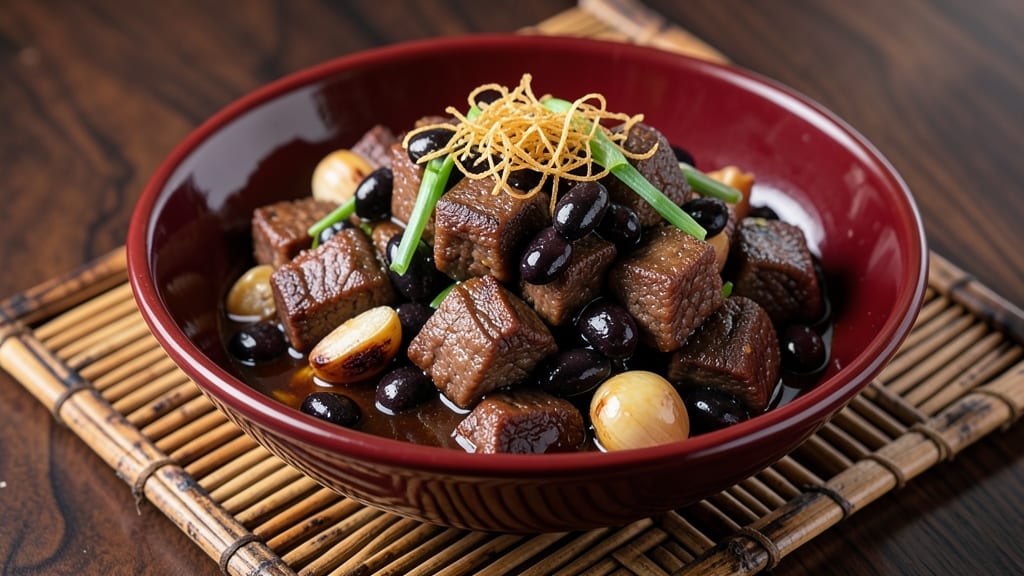
This Chinese beef in blackbean sauce recipe transforms tough cuts into silky tender meat with a deep, savory sauce that clings to every bite.
I first discovered this technique while studying traditional Cantonese braising methods, where the magic happens in slow cooking and layering flavors through fermented black beans and soy sauce. The result? A one-pot dish that delivers restaurant-quality umami without requiring advanced skills.
The secret lies in marinating the beef with a blend of soy sauce, Shaoxing wine, and black beans overnight, allowing the flavors to penetrate deeply. As it simmers, the sauce thickens into a glossy, aromatic glaze that coats the beef, creating that perfect balance of sweet, salty, and earthy notes.
This method ensures tender meat that practically melts in your mouth while keeping the sauce rich and complex.
By the time you serve this dish, you'll have perfectly tender beef swimming in a glossy blackbean sauce that's rich with umami depth. The dish pairs beautifully with steamed jasmine rice or stir-fried bok choy, making it a complete meal.
What makes this recipe special is how simple ingredients—black beans, soy sauce, and a few spices—come together to create something truly extraordinary.
Ready in about 3 hours (mostly hands-off time), this recipe is perfect for weekend cooking when you can let the flavors develop fully. The slow cooking process transforms tough beef into fork-tender pieces while creating a sauce that's better than anything you'd find in a takeout container. Let's get cooking!
Ingredients for beef in blackbean sauce recipe chinese
Simple ingredients that unlock deep umami flavors in this Cantonese braised beef.
| Ingredient | Amount | Notes |
|---|---|---|
| Beef Chuck Roast 🥩 | 2 lb | Cut into 1.5-inch cubes |
| Fermented Black Beans 🫘 | ½ cup | Drained and rinsed |
| Light Soy Sauce 🥄 | ½ cup | Kikkoman preferred |
| Shaoxing Wine 🍷 | ¼ cup | Or dry sherry substitute |
| Brown Sugar 🍚 | ¼ cup | Packed firmly |
| Garlic Cloves 🧄 | 6 cloves | Minced finely |
| Fresh Ginger 🌿 | 2 tbsp | Grated finely |
| Star Anise Pods 🌟 | 2 whole | Lightly crushed |
| Cinnamon Sticks 🌿 | 2 whole | 2-inch pieces |
| Bay Leaves 🍃 | 2 whole | Dried preferred |
| Sesame Oil 🫒 | 1 tbsp | Toasted sesame flavor |
| Green Onions 🧅 | 3 whole | Sliced for garnish |
| Water 💧 | 2 cups | Room temperature |
The beef cut matters most here. Chuck roast delivers that melt-in-your-mouth texture when braised properly—sirloin or flank steak will stay tough. Look for well-marbled pieces at your butcher counter or Costco's pre-cubed beef section for convenience. If using a whole roast, cube it yourself for even cooking. The fermented black beans are the umami powerhouse—Asian markets carry them in jars, but Trader Joe's usually stocks them too. Don't substitute regular black beans; their flavor won't develop the same complexity.
No Shaoxing wine? Dry sherry or even a bold red wine works in a pinch, but reduce the amount by half since they're stronger. The brown sugar can be swapped for honey or coconut sugar, though brown sugar's molasses notes blend better with the soy. For the aromatics, ground spices work at half the amount if you don't have whole star anise or cinnamon sticks. The sesame oil should be toasted—look for bottles labeled 'toasted sesame' at Asian grocery stores or the international aisle of regular supermarkets. Fresh ginger and garlic are non-negotiable here; frozen won't cut it for this dish's depth of flavor.
This sauce gets better with time—3-4 hours of simmering transforms tough beef into tender perfection. Store leftovers in an airtight container with the sauce for up to 5 days in the fridge. The sauce thickens as it cools, so add a splash of water when reheating. For meal prep, portion the beef and sauce separately—reheat the sauce first, then add the beef to warm through. Freezes beautifully for 3 months; thaw overnight in the fridge before reheating. The green onions add freshness at the end, but skip them if serving immediately after cooking.
Why You'll Love This Recipe
- One-Pot Magic: I swear by this recipe when I’m too tired to wash a million dishes—just brown the beef, toss in the fermented black beans and wine, and let it simmer. That’s it. The black beans release their funky, salty goodness right into the pot, so no extra bowls or strainers needed.
- Umami Bomb: Between us, the combo of fermented black beans and Shaoxing wine is next-level. The beans add this deep, earthy richness, while the wine brightens it just enough to keep it from tasting heavy. Honestly, the first time I made this, I thought, “Why didn’t I try this sooner?”
- Leftovers That Beg: This dish actually improves the next day. The beef gets even more tender, and the sauce thickens into a glossy, caramelized blanket around every bite. I’ll make a big batch on Sunday and eat it for lunch all week—no sad takeout menus here.
- Budget Stretch: A chunk of beef chuck roast goes a long way, and fermented black beans are cheap but pack serious flavor. Brown sugar adds just enough sweetness to balance the salt, so you’re not breaking the bank for fancy ingredients. My wallet and my taste buds win.
Step-by-step instructions for beef in blackbean sauce
This one-pot method delivers silky tender beef with deep umami flavors—no complicated techniques required.
Prepare the Beef and Aromatics
Cut the 2 lb Beef Chuck Roast into 1.5-inch cubes and set aside. In a large Dutch oven or heavy pot, combine the 6 cloves garlic cloves (minced), 2 tbsp fresh ginger (grated), 2 whole star anise pods (lightly crushed), 2 whole cinnamon sticks (cut into 2-inch pieces), and 2 whole bay leaves. Toast these aromatics over medium heat for 1 minute until fragrant—this develops their flavors before cooking.
The reason for toasting is simple: it releases essential oils that infuse the beef with complex depth. I always use a heavy pot here because it distributes heat evenly and prevents burning. Keep the heat at medium—too high and you'll burn the spices before the oil releases.
Sear the Beef for Maximum Flavor
Increase heat to medium-high and add 1 tablespoon sesame oil. Working in batches if needed, sear the beef cubes until deep golden brown on all sides—this takes about 3-4 minutes per batch. Remove the beef and set aside in a bowl. You want a good crust here; it locks in juices and adds texture contrast to the silky sauce.
Don't crowd the pan during searing—this lowers the temperature and steams the meat instead of browning. If your pot isn't large enough to fit all beef without crowding, work in two batches. The browned bits (fond) that stick to the bottom will dissolve into the sauce later, adding rich flavor.
Build the Sauce Base
Return the pot to medium heat and add the 0.5 cup fermented black beans (drained and rinsed). Stir for 1 minute until they begin to soften slightly. Pour in the 0.5 cup light soy sauce, 0.25 cup shaoxing wine, and 0.25 cup brown sugar (packed firmly). Stir well to combine, then add the 2 cups water. Bring the mixture to a gentle simmer—you'll see small bubbles forming at the edges.
Here's where the magic happens: the black beans release their fermented umami while the wine and sugar create a balanced sweet-savory foundation. I like to use Kikkoman soy sauce for its clean, reliable flavor profile, but any good light soy will work. The brown sugar should dissolve completely—if not, stir occasionally until it does.
Simmer Until Tender
Return the seared beef to the pot and bring everything back to a gentle simmer. Partially cover with a lid (leave a small gap) and cook for 1 hour 15 minutes until the beef is fork-tender. The sauce should thicken slightly and coat the beef beautifully. Check periodically and add 1-2 tablespoons water if the sauce becomes too thick.
This is a low-and-slow process that rewards patience. The beef should pull apart easily with a fork but still hold its shape. If you're worried about drying out, don't worry—the sauce will keep it moist. The spices will infuse the meat with their aromatic qualities, creating layers of flavor that make this dish truly special.
Finish and Serve
Once the beef is tender, discard the star anise pods, cinnamon sticks, and bay leaves. Stir in the 1 tablespoon sesame oil and taste the sauce. Adjust seasoning if needed—you might need a touch more soy sauce for saltiness or a splash of water to reach your desired consistency. Garnish with 3 whole green onions (sliced) just before serving.
Serve immediately over steamed rice to soak up that rich, umami-packed sauce. The beef should be tender enough to fall apart with a gentle pull, while the sauce clings beautifully to each bite. This one-pot method keeps everything simple while delivering restaurant-quality results—perfect for a weeknight dinner that feels special.
Pro Tips For Making Beef In Blackbean Sauce Recipe Chinese
- Trim That Fat First: Slice the beef chuck roast against the grain after trimming excess fat—it’s the only way to get those clean, shreddable strips later. I used to skip this, and my sauce ended up drowning in grease instead of coating tender beef.
- Toast the Black Beans: Dry-fry the fermented black beans in oil for 1-2 minutes until fragrant—this deepens their nutty flavor and prevents them from turning mushy in the sauce. Yes, even if you’re impatient like me, don’t rush this part.
- Deglaze Aggressively: After browning the beef, add Shaoxing wine immediately and scrape the bottom of the pan like your life depends on it—those stuck-on bits are where all the flavor hides. I learned this the hard way when my sauce tasted bland.
- Balance the Sweet-Salty: Taste the sauce before adding brown sugar—if the soy and black beans already taste rich, cut the sugar in half. Too much makes the dish cloying, and you’ll end up regretting it when the wine’s sharpness gets lost.
Pro cooking tips for perfect results
Low-and-Slow Mastery
The key to silky tender beef lies in the gentle simmer—never let it boil vigorously. I set my Dutch oven to medium-low heat after the initial sear, maintaining 190-200°F internal temperature throughout the 1 hour 15 minutes cook time.
Use a meat thermometer (I love the ThermoWorks Smoke) to monitor—beef should read 195°F when fork-tender. The slow cook transforms tough chuck into melt-in-your-mouth perfection. 🌡️
Sauce Consistency Secrets
Your sauce should coat the back of a spoon by the end but remain pourable—not gluey. If it thickens too fast, add 1-2 tablespoons water at a time. I test consistency by dipping a spoon in—it should leave a light trail when lifted.
For extra gloss, finish with 1 teaspoon cornstarch mixed with 1 tbsp water in the last 5 minutes of cooking. This trick works wonders for restaurant-style shine. ✨
Spice Infusion Tricks
Toast your whole spices (star anise, cinnamon, bay leaves) until fragrant—this releases their essential oils. I crush them lightly with a rolling pin to break open their flavor pockets without pulverizing.
Remove them before serving, but leave them in during cooking to maximize aroma infusion. For deeper flavor, add ½ teaspoon five-spice powder when building the sauce base. 🌟
Beef Prep Pro Tips
Cut your beef into even 1.5-inch cubes for consistent cooking. Pat them dry with paper towels before searing—this ensures a better crust. I like to marinate the beef for 30 minutes in 2 tbsp soy sauce and 1 tbsp Shaoxing wine before searing to jumpstart flavor penetration.
This step isn't traditional but gives me an extra umami boost. 🥩
Equipment Upgrades
A heavy-bottomed Dutch oven (like Le Creuset or All-Clad) is non-negotiable—it prevents scorching and distributes heat evenly. For hands-off cooking, transfer to a 300°F oven after searing and cover with a lid.
This method gives me perfectly tender beef with minimal monitoring. If you don't have a Dutch oven, a 6-quart slow cooker works too—just sear the beef first and transfer everything in. 🔥
Flavor Balancing
Taste your sauce before serving—it should sing with sweet, salty, and umami notes. Adjust with ½ teaspoon white pepper for warmth, 1 tsp sugar for sweetness, or 1 tsp soy sauce for saltiness.
I often add 1 tsp fish sauce (just a splash!) for that authentic Cantonese depth. The green onions at the end add freshness but don't overpower the rich flavors. 💫
Nutrition facts
Frequently asked questions
Can I substitute regular black beans for fermented black beans?
Not recommended! Fermented black beans provide that signature umami depth through their aged, funky flavor. If you must substitute, use ½ cup regular black beans plus 1 teaspoon fish sauce for umami, but the sauce won't be as authentic. For best results, track down fermented black beans at Asian markets—they're worth the hunt!
How do I make this recipe with a slow cooker?
First sear the beef in a skillet, then transfer everything to a 6-quart slow cooker with the aromatics. Cook on LOW for 7-8 hours or HIGH for 4-5 hours. The long cook time ensures tender beef, but check occasionally to prevent over-saucing. Add water if needed to maintain consistency.
What's the best way to store leftovers?
Let the dish cool completely, then store in an airtight container with the sauce. Keeps for 5 days in the fridge. For reheating, warm the sauce first, then add the beef to prevent drying. Freezes beautifully for 3 months—thaw overnight in the fridge before reheating. The sauce thickens when chilled, so add a splash of water when reheating.
Can I use a different cut of beef?
Chuck roast is ideal for its marbling and tenderness when braised. For alternatives: Brisket works well but needs longer cooking (2-3 hours), while sirloin or flank steak will stay tough. If using flank, slice thinly against the grain before cooking. Avoid lean cuts like top round—they lack fat for moisture.
Why does my sauce turn out too salty?
Most likely from overestimating soy sauce or fermented black beans. Taste as you go! Start with ¼ cup soy sauce and adjust. If needed, balance with 1-2 tablespoons water or a pinch of sugar to cut the saltiness. The black beans contribute salt too—rinse them well if concerned.