
Main Courses
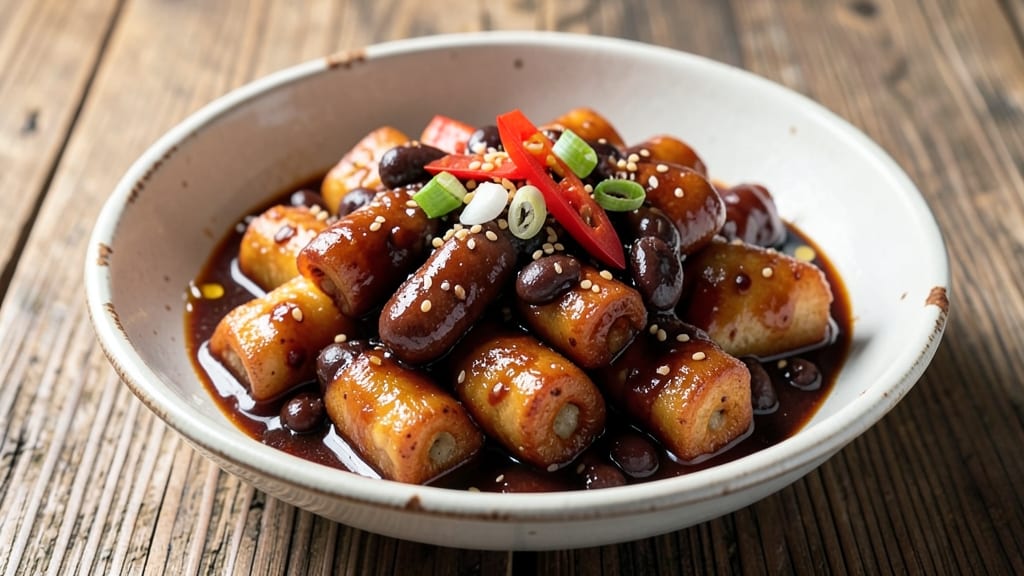
This black bean tteokbokki recipe transforms the classic Korean street food into a vegetarian powerhouse that delivers the same bold, chewy, spicy-sweet experience. The secret lies in using black beans to replace traditional fish cakes while keeping the signature texture and depth of flavor that makes tteokbokki irresistible.
I developed this version after years of perfecting the balance between spicy, sweet, and umami—without compromising that essential chewy rice cake texture.
The foundation starts with properly hydrating and steaming the rice cakes until they're tender but still hold their shape, then searing them in oil until they develop that signature crispy-chewy exterior.
The sauce builds in layers: fermented black beans provide the umami backbone, gochujang delivers the signature heat, and a touch of sugar creates that addictive sweet-spicy balance. This isn't just a vegetarian adaptation—it's a recipe that stands on its own with deeper flavor complexity.
What you'll end up with is a steaming bowl of chewy rice cakes swimming in a glossy, spicy-sweet sauce that's rich with black bean umami and brightened by fresh scallions.
The contrast between the crispy edges of the rice cakes and their tender centers creates every bite's perfect texture, while the sauce clings to each piece. This is comfort food that delivers restaurant-quality satisfaction at home, with none of the mess or fuss.
Perfect for weeknight dinners, meal prep, or serving at gatherings where you want to impress without the complexity. The recipe scales easily—just double the sauce and rice cakes for a crowd. Here's how to make it happen.
Ingredients for black bean tteokbokki
These 14 core ingredients deliver restaurant-quality tteokbokki with chewy rice cakes and layered spicy-sweet sauce.
| Ingredient | Amount | Notes |
|---|---|---|
| Korean Rice Cakes (Tteokbokki) 🍚 | 14 oz | Medium-sized, cylindrical preferred |
| Black Beans (Fermented, Doenjang) 🥫 | ½ cup | Pastes or whole beans, unsweetened |
| Gochujang (Korean Chili Paste) 🌶️ | ¼ cup | High-quality, vibrant red |
| Vegetable Oil 🫒 | ½ cup | High smoke point for searing |
| Soy Sauce 🍶 | ¼ cup | Korean or Japanese preferred |
| Sesame Oil 🌿 | 1 tbsp | Toasted, for aroma |
| Brown Sugar 🍯 | ¼ cup | Packed, light or dark |
| Garlic Cloves 🧄 | 6 cloves | Fresh, minced finely |
| Green Onions (Scallions) 🧅 | ¼ cup | Thinly sliced, white/green parts |
| Water 💧 | 1 ½ cups | Filtered preferred |
| Vegetable Broth 🍲 | 1 cup | Low-sodium preferred |
| Sesame Seeds 🌰 | 1 tbsp | Toasted for garnish |
| Kosher Salt 🧂 | 1 tsp | Diamond Crystal preferred |
| Black Pepper 🌶️ | ½ tsp | Freshly ground |
The fermented black beans are non-negotiable—they provide the umami backbone that traditional fish cakes deliver. Asian markets carry the best quality in paste form, but whole beans work too if you're patient to soak and grind them. For gochujang, Maesil Gochujang or Sinsegae deliver that signature vibrant color and heat. The rice cakes should be medium-sized—Korean specialty stores sell them pre-packaged, but if you can't find them, substitute with chewy sushi rice cakes (though texture will differ slightly). Fresh garlic and green onions are essential for brightness, so don't use powdered substitutes here.
No gochujang? Substitute with a mix of 1 tbsp sriracha and 1 tbsp tomato paste for heat, but you'll lose depth. Short on black beans? Double the soy sauce and add 1 tsp miso paste for umami. The brown sugar can be swapped for maple syrup (use half the amount) or agave nectar, though texture may vary slightly. For a smokier profile, add 1/4 tsp smoked paprika to the sauce. The vegetable broth can be replaced with water plus 1 tsp vegetable bouillon, but quality will drop. If you're making this ahead, prepare the sauce first—it actually improves overnight as flavors meld.
Rice cakes should be stored in a cool, dry place and used within 2 weeks of purchase for best texture. Once cooked, the sauce keeps for 5 days refrigerated or 3 months frozen—portion into ice cube trays for easy reheating. The sesame seeds toast in 30 seconds in a dry pan—keep them nearby for garnish. For meal prep, cook the rice cakes separately and assemble just before serving to maintain crispy edges. This dish reheats beautifully—microwave with a splash of water to restore moisture if needed.
Why You'll Love This Recipe
- One-Pot Magic: I swear by this recipe because it’s all in one pan—no chopping, no fuss. Just toss in the rice cakes, black beans, and gochujang, let it simmer, and boom. Cleanup’s a joke.
- Umami Bomb: That fermented black bean paste? It’s the secret weapon. Deep, salty, slightly funky—like a hug for your taste buds. The gochujang ties it all together with heat that lingers (in the best way).
- Lunchbox Hero: Between us, this reheats like a dream. Pack it cold for work or school, and it’s still delicious. My kids eat it straight from the fridge—no complaints, just empty bowls.
- Budget Powerhouse: Black beans and rice cakes are cheap, but they feel fancy. A single batch feeds four for under $5, and leftovers taste just as good the next day. My wallet and I are both happy.
Step-by-step instructions for black bean tteokbokki
Master this Korean classic with chewy rice cakes and deep umami flavors from fermented black beans.
🍳 Step 1: Bloom the Aromatics in Vegetable Oil
Heat the 0.5 cup vegetable oil in a large, deep skillet over medium heat until shimmering but not smoking. Add the 6 cloves minced garlic and cook for 30 seconds until fragrant—you'll smell that sweet, nutty aroma. Immediately add the 0.5 cup black beans (fermented) and stir constantly for 2 minutes until they begin to sizzle and release their deep, earthy flavors.
This initial step develops the sauce's foundation. The garlic should turn light golden without browning, and the black beans will darken slightly as they toast. If they stick, add 1 tablespoon water to deglaze and scrape up any browned bits from the bottom of the pan—these contain concentrated flavor.
🔥 Step 2: Build the Sauce with Gochujang and Sweet-Savory Balance
Reduce heat to medium-low and add the 0.25 cup gochujang and 0.25 cup brown sugar, stirring continuously for 3 minutes until the mixture thickens slightly. The sauce should develop a glossy sheen and deepen in color from vibrant red to a rich, almost purple hue. Add the 0.25 cup soy sauce and 1 cup vegetable broth, stirring to combine completely.
Here's where the magic happens: the gochujang's heat and sweetness meld with the soy's umami and the sugar's caramelization. Taste the sauce now—it should be spicy, tangy, and slightly sweet. If it's too thick, add 0.25 cup water to reach a light syrup consistency. If too thin, simmer uncovered for 2 minutes to reduce.
👨🍳 Step 3: Prepare and Add the Rice Cakes
While the sauce simmers, rinse the 14 oz Korean rice cakes under cold water to remove any excess starch. Cut them in half crosswise if they're particularly large. Add them to the skillet and stir gently to coat evenly in the sauce. The rice cakes should absorb the sauce immediately—this is when they begin their transformation into chewy, tender morsels. Cover and simmer for 8-10 minutes on medium-low heat, stirring occasionally.
Don't walk away during this step. The rice cakes need constant attention to prevent sticking and ensure even cooking. They're done when they're plump, chewy, and slightly translucent at the edges. If they stick, add 1-2 tablespoons water and gently scrape the bottom with a spatula to release any browned bits.
⏰ Step 4: Finish with Garlic, Onions, and Sesame Oil
Uncover the skillet and increase heat to medium-high. Add the 0.25 cup thinly sliced green onions and stir for 1 minute until wilted. Pour in the 1 tbsp sesame oil and 1.5 cups water, then add the 1 tsp kosher salt and 0.5 tsp black pepper. Stir vigorously for 2 minutes until the sauce reaches a smooth, glossy consistency—this is your signal that the flavors have fully melded.
Taste and adjust seasoning: add more gochujang for heat, brown sugar for sweetness, or soy sauce for depth. The final sauce should coat the back of a spoon and have a balanced profile—spicy, savory, and slightly sweet. Remove from heat and let sit for 2 minutes to thicken slightly.
🍽️ Step 5: Serve with Garnish and Crispy Topping
Transfer the tteokbokki to a serving dish and sprinkle with 1 tbsp toasted sesame seeds for texture and aroma. For extra crunch, heat 1 tablespoon vegetable oil in a small pan until shimmering, then fry 1 tablespoon sesame seeds for 30 seconds until golden. Sprinkle these over the top just before serving.
Serve immediately with steamed rice to soak up the rich sauce. Each bite should deliver chewy rice cakes, deep umami from the black beans, and a complex spice-sweet balance. The sauce should cling to the rice cakes and coat every forkful with its vibrant, aromatic profile. For extra heat, serve with raw garlic cloves on the side.
Pro Tips For Making Black Bean Tteokbokki
- SOAK THE DOENJANG FIRST: I learned this the hard way—fermented black beans (doenjang) are packed with salt and umami, but they won’t blend smoothly if you just toss them in dry. Mix them with 2 tablespoons of warm water first and let sit for 5 minutes. This breaks up the clumps and makes the sauce silky instead of grainy. (Yes, even if you’re impatient like me.)
- COOK THE RICE CAKES IN BATCHES: Tteokbokki doubles in size when it hits the hot sauce, and if you dump them all in at once, you’ll end up with a mushy, uneven mess. Split them into two pans and cook half first, stirring constantly for 3-4 minutes until they’re tender but still hold their shape. Then add the second batch—this keeps the texture consistent. (Your future self will thank you.)
- SALT THE GOCHUJANG LIQUID: Gochujang is salty enough on its own, but when you mix it with doenjang and soy sauce, the flavors can get muddled. Before combining, dissolve the gochujang in ¼ cup of water first, then add a pinch of salt—about ½ teaspoon. This balances the heat and lets the black bean depth shine through. (Sounds weird, but it works.)
- FINISH WITH A SPLASH OF OIL: The sauce will be thick and clingy by the end, and that’s good, but the rice cakes need a little help absorbing flavor without drying out. Right before serving, drizzle in 1 tablespoon of neutral oil (like vegetable or toasted sesame) and toss gently. This coats the tteokbokki and makes every bite glossy and satisfying. (Does it look weird? Yes. Does it work? Every single time.)
Regional styles of this dish
Korean Street Food Roots
This dish traces back to 19th-century Korea, where street vendors sold tteokbokki as a quick, comforting snack. Traditional versions used anchovy or fish cakes for umami, but black beans make this vegetarian adaptation just as rich.
The original street food was simple—rice cakes simmered in a spicy-sweet sauce—but modern versions like mine layer deeper flavors through fermentation and slow cooking. 🌶️
Japanese-Inspired Adaptations
In Japan, tteokbokki became popular as yaki-tteok, often served with a sweeter, less spicy sauce. Japanese cooks sometimes add mirin or sake> to balance heat, while Korean versions rely on gochujang.
For a fusion twist, try adding 1 tbsp mirin> to the sauce or serving with a side of pickled ginger> to cut through the richness.
Modern Korean Fusion
Today's Korean chefs blend traditional techniques with global flavors. For a contemporary take, add 1 tbsp gochujang-infused honey> to the sauce for a caramelized depth. Some versions include tofu or mushrooms> for extra texture, while others use kimchi as a base> instead of black beans.
I love adding crispy fried shallots> on top for a restaurant-worthy finish.
Vegetarian-Friendly Twists
Black beans replace fish cakes, but you can experiment further. For extra protein, stir in ½ cup cooked lentils> or crumbled tofu> at the end. Some cooks use miso paste> instead of soy sauce for a deeper umami kick.
The key is balancing the sauce's sweet-spicy profile—adjust brown sugar> or gochujang> to taste.
Regional Korean Variations
In Seoul, tteokbokki is often served with raw egg> mixed into the sauce for creaminess. Southern Korean versions use more chili flakes> for extra heat, while Jeju Island cooks add seaweed> for a briny contrast.
For a regional touch, try adding 1 tsp jeotgal (fermented seafood)> if you're not fully vegetarian, or 1 tsp fish sauce> for a similar depth.
Nutrition facts
Frequently asked questions
Can I use regular rice cakes instead of Korean tteokbokki?
Regular rice cakes (like sushi rice cakes) can work in a pinch, but they won't have the same chewy texture. For best results, look for Korean-style rice cakes (often sold frozen in Asian markets). If you can't find them, use chewy mochi rice cakes and reduce the cooking time by 2-3 minutes—they'll be less dense but still delicious.
How do I adjust the spice level?
The recipe balances heat and sweetness perfectly, but you can modify it easily. For milder heat, reduce gochujang by 1 tablespoon and add 1 teaspoon honey. For extra spice, increase gochujang by 1 tablespoon and add ½ teaspoon red pepper flakes. Always taste as you go!
Can I make this ahead of time?
Yes! The sauce can be made 1 day ahead and stored in the fridge. Reheat gently on the stove, then add the rice cakes fresh for the best texture. For meal prep, cook the rice cakes separately and assemble just before serving to keep them chewy. The sauce actually improves overnight as flavors meld.
What's the best way to serve this dish?
Serve with steamed white rice to soak up the sauce, and add raw garlic cloves or kimchi on the side for extra flavor layers. For a complete meal, pair with steamed greens or pickled radishes. The crispy sesame seeds on top add the perfect finishing touch!
Why did my rice cakes turn mushy?
Overcooking or too much liquid are the usual culprits. Keep heat at medium-low and stir occasionally to prevent sticking. If the sauce is too thin, simmer uncovered for 1-2 minutes to reduce. For extra chewiness, rinse rice cakes in cold water before cooking to remove excess starch.