
Side Dishes
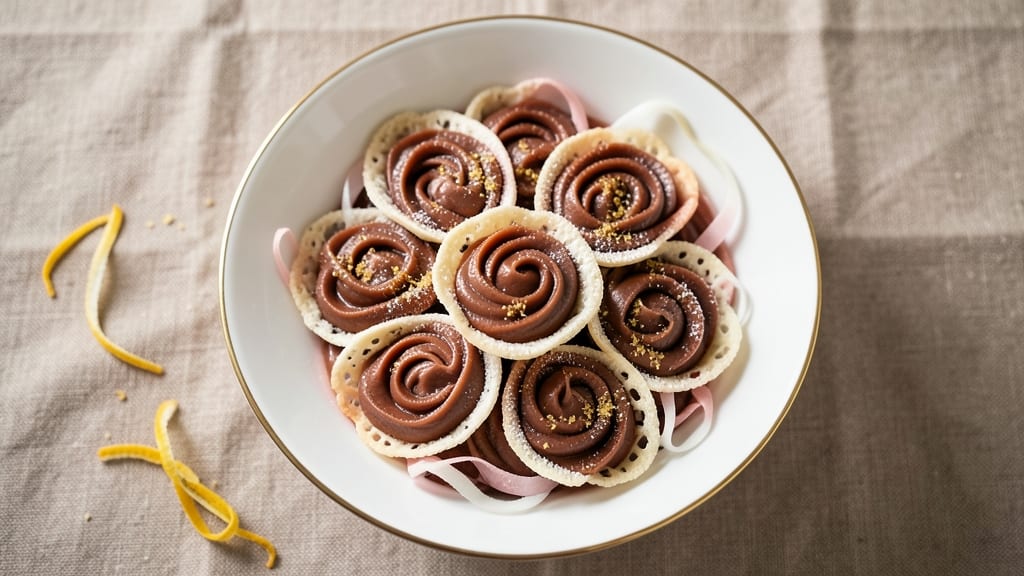
This bean paste flower recipe transforms simple ingredients into delicate, edible art with a satisfying crunch and velvety core. The technique combines traditional Asian pastry skills with modern vegan baking, creating flowers that look stunning and taste even better.
What makes this recipe special is the balance—crispy edges from careful frying meet the silky sweetness of the bean paste filling, all held together by a delicate dough shell.
The process starts with preparing the bean paste dough, which requires precise measurements and gentle handling to maintain its delicate structure. You'll shape the dough into petals and carefully fill them with sweet red or mung bean paste before sealing into intricate floral designs.
The key to success lies in patience during shaping and consistent heat control when frying, ensuring each flower emerges golden and perfectly formed.
What you'll achieve is a plate of elegant, bite-sized edible flowers that are both visually impressive and delicious. These can be served as a standalone dessert, paired with herbal tea, or included in vegan gift baskets.
The contrast of textures—crispy exterior, soft filling—makes every bite satisfying, while the presentation elevates any occasion from casual to special.
Perfect for celebrations, gift-giving, or simply indulging in something beautiful to eat, these bean paste flowers are surprisingly approachable for beginners. The recipe includes tips for troubleshooting common issues like uneven frying or filling leaks, ensuring your first attempt looks as good as it tastes.
Ingredients for bean paste flower
Transform simple pantry staples into delicate floral edible art with this precise bean paste recipe.
| Ingredient | Amount | Notes |
|---|---|---|
| All-Purpose Flour 🌾 | 2 cups | Unbleached, for delicate texture |
| Granulated Sugar 🍚 | ½ cup | Fine grain preferred |
| Vegetable Shortening 🧈 | ½ cup | Or vegan butter substitute |
| Red Bean Paste 🍫 | 1 cup | Sweetened, store-bought or homemade |
| Mung Bean Paste 🍫 | 1 cup | Traditional alternative to red bean |
| Aquafaba 🥫 | ¼ cup | Chickpea brine, whipped for binding |
| Vegetable Oil 🫒 | 2 cups | High smoke point for frying |
| Granulated Sugar 🍚 | ¼ cup | For coating petals |
| Cornstarch 🌾 | ¼ cup | For crispy texture |
| Water 💧 | ½ cup | Room temperature preferred |
| Salt 🧂 | ½ tsp | Fine sea salt |
| Vanilla Extract 🌸 | 1 tsp | Pure vanilla preferred |
| Food Coloring (Optional) 🎨 | ½ tsp | Natural plant-based dyes |
The flour and vegetable shortening form the delicate dough shell—King Arthur brand flour yields the best texture, while Crisco shortening ensures crisp edges. Red bean paste from Trader Joe's or Asian markets provides the signature sweetness, though homemade versions work equally well. For the aquafaba, reserve the brine from a can of chickpeas—the fresher, the better. If you're using mung bean paste, opt for organic varieties from specialty stores for a more authentic flavor profile. The vegetable oil should have a high smoke point—Avocado oil or grapeseed oil are ideal for consistent frying temperatures.
No aquafaba? Flaxseed gel (1 tbsp ground flaxseed + 3 tbsp water) works as a binding substitute, though texture may vary slightly. Shortening unavailable? Use coconut oil solidified in the fridge, but expect a marginally softer dough. The sugar coating can be adjusted—powdered sugar creates a finer finish, while turbinado sugar adds subtle crunch. For food coloring, natural options like beet juice or turmeric work beautifully. If your bean paste is too thick, warm it gently with a splash of water to achieve a smooth, pipeable consistency. The dough should rest for at least 30 minutes before shaping to prevent cracking during frying.
Store the uncooked dough wrapped in plastic for up to 2 days in the fridge, though fresh is ideal. Filled flowers keep for 1 week in an airtight container at room temperature, but their crispiness diminishes over time. For longer storage, freeze uncooked petals on parchment paper—thaw completely before reassembling. The bean paste filling can be refrigerated separately for 2 weeks, though it softens slightly with time. To maintain presentation, fry in small batches and drain on a wire rack rather than paper towels to preserve crispness.
Why You'll Love This Recipe
- No-Rolling Required: I’ll be real—this dough is so forgiving. No need to fuss with rolling pins or perfect circles. Just press the paste through a colander, shape with wet hands, and steam. My kids think it’s magic (and they’re not wrong).
- Sweet-Salty Magic: That first bite? Crispy golden edges hugging a tender, jammy center—red bean’s deep earthiness meets mung bean’s smooth sweetness. A sprinkle of sugar on top turns it into something dangerously addictive. Honestly, I’ve caught myself sneaking seconds straight from the pot.
- Steam-Pot Party: Here’s what sold me—they’re perfect for gatherings. Make a big batch, steam a tray, and suddenly you’ve got a crowd-pleaser that feels fancy but costs pennies. My book club now expects them at every meeting. (Yes, even on a Tuesday night.)
- Pantry Goldmine: Between us, this recipe turns shelf staples into treasure. Flour, sugar, shortening—stuff you already own—and those little cans of bean paste? They last for months. I keep a stash in my freezer for lazy mornings or last-minute gifts. Zero waste, all win.
Step-by-step instructions for bean paste flowers
Master the delicate balance of crispy petals and silky bean centers with precision timing and technique.
Prepare the Bean Paste Filling
In a medium bowl, combine the 1 cup red bean paste and 1 cup mung bean paste. Using a fork or small spatula, gently fold until completely homogeneous. The mixture should be smooth with no visible lumps—this ensures even distribution when we pipe the filling later.
Transfer the combined paste to a piping bag fitted with a small round tip. I like to use a ¼-inch tip for precise, controlled filling. Chill the piping bag in the refrigerator for 15 minutes while you prepare the dough. This prevents the filling from warming too quickly during assembly, which could make the petals soggy.
Create the Petal Dough
In a stand mixer fitted with the paddle attachment, cream together the 0.5 cup vegetable shortening and 0.5 cup granulated sugar on medium speed for 3-4 minutes until light and fluffy. Scrape down the sides of the bowl as needed to ensure even mixing. The mixture should nearly double in volume and become pale, with ribbons forming when the paddle is lifted.
Add the 2 cups all-purpose flour, 0.25 cup cornstarch, 0.5 tsp salt, and 1 tsp vanilla extract. Mix on low speed for 1-2 minutes until just combined—you should still see small flour streaks. Avoid overmixing, which develops gluten and makes the petals tough. Transfer the dough to a clean work surface and divide it into 12 equal portions (about 1.5 ounces each), rolling each into a 2-inch log. Wrap each log in plastic wrap and refrigerate for 30 minutes to firm up.
Pipe and Assemble the Flowers
Preheat your oven to 350°F and line two baking sheets with parchment paper. Remove one dough log from the refrigerator and roll it gently between your palms to soften slightly. Using a petal-shaped cookie cutter (or a knife to create petal shapes), cut 6 petals from the log. Repeat with the remaining dough logs, keeping unused logs refrigerated until needed.
Place a small dollop of chilled bean paste filling at the center of a parchment-lined baking sheet. Arrange 6 petals around the filling, slightly overlapping at the edges to create a flower shape. Gently press the edges together to seal, leaving the center open. Use a small brush to lightly coat the outer edges of the petals with 0.5 cup water mixed with a pinch of salt—this creates a crispy, translucent finish. Repeat with the remaining dough and filling.
Bake to Crispy Perfection
Bake the flowers in a single layer for 12-15 minutes, rotating the baking sheet halfway through, until the petals are golden brown and the edges are crisp to the touch. Do not overbake—the filling should remain soft and silky, not dry. Remove from the oven and let cool on the baking sheet for 5 minutes before transferring to a wire rack.
While still warm, use a small offset spatula to gently lift each flower and transfer it to a serving platter. Brush the petals lightly with a mixture of 0.25 cup granulated sugar and 0.5 tsp food coloring (if using) dissolved in 1 tablespoon water for a decorative finish. Serve immediately while the petals are still crisp and the filling is warm.
Optional Coloring and Finishing
For a vibrant presentation, prepare the sugar glaze by dissolving the 0.25 cup granulated sugar in 1 tablespoon water over low heat, stirring until fully combined. Remove from heat and add the 0.5 tsp food coloring (optional). Using a pastry brush, apply a thin, even layer of glaze to the petals, allowing any excess to drip onto the platter for a decorative touch.
Let the flowers sit for 2-3 minutes to allow the glaze to set slightly before serving. The contrast of the crispy, translucent petals with the soft, sweet bean filling creates a delightful textural experience. Store any leftovers in an airtight container at room temperature for up to 3 days, though they're best enjoyed fresh.
Pro Tips For Making Bean Paste Flower
- Chill the Dough First: I learned this the hard way—skipping the 30-minute fridge rest makes the dough sticky and hard to shape. Roll it out when it’s firm but still pliable, not when it’s fighting you.
- Use Cold Shortening: That vegetable shortening needs to be straight from the fridge. Warm it up, and you’ll end up with greasy, dense flowers instead of crisp layers. Scoop what you need and let it sit just until it softens—no more.
- Don’t Overfill the Pockets: Stuff those little pouches with just enough paste—about 1 teaspoon per—so they don’t burst when frying. I used to pack them too tight, and half my flowers would split open like overstuffed dumplings.
- Fry in Small Batches: A crowded pan steams the flowers instead of frying them. Keep the oil at 350°F (175°C) and cook 2-3 at a time, turning once. Yes, it takes longer, but the result is worth the patience—golden and crisp, not soggy.
Health benefits of these flavors
Vegan Protein Power
These bean paste flowers are a plant-based protein powerhouse, offering a satisfying alternative to traditional desserts.
Each flower contains about 4 grams of protein per serving from the mung bean and red bean pastes, making them an excellent choice for vegans or anyone looking to boost plant-based protein intake.
The combination of beans provides all nine essential amino acids, supporting muscle maintenance and overall health. 💪
Rich in Fiber
The bean pastes used in this recipe are packed with dietary fiber, with roughly 3 grams per serving. This fiber supports digestive health, helps regulate blood sugar levels, and keeps you feeling full longer.
The fiber content also contributes to the silky texture of the filling, creating that satisfying contrast with the crispy petals. For even more fiber, consider adding a sprinkle of chia seeds or flaxseeds to the dough.
Natural Sweetness
Unlike many store-bought desserts, these bean paste flowers rely on natural sweetness from the bean pastes themselves, eliminating the need for refined sugar. The red bean paste provides a deep, molasses-like sweetness, while mung bean paste offers a lighter, nuttier profile.
Together, they create a balanced flavor that’s both satisfying and less likely to cause blood sugar spikes. You can further enhance this by using unsweetened cocoa powder in the dough for a chocolatey twist.
Gluten-Free Adaptation
This recipe can easily be adapted for gluten-free diets by substituting the all-purpose flour with a 1:1 gluten-free flour blend (like Bob’s Red Mill or King Arthur). The cornstarch in the dough also helps create a crispy texture without gluten.
Just ensure your bean pastes are certified gluten-free, as some brands may contain traces. The result is just as delicate and satisfying—proving these flowers can be enjoyed by everyone at the table. ✨
Low in Fat, High in Flavor
While the dough contains vegetable shortening for texture, the overall recipe is surprisingly low in saturated fat compared to traditional fried pastries. The aquafaba (chickpea brine) acts as a natural binder, reducing the need for excessive fat while maintaining structure.
The real star is the flavor profile—the combination of sweet bean paste, vanilla, and a hint of salt creates a complex taste that feels indulgent without the guilt. 🌟
Antioxidant Boost
Both red and mung bean pastes are rich in antioxidants, particularly polyphenols and flavonoids, which help combat oxidative stress in the body.
Mung beans, in particular, are known for their detoxifying properties, making these flowers not just a treat for your taste buds but also a nourishing choice. Pair them with green tea to amplify the antioxidant benefits even further. 💛
Nutrition facts
Frequently asked questions
Can I use store-bought bean paste for this recipe?
Yes! Store-bought red bean paste or mung bean paste works perfectly—just check for added sugars or thickeners that might affect texture. Brands like Trader Joe's or Asian markets carry excellent options. For best results, choose a smooth, lump-free paste. If your paste is too thick, warm it gently with 1 tsp water to achieve a pipeable consistency.
How do I prevent the petals from sticking together?
Use a wire rack instead of a plate when cooling the flowers—the airflow prevents condensation buildup. Also, lightly dust your work surface with cornstarch before cutting petals, and avoid overcrowding the baking sheet. If petals stick after baking, gently separate them with a thin spatula while still warm.
What's the best way to shape the flowers for beginners?
Start with simple 3-4 petal designs instead of intricate flowers. Use a round cutter> (like a biscuit cutter) to create uniform petal shapes, then overlap them slightly at the base. For extra stability, press the edges gently with your fingers before baking. Practice makes perfect—even "imperfect" flowers taste delicious!
Can I make these without a piping bag?
Use a ziplock bag with a tiny corner snipped off, or a small spoon> to place the bean paste filling. For the dough, roll it thin and cut petals freehand with a knife. The key is to keep portions small—about ½ tsp of filling per flower. The texture will be slightly less precise but still delicious.
How long do these keep, and can I freeze them?
Store uncooked dough for 2 days> in the fridge, wrapped tightly. Once baked, keep them in an airtight container for 3 days> at room temperature. For freezing, shape petals without filling, freeze on parchment, then assemble and bake fresh when ready. The filling can be frozen separately for 2 weeks>, but it may soften slightly upon thawing.